World’s No. 3 Container Carrier Warns Against Price War
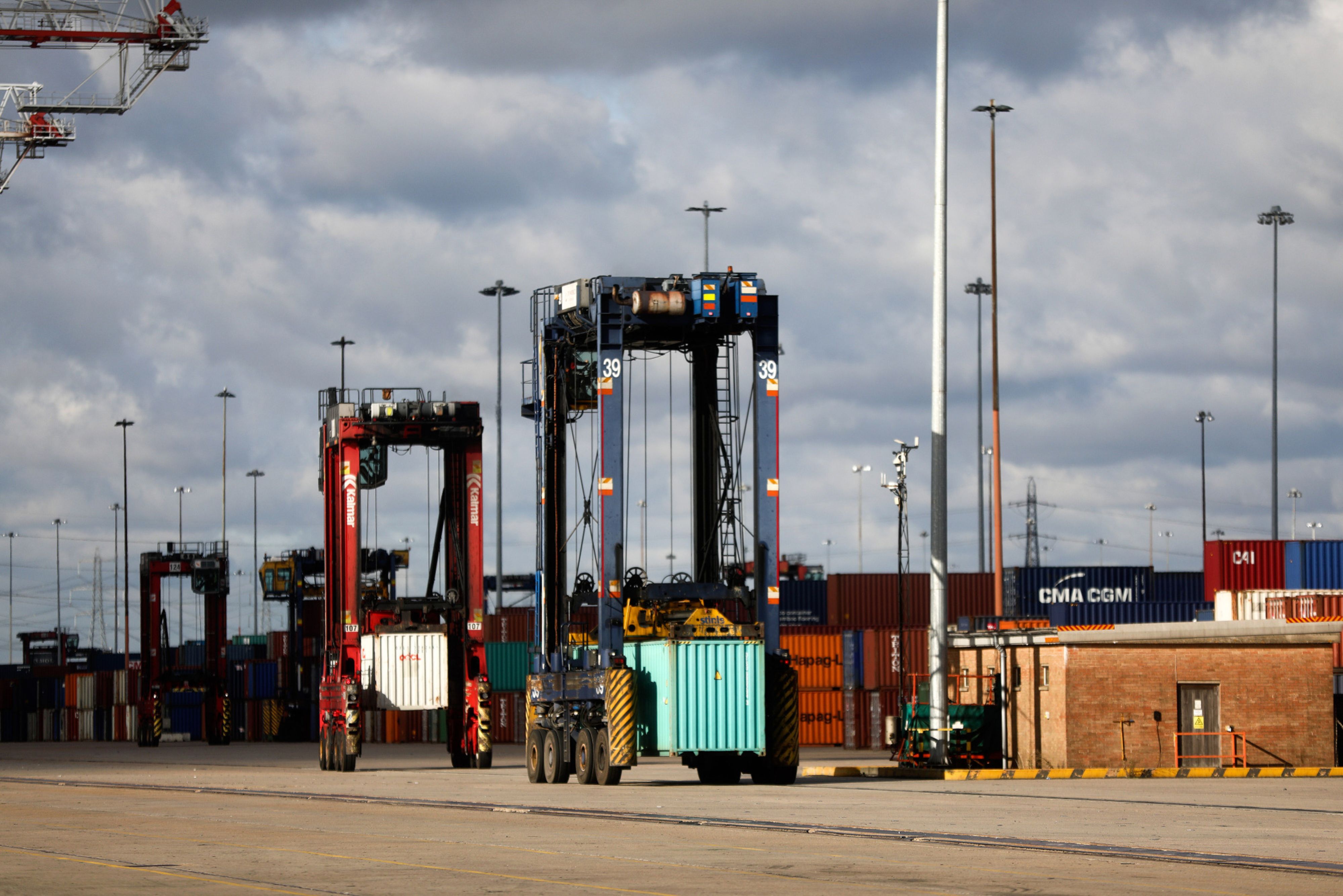
(Bloomberg) -- CMA CGM SA, the world's No. 3 container carrier, urged the industry to avoid a price war as the delivery of new vessels threatens to push global shipping to a protracted slump.
“New capacity expected on the market in 2024 will likely continue to pull down freight rates,” the French company controlled by billionaire Rodolphe Saade and his family said in an earnings statement Friday. “The slowdown in the global economy is expected to continue weighing on our industry in the period ahead.”
The closely held company's third-quarter net income fell 94% to $388 million from $7.04 billion in the same three months a year earlier. The profit margin narrowed to 17.5% from 46%.
CMA CGM follows rivals A.P. Moller-Maersk A/S, the second-biggest container line, and No. 5 Hapag-Lloyd AG in painting a gloomy outlook for the notoriously cyclical industry.
Maersk said last week it's cutting at least 10,000 jobs to protect profitability.
Read More: A Record $90 Billion in Ship Orders Loom Over Boom-Bust Industry
Marseille-based CMA CGM said it's also reducing costs, but declined to specify whether jobs are being eliminated.
The industry's reversal of fortunes began in the second half of 2022, after an unprecedented boom in demand during the pandemic sent cargo rates soaring and profits to record highs.
The windfall led CMA CGM and others to order vessels that are now entering service. Global capacity is rising 5% in the last half of this year and is expected to gain 9% in 2024, the company said.

At the same time, two wars, elevated inflation and high borrowing costs are weighing on consumer purchases and business confidence.
“There is a risk of imbalance because demand is weak and supply is high, and in this case what happens is that rates fall,” CMA CGM Chief Financial Officer Ramon Fernandez told reporters Friday.
In the decade before the pandemic, container companies struggled to make money in an environment where available capacity outstripped the demand to move goods, leading to rock-bottom prices often set below costs in a battle for market share.
While Fernandez stopped short of saying there's currently a price war going on and said rates have more or less stabilized around 2019 levels, he called for discipline.
“It's impossible to say what will happen in 2024, this will depend on the behavior of the players,” he said. “With 9% capacity growth we would expect vessel scrapping to replace aging fleets.”
CMA CGM has about 100 new vessels on order that will be added to a fleet that now stands at 621, Fernandez said.
Read More: A Fleet of New Cargo Ships Is Coming. Here's How They're Named
“Each actor will have to be responsible to ensure that the market remains reasonable amid rates that are relatively low,” he said. “Price wars after a while hurt not only those who start them but everyone, even customers because they get erratic behavior from their partners.”
Surging profits over the previous two years filled the coffers of the Saades and rival European shipping tycoons like Gianluigi Aponte, founder of Mediterranean Shipping Co., and Klaus-Michael Kuehne, who has stakes in logistics and shipping companies.
CMA CGM went on a buying spree, most recently bolstering its media assets like La Tribune newspaper. The company is also working to close its biggest purchase to date: Bollore SE's logistics arm for an enterprise value of €5 billion ($5.3 billion).
The Saade family is worth about $19 billion, according to the Bloomberg Billionaires Index. That compares with $33 billion in April.
More stories like this are available on bloomberg.com
©2023 Bloomberg L.P.

-
Where You Live Shapes How You Get To Work | The Reason Why

Two-wheelers are the most popular way to get to work in India, accounting for nearly 43% of workplace commutes.
-
High US Salaries, No Green Card Certainty: The Financial Calculation Facing Indian H-1B Families
The suspension of PERM processing at eight technology employers does not cancel existing H-1B visas. What it does is force a question many Indian families have been avoiding: is the US salary worth tying your career and family plans to one employer?
-
Unhedged Position: Can India See An Indonesia-Style Time Correction?
The Nifty is trading below levels it first clocked in 2024. Is there, then, as I have suggested in the headline, potential that the current time correction drags on painfully for the next three-five, even ten years?
-
Navigating Friction And Energy Realities: An Analysis Of Marco Rubio's October Visit To India
Occurring at a critical juncture marked by stalled trade negotiations and escalating geopolitical pressures over global energy supplies, the visit offers a profound window into modern US-India relations.
-
India Exports Capital. Why Not Export Trusteeship?
The big question, then, is whether India can build an institution that global borrowers, investors, banks, and lawyers can trust, even without an Indian connection.
-
France's Economy & Politics Are In Crisis | The Reason Why
Let's look at how the French economy and politics evolved under Nicolas Sarkozy, Franois Hollande and Emmanuel Macron.
-
You May Inherit The Business. You Must Earn Its Credibility.
Succession tests the founder's ability to share authority as much as it tests the next generation's readiness to assume it.
-
Signing Deals Is One Thing; Making Them Work Is Another | The Week In Whys
Sometimes, things don't turn out as planned. Indian companies have lost some bids to rivals, some projects won't produce until 2030.
-
FOMC Wall, PERM Suspension, Hospital Stocks | Talking Points This Week
A PERM suspension would directly affect green-card sponsorship rather than H-1B visas, so the near-term earnings impact could remain relatively limited. The key question is whether this marks a new phase in US scrutiny of Indian IT.
-
Everything, Everywhere, All At Once: Dalal Street's Week To Forget | Joining The Dots
Visa curbs, a Starlink spat and cancer drug caps: what connects this week's shocks for Indian markets









