Cyrus Mistry Death: Who Controls $30-Billion Shapoorji Pallonji Group?
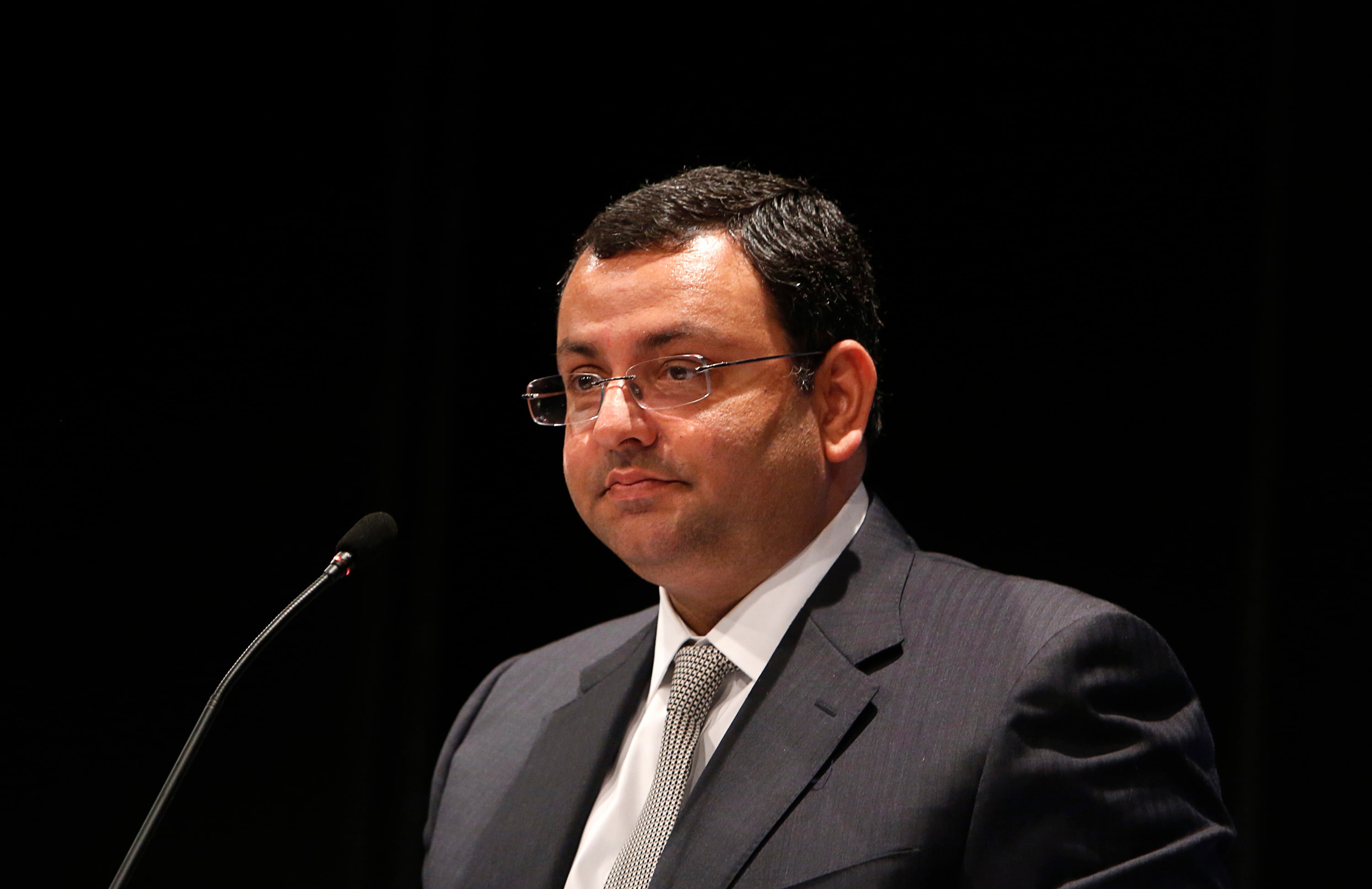
For the 157-year-old multi-billion dollar Shapoorji Pallonji Group, the death of its youngest scion Cyrus Mistry in a tragic road accident is a double loss as that comes on the heels of the group patriarch's death in late June.
The nearly $30-billion diversified group, which owns 18.6 per cent in the $130-billion Tata Group, was founded by the late senior Pallonji Mistry (great grandfather of Cyrus) in 1865 as Littlewood Pallonji & Co.
Cyrus' father, Pallonji Mistry, who died on June 28, 2022, at the age of 93, is dubbed 'the Phantom of Bombay House'.
According to the Bloomberg billionaires index, the SP Group has a net worth of about $30 billion in 2022.
The Mistry's epic showdown after Cyrus Mistry was thrown out of the group as the chairman in a board coup in October 2016 with the Tata Group sparked the biggest corporate feud in the history of India Inc.
Under Cyrus' watch, the Tata Group (top-20 listed group companies) grew by a CAGR of 12.5 per cent, while their debt has increased at a slower pace of 9.98 per cent from Rs 1.89 lakh crore to Rs 2.29 lakh crore.
But during this period, the net profit zoomed at a CAGR of 42.3 per cent, indicating much more efficient operations under his tenure. He left the group with an overall turnover of over $100 billion, nearly doubling under his watch.
The SP Group's interest spans from engineering & construction under its flagship Afcons, real estate, consumer goods and solar power, from the last two it had exited recently as part of deleveraging. The group employs more than 50,000 people in more than 50 countries today.
Cyrus, 54, who died on the spot earlier in the day when his car lost control on the Mumbai-Ahmedabad highway, was the youngest son of Pallonji Mistry and left behind his wife Rohiqua and two sons, Firoz and Zahan.
Since he was appointed the chairman of the Tata Group in December 2012, Cyrus has not been into the operations of the family business, having entrusted it to his elder brother Shapoor Mistry.
Since late 2019, the group underwent more management changes, with Shapoor's son Pallon, 26, being inducted into the board of the group holding company, while daughter Tanya was handling the group's corporate social responsibility activities.
The new gen has been mandated to help the group companies with digitalisation and communicate better with its shareholders. Pallon is now part of the apex panel that takes long-term, strategic and impactful decisions.
Shapoorji Pallonji & Co has been known for its engineering prowess and is the oldest domestic construction engineering and construction company in the country under its flagship Afcons.
The company's first project was the construction of pavement on the Girgaum Chowpatty in south Mumbai, followed by the construction of a reservoir on Malabar Hill, which has been supplying water to the megapolis since then.
The SP group's engineering empire has constructed opulent hotels, stadia, palaces, and factories across Asia.
Some of the iconic buildings that the group built over the decades include the Reserve Bank of India headquarters, the BSE Towers, the Oberoi hotel in Mumbai, and the blue-and-gold Al Alam palace for the Sultan of Oman, apart from the Statue of Belief--of lord Shiva in Nathdwara in Rajasthan, is amongst the largest statue of Shiva in the world and the fourth-largest statue in the world), the Jumeirah Lake Towers in Dubai and Ebene Cyber City in Mauritius.
Its latest engineering landmarks are:
- The Chenab Railway Bridge.
- Atal Tunnel.
- Dhaka-Chittagong railway corridor.
- The first Kolkata metro.
The company also built the Brabourne stadium in Mumbai, the Jawaharlal Nehru Stadium in New Delhi and the Mumbai Central Railway station in just 21 months for Rs 1.6 crore. In 2010, it built the country's tallest building of the time, The Imperial, a residential tower in Mumbai.
The SP group had exited from consumer durables business Eureka Forbes, known for its vacuum cleaners and water purifiers, after selling its remaining 8.7 per cent stake to Lunolux, a firm backed by private equity firm Advent International in September 2021 for Rs 4,400 crore.
Similarly, it sold its majority stake in Sterling & Wilson Solar Power to a Reliance Industries entity in October 2021.
Since 2012, when the late Pallonji Mistry announced retirement, the group has been under the control of his eldest son and Cyrus's elder brother Shapoor Pallonji Mistry.
The reorganisation was also because, in December 2012, Cyrus was appointed chairman of Tata Sons, following which he withdrew completely from the family business "to ensure that there is no conflict of interest with the Tata group, including banning his family companies from entering into any business with any Tata entities unless through open competitive budding".
From early 2003, the Mistry family gave up their Indian citizenship and became Irish nationals.
This was also because Cyrus' mother, Patsy Perin Dubash, is from Dublin, and the change of their citizenship was on "the basis of his marriage to an Irish national.'
Their love of horses compounds the family's interest in Ireland, and they also own a 200-acre stud farm in Pune.

-
Ten Things I Learnt This Samvat

Patience can be a trap. Cheap stocks can stay cheap. Leverage can wipe you out. What did Samvat 2082 teach us? Niraj Shah writes on 10 lessons from the year gone by.
-
Talking Points This Week: Tech Nerves, FII Buying, And A Faraway Banking Shock
The global markets are not shining this Diwali. The exception in the large markets is, India.
-
Midterm Rally Lasted A Day. The Hard Reality Of A Divided US May Last Two Years | Opinion
Between a contested AI boom, a debt ceiling that arrives in 2027 and a president with every incentive to act alone, the next two years may prove more volatile than the first day's rally suggests.
-
Blue Wave Will Derail the AI Trade but Won't Dismantle the AI Era | Unhedged Position
The Democrats' sweep of the US Congress will see politics collide with economic forces both over the long and short term.
-
It's Time To Take The GST Council's Bet On Trust Global
Payment records can prove India's services exports, and clear, proportionate rules can bring foreign digital sellers into the tax net.
-
Opinion | India at 38: From Innovation Overperformer to Innovation Powerhouse
India now has 453 VC-backed deep science startups, 18 of them late-stage, after 117 percent growth since 2020. Laurus Labs, at USD 9.3 billion, is the most valuable deep science company in any middle-income economy outside China.
-
Navigating Energy Crossroads: S Jaishankar's Call For Diversified Supply Chains At G20 Ministerial Meeting
As geopolitical fault lines continue to test maritime trade routes and commodity flows, Jaishankar's message remains pertinent: true economic resilience requires open markets, protected transit lines, and a genuine commitment to multilateral cooperation rather than coercion.
-
Indians Are Travelling, But Not Every Journey Is A Holiday | The Week In Whys
Pilgrims, patients and working women are the real travellers, and the system hasn't quite caught up with them.
-
Getting To Work Costs Women More | The Reason Why
It is not just about women paying more than men. It is about women paying much more in cities than in villages.









