Bonds Surge, Rupee Weakens After Appointment Of New RBI Governor
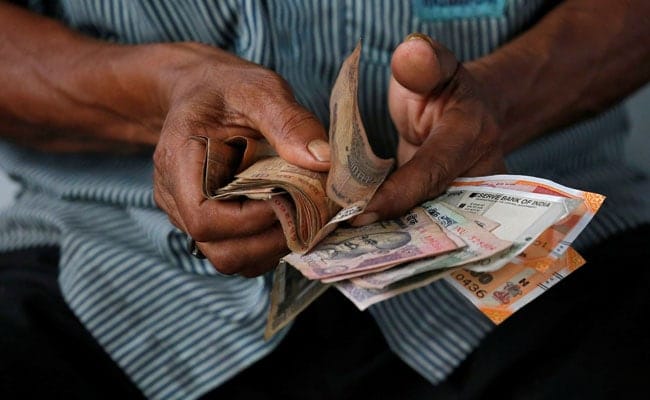
MUMBAI: Stocks and bonds rallied on Wednesday after the government moved quickly to calm markets and appoint a new central bank governor whose predecessor quit after a months-long tussle over policy. The rupee weakened slightly, however, in response to a sharp rise in global crude oil prices which threatens to aggravate the current account deficit. The appointment of ex-finance ministry official Shaktikanta Das on Tuesday as the new Reserve Bank of India governor came just a day after Urjit Patel resigned from the post following clashes with the government, which wants more economy boosting-measures ahead of a general election.
The benchmark 10-year bond yield was trading at 7.43 per cent as of 0505 GMT or 10:35 am IST, after earlier falling as much as 12 basis points to 7.41 per cent.
The partially convertible rupee was trading at 72.03 per dollar versus its previous close of 71.84, after initially dropping to a low of 72.20 at the open.
"The appointment of the new governor is likely to calm investors and ease any uncertainty about the next head of the central bank," economists at HDFC Bank wrote in a note.
"We believe that there is unlikely to be a major change in the monetary policy path with the appointment of the new Governor as the structure of the Monetary Policy Committee remains broadly unchanged."
The broader Nifty share index gained 1.2 per cent while the BSE index was up 1.12 per cent.
Traders and analysts broadly expect the monetary policy stance of the central bank to gradually shift towards neutral as inflation readings have been subdued in recent months.
Inflation is expected to ease to a 16-month low in November, according to a Reuters poll, as food and fuel prices fell. Data is due to be released post market close on Wednesday.
RBI watchers said they expected the 61-year-old Das to put relations between the RBI and the finance ministry on a more stable footing. Das retired last year as secretary of the department of economic affairs, having previously served on the RBI's board.
Das was a strong advocate of slashing rates during his tenure, said Sue Trinh at RBC Capital Markets in Hong Kong.
But investors are watching closely to see how he holds up against outside influences after recent efforts by the government to gain greater control over the central bank's regulatory powers, raising concern over its independence.

-
A New Samvat Wishlist: Inclusive Prosperity And Human Development

India has strengthened its economic foundations through infrastructure, digital access and enterprise. Its next growth chapter must deepen productivity, create better livelihoods and widen participation in prosperity.
-
Love, Sex Aur Dhokha: The Audacious Plot To Spy On Jensen Huang
A Taipei dinner, a Singapore chip buyer and a suspected Chinese asset: inside the alleged spy operation that got close to NVIDIA's Jensen Huang.
-
Ten Things I Learnt This Samvat
Patience can be a trap. Cheap stocks can stay cheap. Leverage can wipe you out. What did Samvat 2082 teach us? Niraj Shah writes on 10 lessons from the year gone by.
-
Talking Points This Week: Tech Nerves, FII Buying, And A Faraway Banking Shock
The global markets are not shining this Diwali. The exception in the large markets is, India.
-
Midterm Rally Lasted A Day. The Hard Reality Of A Divided US May Last Two Years | Opinion
Between a contested AI boom, a debt ceiling that arrives in 2027 and a president with every incentive to act alone, the next two years may prove more volatile than the first day's rally suggests.
-
Blue Wave Will Derail the AI Trade but Won't Dismantle the AI Era | Unhedged Position
The Democrats' sweep of the US Congress will see politics collide with economic forces both over the long and short term.
-
It's Time To Take The GST Council's Bet On Trust Global
Payment records can prove India's services exports, and clear, proportionate rules can bring foreign digital sellers into the tax net.
-
Opinion | India at 38: From Innovation Overperformer to Innovation Powerhouse
India now has 453 VC-backed deep science startups, 18 of them late-stage, after 117 percent growth since 2020. Laurus Labs, at USD 9.3 billion, is the most valuable deep science company in any middle-income economy outside China.
-
Navigating Energy Crossroads: S Jaishankar's Call For Diversified Supply Chains At G20 Ministerial Meeting
As geopolitical fault lines continue to test maritime trade routes and commodity flows, Jaishankar's message remains pertinent: true economic resilience requires open markets, protected transit lines, and a genuine commitment to multilateral cooperation rather than coercion.









