Shaktikanta Das Appointed New RBI Governor: 10 Things To Know
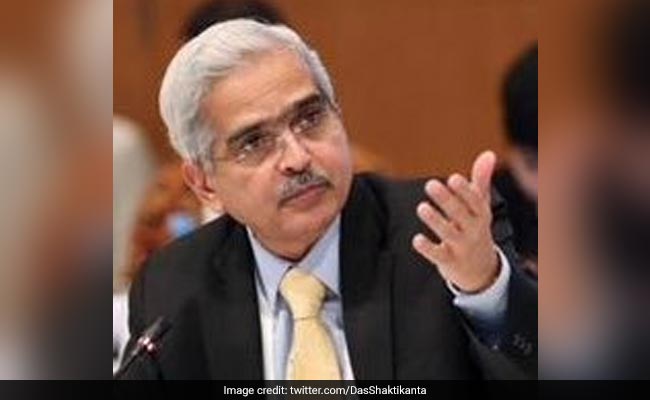
- "The Appointments Committee of the Cabinet has approved the appointment of Shaktikanta Das, former Secretary, Department of Economic Affairs, as Governor of the Reserve Bank of India (RBI) for a period of three years," news agency Indo-Asian News Service (IANS) reported an official order as saying.
- Mr Das, a former secretary at the department of economic affairs, was appointed the governor for a period of three years. He retired as the Economic Affairs Secretary in May 2017.
- He is a 1980 batch IAS officer from Tamil Nadu cadre.
- Mr Das is known for being an experienced bureaucrat who has held key positions both under the ruling Bharatiya Janata Party as well the previous Indian National Congress-led government, reported news agency Reuters.
- His appointment is likely to cheer markets as investors expect communication between the government and the central bank to improve following a public spat that deepened an existing rift between the two sides, said experts.
- "Bonds and rupee should react positively following this news," said Ashish Vaidya, executive director and head of trading at DBS Bank.
- Mr Patel resigned after a power tussle with the government wherein the Centre sought a part of RBI's excess reserves ahead of the general elections next year.
- The last meeting of the RBI Board had ended on a conciliatory note, with the central bank agreeing to set up a panel on sharing surplus reserves and restructure loans of small businesses up to Rs. 25 crore.
- However, various reports had said that the friction between the RBI and the government would re-surface at Friday's meeting. The government's nominees on RBI Board had also been putting pressure on the central bank to allow some bad-debt-laden public sector banks to lend more easily.
- Tensions between the RBI and the Centre had become public last month when Deputy Governor Viral Acharya, giving an example of the Argentinian government's interference in the central bank's policies, said that undermining the top lender's authority was "potentially catastrophic". (With agencies inputs)

-
Talking Points This Week: Tech Nerves, FII Buying, And A Faraway Banking Shock

The global markets are not shining this Diwali. The exception in the large markets is, India.
-
Midterm Rally Lasted A Day. The Hard Reality Of A Divided US May Last Two Years | Opinion
Between a contested AI boom, a debt ceiling that arrives in 2027 and a president with every incentive to act alone, the next two years may prove more volatile than the first day's rally suggests.
-
Blue Wave Will Derail the AI Trade but Won't Dismantle the AI Era | Unhedged Position
The Democrats' sweep of the US Congress will see politics collide with economic forces both over the long and short term.
-
It's Time To Take The GST Council's Bet On Trust Global
Payment records can prove India's services exports, and clear, proportionate rules can bring foreign digital sellers into the tax net.
-
Opinion | India at 38: From Innovation Overperformer to Innovation Powerhouse
India now has 453 VC-backed deep science startups, 18 of them late-stage, after 117 percent growth since 2020. Laurus Labs, at USD 9.3 billion, is the most valuable deep science company in any middle-income economy outside China.
-
Navigating Energy Crossroads: S Jaishankar's Call For Diversified Supply Chains At G20 Ministerial Meeting
As geopolitical fault lines continue to test maritime trade routes and commodity flows, Jaishankar's message remains pertinent: true economic resilience requires open markets, protected transit lines, and a genuine commitment to multilateral cooperation rather than coercion.
-
Indians Are Travelling, But Not Every Journey Is A Holiday | The Week In Whys
Pilgrims, patients and working women are the real travellers, and the system hasn't quite caught up with them.
-
Getting To Work Costs Women More | The Reason Why
It is not just about women paying more than men. It is about women paying much more in cities than in villages.
-
AI Bias In Investing Cannot Be Eliminated, But It Can Be Governed
Framing is a particularly important example as identical financial information presented in terms of gains rather than losses can lead an LLM to reach a different assessment.









