Sensex Soars Over 600 Points, Nifty Above 10,700: 10 Points
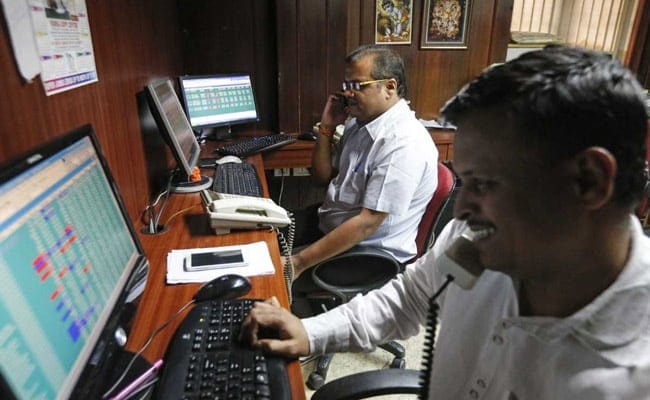
- Trading between 5.27 per cent and 7.19 per cent higher, Hero MotoCorp, UPL, Bharti Airtel, Yes Bank, and Indiabulls Housing Finance were the top Nifty50 gainers.
- Forty six out of 50 Nifty stocks traded with gains.
- Investor sentiment got a boost after the appointment of former bureaucrat Shaktikanta Das as the new RBI Governor on hopes that he will now address liquidity concerns and could help state banks in their recapitalisation programme, brokers were quoted as saying in a report by news agency Press Trust of India.
- All sectoral indices traded in the green led by gains in bank, metal, auto and financial stocks.
- Technical experts said that traders should look for a stock-specific action. "The recent bearish rally has been caught near the 10,400-mark... We advise traders to go for a directional view on indices. One should look for the stock-specific action," said Dyaneshwar Padwal, AVP Technical Analyst, KIFS Trade Capital.
- Bonds rallied as the benchmark 10-year bond yield fell as much as 8 basis points to 7.45 per cent.
- The rupee, however, weakened slightly on the back of sharp gains in global crude oil prices, reported news agency Reuters. It traded at 72.03 per dollar versus its previous close of 71.84 after initially dropping as low as 72.20 at the open.
- Asian stock markets rallied as US President Donald trump sounded upbeat about a trade deal with China, while sterling struggled with the risk of an imminent party coup against British Prime Minister Theresa May.
- MSCI's broadest index of Asia-Pacific shares outside Japan advanced 1.2 per cent. Japan's Nikkei led the way with a jump of 2 per cent, while Shanghai blue chips trailed with just 0.2 per cent.
- On Tuesday, domestic institutional investors bought net equities worth Rs 2,255.68 crore, showed provisional NSE data. The Sensex had closed at 35,150.01 and the Nifty50 at 10,549.15. (With agencies inputs)

-
A New Samvat Wishlist: Inclusive Prosperity And Human Development

India has strengthened its economic foundations through infrastructure, digital access and enterprise. Its next growth chapter must deepen productivity, create better livelihoods and widen participation in prosperity.
-
Love, Sex Aur Dhokha: The Audacious Plot To Spy On Jensen Huang
A Taipei dinner, a Singapore chip buyer and a suspected Chinese asset: inside the alleged spy operation that got close to NVIDIA's Jensen Huang.
-
Ten Things I Learnt This Samvat
Patience can be a trap. Cheap stocks can stay cheap. Leverage can wipe you out. What did Samvat 2082 teach us? Niraj Shah writes on 10 lessons from the year gone by.
-
Talking Points This Week: Tech Nerves, FII Buying, And A Faraway Banking Shock
The global markets are not shining this Diwali. The exception in the large markets is, India.
-
Midterm Rally Lasted A Day. The Hard Reality Of A Divided US May Last Two Years | Opinion
Between a contested AI boom, a debt ceiling that arrives in 2027 and a president with every incentive to act alone, the next two years may prove more volatile than the first day's rally suggests.
-
Blue Wave Will Derail the AI Trade but Won't Dismantle the AI Era | Unhedged Position
The Democrats' sweep of the US Congress will see politics collide with economic forces both over the long and short term.
-
It's Time To Take The GST Council's Bet On Trust Global
Payment records can prove India's services exports, and clear, proportionate rules can bring foreign digital sellers into the tax net.
-
Opinion | India at 38: From Innovation Overperformer to Innovation Powerhouse
India now has 453 VC-backed deep science startups, 18 of them late-stage, after 117 percent growth since 2020. Laurus Labs, at USD 9.3 billion, is the most valuable deep science company in any middle-income economy outside China.
-
Navigating Energy Crossroads: S Jaishankar's Call For Diversified Supply Chains At G20 Ministerial Meeting
As geopolitical fault lines continue to test maritime trade routes and commodity flows, Jaishankar's message remains pertinent: true economic resilience requires open markets, protected transit lines, and a genuine commitment to multilateral cooperation rather than coercion.









