Congress Averts US Government Shutdown Hours Before Deadline
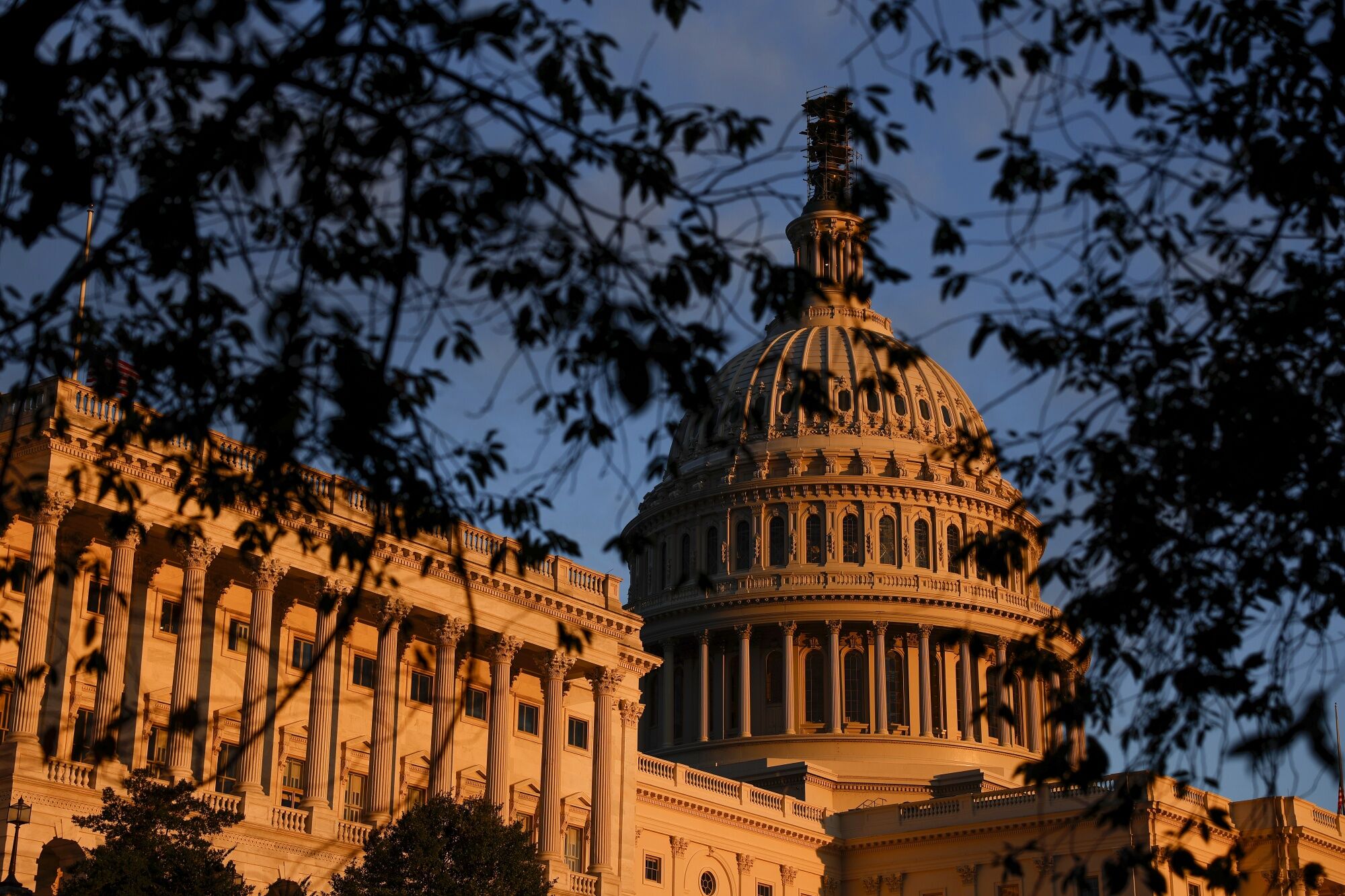
(Bloomberg) -- The US narrowly averted a disruptive and costly shutdown of federal agencies as Congress passed compromise legislation to keep the government running until Nov. 17.
The legislation, passed in both chambers Saturday just hours before a midnight deadline, buys Democrats and Republicans time to negotiate longer-term federal funding. It doesn't include new funding for Ukraine.
President Joe Biden signed the bill late Saturday night, capping an extraordinary day in Washington that began with the country careening to what appeared to be an inevitable and prolonged federal funding lapse.
“Tonight, bipartisan majorities in the House and Senate voted to keep the government open, preventing an unnecessary crisis that would have inflicted needless pain on millions of hardworking Americans,” Biden said in a statement.
Final passage by the Senate was set in motion earlier in the day by embattled House Speaker Kevin McCarthy, who called the bluff of the far-right Republicans and pushed the last-minute compromise. They'd threatened to oust him from leadership if he didn't shut down the government, a move most in Congress see as highly unpopular with voters.
“If somebody wants to remove me because I want to be the adult in the room, go ahead and try,” McCarthy told reporters.
In unusually swift action in the typically slow-moving Capitol, the bill made it through both chambers in less than 12 hours.
“Total roller coaster,” Representative Guy Reschenthaler, the House GOP chief deputy whip, said of the day's events.

Americans to investors globally have been watching Washington closely in recent days as the the risk of a shutdown grew. Even a short-term funding breach would pause many federal functions and paychecks, while economists predicted that a long-term shutdown could impede the Federal Reserve's efforts to quell inflation without widespread job losses. Markets also considered how an impasse could further harm perceptions of US governance.
The legislation, which is devoid of deep spending cuts and border policies demanded by Republican hardliners, marks a rare bipartisan victory in a fiercely divided Washington.
“After trying to take our government hostage, MAGA Republicans won nothing,” Senate Majority Leader Chuck Schumer said after final passage.
But the exclusion of the Ukraine aid — at least for now — is a blow to President Volodymyr Zelenskiy, who last week met with Biden and lawmakers and personally pleaded for new weapons systems, including F-16 fighter jets and longer-range ATACMS missiles.
Biden and other lawmakers sought to assure Ukraine that the US remains committed to the war effort. The US has sent $44 billion to Ukraine since the Russian invasion last year and Biden has requested an additional $24 billion to refill accounts that the Pentagon says are nearly depleted.
“We cannot under any circumstances allow American support for Ukraine to be interrupted,” Biden said, adding that McCarthy has committed to passage of a separate Ukraine aid package.
The bill passed the Senate on an 88-9 vote, just hours after an overwhelming House vote that included nearly all Democrats and more than half of Republicans.
The legislation includes $16 billion in disaster relief funding but not aid for Ukraine. Lawmakers in both parties who support the Ukraine funding said that would be handled separately.
--With assistance from Billy House, Derek Wallbank and Aradhana Aravindan.
(Updates with Biden signing legislation into law late Saturday night Washington time.)
More stories like this are available on bloomberg.com
©2023 Bloomberg L.P.

-
Ten Things I Learnt This Samvat

Patience can be a trap. Cheap stocks can stay cheap. Leverage can wipe you out. What did Samvat 2082 teach us? Niraj Shah writes on 10 lessons from the year gone by.
-
Talking Points This Week: Tech Nerves, FII Buying, And A Faraway Banking Shock
The global markets are not shining this Diwali. The exception in the large markets is, India.
-
Midterm Rally Lasted A Day. The Hard Reality Of A Divided US May Last Two Years | Opinion
Between a contested AI boom, a debt ceiling that arrives in 2027 and a president with every incentive to act alone, the next two years may prove more volatile than the first day's rally suggests.
-
Blue Wave Will Derail the AI Trade but Won't Dismantle the AI Era | Unhedged Position
The Democrats' sweep of the US Congress will see politics collide with economic forces both over the long and short term.
-
It's Time To Take The GST Council's Bet On Trust Global
Payment records can prove India's services exports, and clear, proportionate rules can bring foreign digital sellers into the tax net.
-
Opinion | India at 38: From Innovation Overperformer to Innovation Powerhouse
India now has 453 VC-backed deep science startups, 18 of them late-stage, after 117 percent growth since 2020. Laurus Labs, at USD 9.3 billion, is the most valuable deep science company in any middle-income economy outside China.
-
Navigating Energy Crossroads: S Jaishankar's Call For Diversified Supply Chains At G20 Ministerial Meeting
As geopolitical fault lines continue to test maritime trade routes and commodity flows, Jaishankar's message remains pertinent: true economic resilience requires open markets, protected transit lines, and a genuine commitment to multilateral cooperation rather than coercion.
-
Indians Are Travelling, But Not Every Journey Is A Holiday | The Week In Whys
Pilgrims, patients and working women are the real travellers, and the system hasn't quite caught up with them.
-
Getting To Work Costs Women More | The Reason Why
It is not just about women paying more than men. It is about women paying much more in cities than in villages.









