SEBI’s Social Media Regulatory Overreach
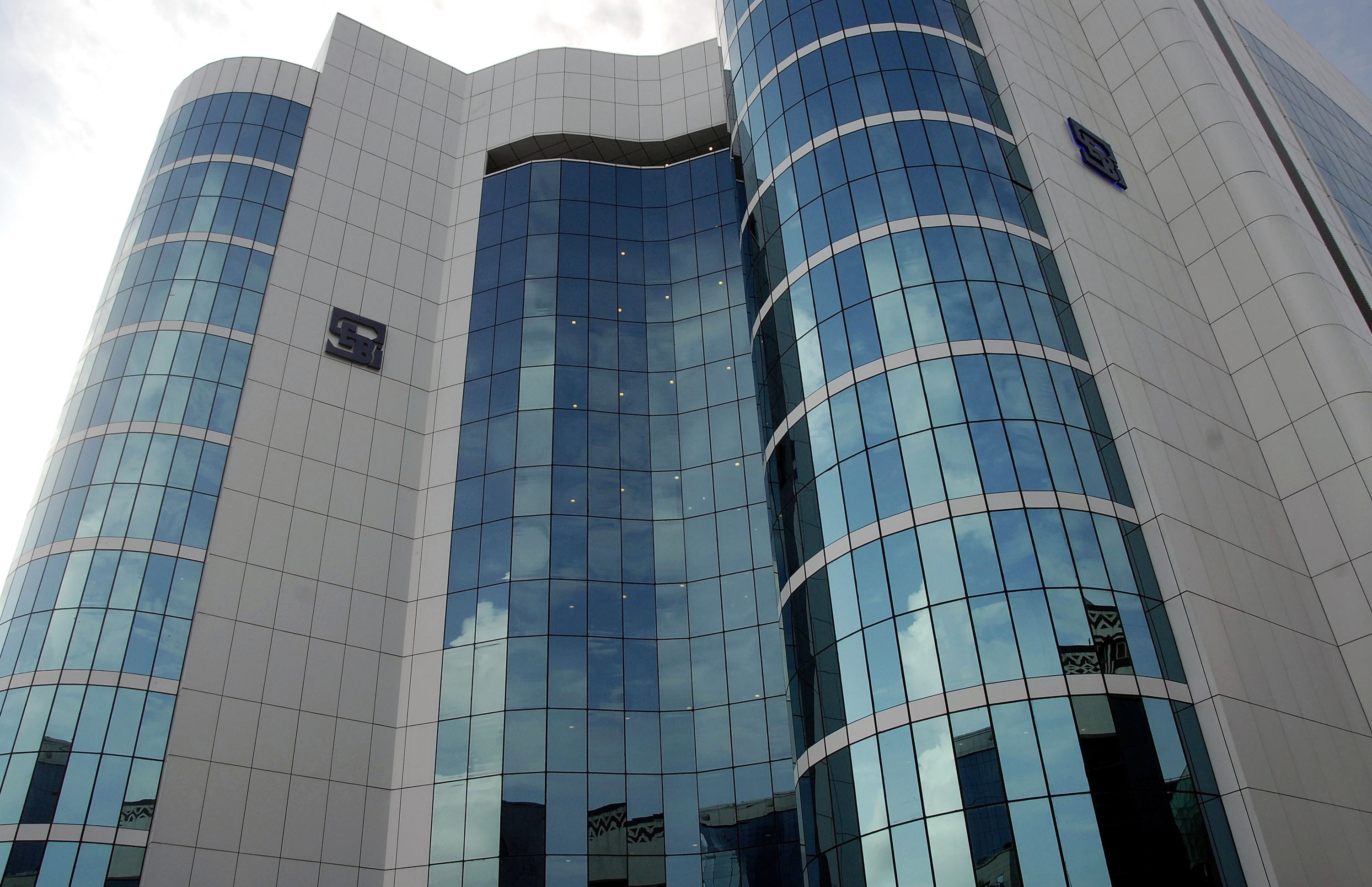
More than three years ago, as a member of the Financial Sector Legislative Reforms Commission (FSLRC), I wrote a note of dissent in the FSLRC Report which argued that an expansive definition of financial services “creates the risk of regulatory overreach” and “creates scope for needless harassment of innocent people without providing any worthwhile benefits”. I also wrote that “regulatory self restraint ... is often a scarce commodity”. At that time, most people thought that I was paranoid and that regulators can generally be trusted to behave sensibly.
Last week, the Securities and Exchange Board of India (SEBI) put out a “Consultation Paper on Amendments/Clarifications to the SEBI (Investment Advisers) Regulations, 2013” which shows that my fears were not at all misplaced. The document proposes that:
- No person shall be allowed to provide trading tips, stock specific recommendations to the general public through short message services (SMS), email, telephonic calls, etc. unless such persons obtain registration as an Investment Adviser or are specifically exempted from obtaining registration.
- No person shall be allowed to provide trading tips, stock specific recommendations to the general public through any other social networking media such as WhatsApp, ChatOn, WeChat, Twitter, Facebook, etc. unless such persons obtain registration as an Investment Adviser or are specifically exempted from obtaining registration.
If everybody needs a license from SEBI to post any stock specific thing on any social media, SEBI would quickly become one of the richest regulators in the world with a market capitalisation rivalling that of Facebook.
Let me deliberately give a non Indian example of the kind of thing that SEBI now wants to censor. Last week, Aswath Damodaran wrote a post on his widely respected blog, Musings on Markets, arguing that Deutsche Bank was now undervalued. He stated that he had bought it himself and also wrote: “I have set up my valuation spreadsheet to allow for you to replace my assumptions with yours. If you are so inclined, please do enter your numbers into the shared Google spreadsheet that I have created for this purpose and let's get a crowd valuation going!” This is social media is at its best trying to disintermediate the analysts who are licensed by the regulator. The blog post was also posted on Twitter (with more than a hundred retweets), on Facebook (with more than a hundred likes) and on YouTube (with more than 3,000 views). This is the kind of carefully reasoned analysis that SEBI now wants to shut down. Thankfully, Aswath Damodaran, teaches at NYU, Stern, safely out of reach of SEBI's censorship.
Everybody wants to become a censor because censorship is the most powerful weapon in a democracy. It is so in India and it was so in ancient Rome where the Censor was one of the most powerful and feared officials (More than two millennia after his death, we still refer to the great Roman writer, Cato, as “Cato the Censor” and not by the numerous other military and civilian offices that he held).
It is therefore extremely important in a democracy to thwart the desires of regulators to become censors. A financial regulator is there to defend the right to property and any day, anywhere the right to free speech overrides the right to property. If there is a conflict between the right to life and the right to free speech, we can have a debate about what reasonable restrictions can be placed on free speech. But the right to property can never be a ground for stifling free speech.
The author is a professor at Indian Institute of Management, Ahmedabad (IIMA). This article was first published on JR Varma's personal blog.
The views expressed here are those of the author's and do not necessarily represent the views of BloombergQuint or its editorial team.

-
Navigating Friction And Energy Realities: An Analysis Of Marco Rubio's October Visit To India

Occurring at a critical juncture marked by stalled trade negotiations and escalating geopolitical pressures over global energy supplies, the visit offers a profound window into modern US-India relations.
-
India Exports Capital. Why Not Export Trusteeship?
The big question, then, is whether India can build an institution that global borrowers, investors, banks, and lawyers can trust, even without an Indian connection.
-
France's Economy & Politics Are In Crisis | The Reason Why
Let's look at how the French economy and politics evolved under Nicolas Sarkozy, Franois Hollande and Emmanuel Macron.
-
You May Inherit The Business. You Must Earn Its Credibility.
Succession tests the founder's ability to share authority as much as it tests the next generation's readiness to assume it.
-
Signing Deals Is One Thing; Making Them Work Is Another | The Week In Whys
Sometimes, things don't turn out as planned. Indian companies have lost some bids to rivals, some projects won't produce until 2030.
-
FOMC Wall, PERM Suspension, Hospital Stocks | Talking Points This Week
A PERM suspension would directly affect green-card sponsorship rather than H-1B visas, so the near-term earnings impact could remain relatively limited. The key question is whether this marks a new phase in US scrutiny of Indian IT.
-
Everything, Everywhere, All At Once: Dalal Street's Week To Forget | Joining The Dots
Visa curbs, a Starlink spat and cancer drug caps: what connects this week's shocks for Indian markets
-
India Is Going Abroad For Critical Minerals. But It May Take Years To Pay Off | The Reason Why
Although India's steps are in the right direction, they remain modest compared with India's growing dependence.
-
When Everyone Has AI, What Gives You An Edge?
India's young workforce is entering an uncertain world of work where powerful AI tools are becoming widely accessible. The advantage will belong to those who combine deep expertise with digital fluency, and the distinctly human capabilities that technology cannot manufacture.
-
Wrong Labels, High Pesticide Residues Holding Back Agri Exports | The Reason Why
India needs stronger domestic food-safety and labelling standards, with best practices becoming part of everyday business for farmers, traders and food companies.










