SEBI-Sahara Case: Supreme Court Directs Company To Deposit Rs 1,000 Crore Within A Month
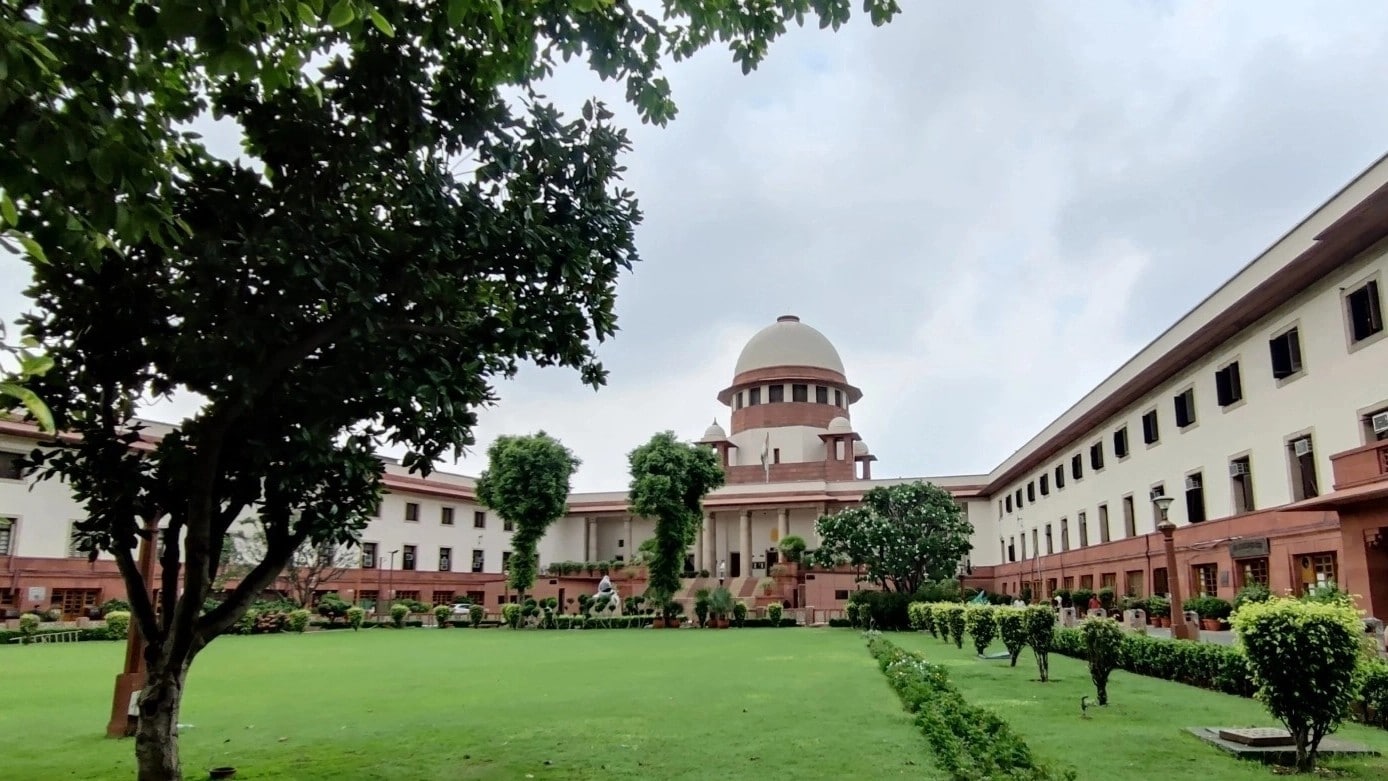
The Supreme Court on Thursday directed two Sahara India Pariwar companies—Sahara India Real Estate Corp. and Sahara Housing Investment Corp.—to deposit Rs 1,000 crore in the SEBI-Sahara Fund within the next 30 days.
Additionally, Sahara has 30 days to negotiate a joint venture or land development agreement for their Versova property in order to make up the remaining shortfall.
Notably, the top court had directed Sahara to pay up Rs 25,000 crore in the SEBI-Sahara fund. So far, Sahara has paid about Rs 15,000 crore. Therefore, the remaining shortfall is currently Rs 10,000 crore.
The court further stated that any Sahara group company selling other property in the interim must deposit the proceeds into the SEBI-Sahara fund.
The court will take up the case again after a month to make sure that Sahara has made good on the court's directions.
Appearing for Sahara, senior advocate Kapil Sibal maintained that the top court ruling from 2012 gives an impression that all of Sahara's depositors are fictitious. "Supreme Court has proceeded on the assumption that there are no depositors," he said.
Sahara had sent 127 trucks to SEBI containing all the documents of depositors, Sibal said. Twelve years have passed and they (SEBI) still hasn't conducted the verification exercise, he said.
You can't take a position after 12 years that we will not do our due diligence regarding the investors. I challenge them...You pick out random 1000 investors out of the docs we have submitted and I will produce them before the court.Senior Advocate Kapil Sibal
On the other hand, SEBI contended that Sahara's argument that it has already paid off nearly 95% of its depositors is entirely bogus.
Appearing for the market regulator, senior advocate Arvind Datar argued that Sahara hasn't been able to furnish bank statements of companies through which they have paid these investors.
Even if they were paying the investors through their sister concerns, Datar said that the law requires that if such a payment has been made, a related party indication should be there in the balance sheet of the said sister concerns.
"None of the sister concerns have reported these related party transactions in their balance sheets", Datar said.
In an August 2012 verdict, the top court had ordered two Sahara companies—Sahara India Real Estate Corp. and Sahara Housing Investment Corp.—to refund Rs 24,000 crore, along with 15% interest, to more than 2 crore small investors who had invested in their optionally fully convertible debentures between the years 2008 and 2011.
This order came after the regulator ruled that the funds were raised by the two firms in violation of its rules and regulations.
Sahara was eventually asked to deposit an estimated Rs 25,000 crore with SEBI for further refunds to investors, though the group has been maintaining that it had already refunded more than 95% of investors directly.
In 2020, SEBI filed a petition before the top court, pegging the amount that Sahara Group's two companies and Subrata Roy had to pay the regulator at Rs 62,000 crore.
Subrata Roy passed away in November last year. At the time, SEBI chief Madhabi Puri Buch had said that the case would continue even after the death of Roy, stating that the matter was about an entity's conduct and adding that it would continue regardless of whether an individual is there or not.
Notably, out of Rs 25,000 crore, Sahara has paid only Rs 15,000 crore as of now.

-
Navigating Energy Crossroads: S Jaishankar's Call For Diversified Supply Chains At G20 Ministerial Meeting

As geopolitical fault lines continue to test maritime trade routes and commodity flows, Jaishankar's message remains pertinent: true economic resilience requires open markets, protected transit lines, and a genuine commitment to multilateral cooperation rather than coercion.
-
Indians Are Travelling, But Not Every Journey Is A Holiday | The Week In Whys
Pilgrims, patients and working women are the real travellers, and the system hasn't quite caught up with them.
-
Getting To Work Costs Women More | The Reason Why
It is not just about women paying more than men. It is about women paying much more in cities than in villages.
-
AI Bias In Investing Cannot Be Eliminated, But It Can Be Governed
Framing is a particularly important example as identical financial information presented in terms of gains rather than losses can lead an LLM to reach a different assessment.
-
Joining The Dots | Dark Skies, Steady Diya: Why Hope Holds This Diwali
With war, a weak rupee and foreign outflows weighing on sentiment, policymakers at the NDTV World Summit and market veterans at NDTV Profit Ignite: Diwali Edition offered the same advice: stay invested and filter out the noise.
-
The Curious Case of Equitas Small Finance Bank And A CEO Who Quit For Stock
PN Vasudevan believes persistent investor concerns over a perceived conflict of interest had become a governance overhang on Equitas Small Finance Bank's stock, even as the lender improved profitability and asset quality.
-
Talking Points This Week: AI Cash Burn, A Tiger Comeback And An India That Still Finds Its Own Path
India is not immune to higher oil or tighter global liquidity, yet its earnings base is broader, its domestic policy levers are still available.
-
Foreign Investors Own Half Of HDFC Bank and ICICI Bank. An LTCG Cut Could Matter Most Here
Foreign portfolio investors have US$115 billion parked in HDFC Bank, ICICI Bank. If the government cuts long-term capital gains tax, Jefferies says returning foreign money could land here first.
-
'Never Seen This Level Of Negativity': Sandeep Tandon Says The Next Rally May Be Closer Than You Think
Veteran investor Sandeep Tandon says foreign selling is easing, large-caps are due a comeback and mid-caps are crowded, while he turns positive on gold, power and pharma this Diwali.
-
Indians Stay With Family, Not In Hotels | The Reason Why
India still lacks enough clean, reliable and affordable hotels for budget-conscious travellers.










