SEBI Puts A Stop To Practice Of Withdrawal of Credit Ratings
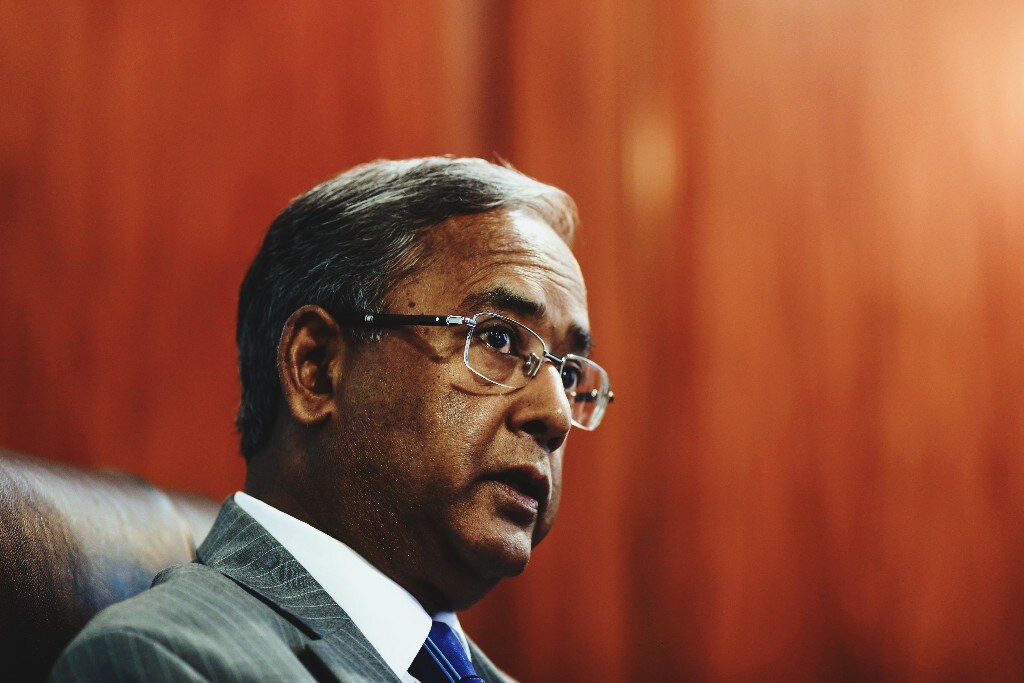
The Securities and Exchange Board of India has issued revised guidelines for credit rating agencies, increasing the transparency of the rating process and putting a stop to practices like the abrupt withdrawal of ratings.
The guidelines, SEBI said in a notification on its website on Tuesday, will have to be implemented by credit rating agencies within 60 days.
Once the new rules are in place, rating agencies will no longer be able to withdraw a rating - a practice which often leaves investors in the lurch. Rating agencies will have to continue rating debt instruments for their entire tenor even if the issuer does not cooperate, or in other words share information.
In the case of non-cooperation, “the CRA (credit rating agency) shall continue to review the instrument, on an ongoing basis throughout the instrument's lifetime, on the basis of best available information...” SEBI said.
In such a case, the rating agency will have to state “Issuer did not cooperate; Based on best available information” alongside the rating that is assigned.
To plug any loopholes, SEBI has said that if a company that has not cooperated with one rating agency, approaches another for a rating, the latter will have to include the instance of non-cooperation in its rating press release.
Another change is that rating agencies will now have to disclose the rating on companies and debt instruments even if these ratings are not accepted by the company in question. This, the regulator said, applies to non-listed companies as well.
India Ratings welcomes SEBI's guidelines on enhanced standards for credit rating agencies. The guidelines will bring in greater transparency and consistency in ratings process across the industry which will help investors and lenders to take an informed decision.Rajesh Patel, Chief Executive Officer, India Ratings and Research
There are currently six rating agencies registered with SEBI. They are ICRA Ltd., CRISIL Ltd., Fitch Ratings India Pvt Ltd., Credit Analysis & Research Ltd., Brickwork Ratings India Pvt Ltd., and SME Rating Agency of India Ltd.
SEBI had initiated a review of the rating process last year after sharp downgrades and abrupt withdrawal of ratings in cases like Amtek Auto hit investors.
Here are the highlights of the new norms laid down by the SEBI on the functioning of rating agencies:
Rating Criteria
Credit rating agencies will have to frame detailed rating criteria and disclose this on their websites. This, SEBI has stipulated, will have to include criteria on recognition of a default by a company and the repayment grace period.
Additionally, credit rating agencies will now also have to provide an explanation as to how it analyses the financial ratios of a company. The rating agency must also disclose how it assesses the support available to a company from its parent or the government.
The criteria for rating of banks and financial institutions and infrastructure companies must be disclosed separately.
These criteria will have to be revised on a regular basis, and a hyperlink of the previous criteria will have to be provided if any changes are made, the SEBI said.
On Rating Process
Rating agencies have been asked to disclose the general nature of compensation agreements with the companies it rates.
Rating agencies also need to disclose the policy for appeal by an issuer of a debt instrument against a certain rating. In addition, the agency must disclose what constitutes non-cooperation if it chooses to label an insurer as one which has been rated without cooperation.
Non-cooperation is generally when a company refuses to share certain information that is key to the rating process, said a spokesperson of a rating agency. Rating agencies use non-cooperation as a grounds for suspending the rating on some companies.
Functioning of the Rating Committees
The capital market regulator has stipulated that persons responsible for running the business of the rating agency cannot be part of the rating committee that decides the ratings. However the managing director or the chief executive officer of the rating company may be on the committee if a majority of its members are independent.
Also, the minutes of the meetings held by the rating committee must be maintained and signed by the chairperson, SEBI said.
The chairperson of a rating committee will also have to conduct an annual review of the ratings assigned by the committee or a sub committee. This review must especially be conducted in cases where there is a sharp change in the rating of a company or debt instrument.

-
Navigating Friction And Energy Realities: An Analysis Of Marco Rubio's October Visit To India

Occurring at a critical juncture marked by stalled trade negotiations and escalating geopolitical pressures over global energy supplies, the visit offers a profound window into modern US-India relations.
-
India Exports Capital. Why Not Export Trusteeship?
The big question, then, is whether India can build an institution that global borrowers, investors, banks, and lawyers can trust, even without an Indian connection.
-
France's Economy & Politics Are In Crisis | The Reason Why
Let's look at how the French economy and politics evolved under Nicolas Sarkozy, Franois Hollande and Emmanuel Macron.
-
You May Inherit The Business. You Must Earn Its Credibility.
Succession tests the founder's ability to share authority as much as it tests the next generation's readiness to assume it.
-
Signing Deals Is One Thing; Making Them Work Is Another | The Week In Whys
Sometimes, things don't turn out as planned. Indian companies have lost some bids to rivals, some projects won't produce until 2030.
-
FOMC Wall, PERM Suspension, Hospital Stocks | Talking Points This Week
A PERM suspension would directly affect green-card sponsorship rather than H-1B visas, so the near-term earnings impact could remain relatively limited. The key question is whether this marks a new phase in US scrutiny of Indian IT.
-
Everything, Everywhere, All At Once: Dalal Street's Week To Forget | Joining The Dots
Visa curbs, a Starlink spat and cancer drug caps: what connects this week's shocks for Indian markets
-
India Is Going Abroad For Critical Minerals. But It May Take Years To Pay Off | The Reason Why
Although India's steps are in the right direction, they remain modest compared with India's growing dependence.
-
When Everyone Has AI, What Gives You An Edge?
India's young workforce is entering an uncertain world of work where powerful AI tools are becoming widely accessible. The advantage will belong to those who combine deep expertise with digital fluency, and the distinctly human capabilities that technology cannot manufacture.
-
Wrong Labels, High Pesticide Residues Holding Back Agri Exports | The Reason Why
India needs stronger domestic food-safety and labelling standards, with best practices becoming part of everyday business for farmers, traders and food companies.










