SEBI Approves Appointment Of BSE's Ashishkumar Chauhan As New NSE Head
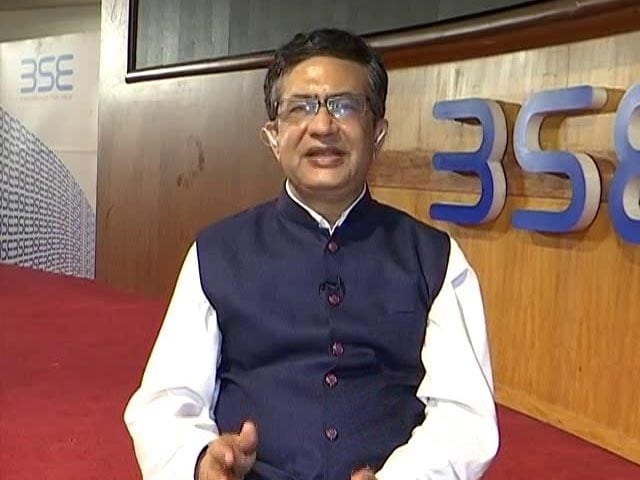
Ashishkumar Chauhan is set to become the new managing director and CEO of the National Stock Exchange as capital markets regulator SEBI has given its clearance for his appointment, the exchange said on Sunday.
Chauhan, who is currently the MD and CEO of BSE, will be appointed for a period of five years. The tenure of Chauhan, who has been with BSE since 2009, is scheduled to end in November.
He will be taking over the helm of NSE from Vikram Limaye, whose five-year term ended on Saturday. Limaye did not seek another tenure at the NSE despite being eligible for it.
In a statement, the NSE said that the Securities and Exchange Board of India (SEBI) has approved the name of Chauhan as the MD and CEO of NSE.
His appointment is subject to acceptance of the offer made to him and fulfilment of terms and conditions including approval from the shareholders of NSE, the statement noted.
In the interim, an internal executive committee has been constituted by the governing board of NSE for running the affairs of the company till the new MD and CEO assumes charge. The committee will be dissolved upon the new chief assuming office.
The internal executive committee comprises Yatrik Vin, Group CFO & Head Corporate Affairs, Priya Subbaraman, Chief Regulatory Officer, Somasundaram KS, Chief Enterprise Risk & Information Security Officer and Shiv Kumar Bhasin, Chief Technology & Operations Officer.
Chauhan, who is one of the founders of NSE, has the uphill task of guiding the exchange, which is facing the regulatory probe in a case pertaining to governance lapses at the bourse as well as in the co-location matter.
The co-location scam resulted in ouster and later arrest of its former MD and CEO Chitra Ramkrishna.
Also, all eyes are now on the BSE that who will get the top job at the exchange after the departure of Chauhan. BSE has already begun the search for a new MD and CEO.
Under the new market infrastructure institution (MII) rules, the head of an MII is allowed a maximum of two terms of five years each.
Chauhan, a technocrat from IIT and IIM, is considered the father of modern financial derivatives in India due to his work at NSE from 1993-2000. He is also the creator of Nifty index and was in charge of creating the first screen-based trading. He started his career as a banker with IDBI.
At BSE, Chauhan helped it become the world's fastest exchange with 6 microseconds response time, completed its IPO, revived its revenues, introduced mobile stock trading to India, diversified in new areas including currency, commodities and equity derivatives, SME, start-ups, mutual fund and insurance distribution, spot markets and power trading.
In addition, Chauhan has the experience of successfully handling the initial public offering (IPO) of BSE. This was one of the eligibility criteria NSE was looking in its next chief.
The NSE is planning to come out with its initial share-sale since long. However, the plan to go public derailed after the bourse got embroiled into colocation controversy, where certain brokers were allegedly given unfair access to the exchange data feeds over other members.
In March, NSE invited applications from candidates for the role of MD and CEO. The applications were invited from candidates having IPO experience for the top post job.

-
High US Salaries, No Green Card Certainty: The Financial Calculation Facing Indian H-1B Families

The suspension of PERM processing at eight technology employers does not cancel existing H-1B visas. What it does is force a question many Indian families have been avoiding: is the US salary worth tying your career and family plans to one employer?
-
Unhedged Position: Can India See An Indonesia-Style Time Correction?
The Nifty is trading below levels it first clocked in 2024. Is there, then, as I have suggested in the headline, potential that the current time correction drags on painfully for the next three-five, even ten years?
-
Navigating Friction And Energy Realities: An Analysis Of Marco Rubio's October Visit To India
Occurring at a critical juncture marked by stalled trade negotiations and escalating geopolitical pressures over global energy supplies, the visit offers a profound window into modern US-India relations.
-
India Exports Capital. Why Not Export Trusteeship?
The big question, then, is whether India can build an institution that global borrowers, investors, banks, and lawyers can trust, even without an Indian connection.
-
France's Economy & Politics Are In Crisis | The Reason Why
Let's look at how the French economy and politics evolved under Nicolas Sarkozy, Franois Hollande and Emmanuel Macron.
-
You May Inherit The Business. You Must Earn Its Credibility.
Succession tests the founder's ability to share authority as much as it tests the next generation's readiness to assume it.
-
Signing Deals Is One Thing; Making Them Work Is Another | The Week In Whys
Sometimes, things don't turn out as planned. Indian companies have lost some bids to rivals, some projects won't produce until 2030.
-
FOMC Wall, PERM Suspension, Hospital Stocks | Talking Points This Week
A PERM suspension would directly affect green-card sponsorship rather than H-1B visas, so the near-term earnings impact could remain relatively limited. The key question is whether this marks a new phase in US scrutiny of Indian IT.
-
Everything, Everywhere, All At Once: Dalal Street's Week To Forget | Joining The Dots
Visa curbs, a Starlink spat and cancer drug caps: what connects this week's shocks for Indian markets
-
India Is Going Abroad For Critical Minerals. But It May Take Years To Pay Off | The Reason Why
Although India's steps are in the right direction, they remain modest compared with India's growing dependence.









