SBI's Bhattacharya, ICICI's Kochhar Among Forbes' Most Powerful Women
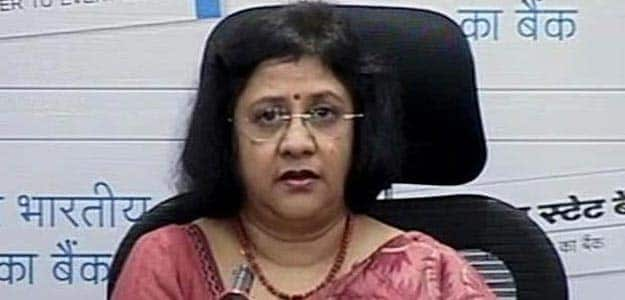
State Bank of India chairperson Arundhati Bhattacharya and ICICI Bank managing director Chanda Kochhar are among the five women from India who featured in Forbes' 100 most powerful women in the world, a list topped by German Chancellor Angela Merkel.
Ms Bhattacharya is ranked 36th on the list, while Ms Kochhar is placed at the 43rd spot.
Biocon founder Kiran Mazumdar-Shaw is ranked 92nd.
PepsiCo's India-born chief, Indra Nooyi, is 13th on the list while Cisco's chief technology and strategy officer, Padmasree Warrior, is ranked 71st on Forbes' "definitive annual guide to the extraordinary icons and leaders, groundbreakers and ceiling crashers who command the world stage".
Ms Merkel, who retained her No. 1 spot this year, has made it to the list 10 times out of the past 11 and 9 times at the No. 1 position.
She is followed by Federal Reserve Chair Janet Yellen, philanthropist Melinda Gates (3), former US Secretary of State Hillary Clinton (6), General Motors' first woman CEO Mary Barra (7), First Lady Michelle Obama (8) and Facebook COO Sheryl Sandberg (9).
Forbes said as the head of India's largest lender with about $380 billion (Rs 22,80,000 crore at 1 dollar = 60 rupees) in assets, Ms Bhattacharya holds "one of the most powerful positions" on the Asian subcontinent.
"Not only is she the first woman appointed to the position, but she is also the youngest at age 57," it said.
Ms Bhattacharya has served almost every function within the company, including foreign exchange, treasury, retail operations, human resources and investment banking.
"When the Indian economy showed signs of slowing, she voiced strong support for major reforms across agriculture, industry and the financial sector," the magazine said.
She's been an ally to women at SBI, introducing a two-year sabbatical policy for women employees for child or elder care and serving on a team to create blueprints for the first all-women bank, it added.
Ms Kochhar, 52, oversees almost $125 billion (Rs 7,50,000 crore) in assets as managing director and chief executive of ICICI Bank.
"She has been credited with leading a remarkable transformation at the firm, which experienced major setbacks after the 2008 financial crisis," Forbes said.
Her focus on "mobile banking" in rural areas to reach more clients has been praised as a model for low-cost expansion in a country with a burgeoning middle class.
Ms Kochhar has been an outspoken proponent of clearer banking laws from the government led by new Prime Minister Narendra Modi.
Ms Shaw, 61, is the founder of India's leading biotechnology enterprise and the country's wealthiest self-made woman with a net worth of $655 million (Rs 3,930 crore), Forbes said. Her company this year developed a treatment for breast cancer more affordable than anything previously on the market.
She is the first female chair of the Indian Institute of Management, Bangalore. An active philanthropist, she recently donated $5 million for a new research unit at her cancer hospital in Bangalore.
On Ms Nooyi, 58, the magazine said she once again exceeded analysts' expectations and the beverages giant delivered a good performance under her leadership.
"How'd she do it? Thinking outside the soda can. In 2013, PepsiCo products accounted for nine of the top 50 new food and beverage introductions in the US," Forbes said.
"She did not give way to recent pressure to split the company to slash costs and spur growth. Instead, she pledges to keep the company undivided while improving performance and cutting $5 billion in costs over five years starting in 2015," it said.
Ms Warrior, 53, has been called by the IT company's CEO John Chambers as "among the sharpest technology persons in the world" and her name frequently comes up as a most likely successor when he steps down in the next few years.
The IIT alumnus helped Cisco grow through partnerships and acquisitions, including nine in 2013 totalling $4.2 billion.
"Warrior still finds the time to mentor other women in the tech industry, stay in touch with her 1.46 million Twitter followers and for a nightly meditation routine," Forbes added.
"Increasingly it's not about knowing all the answers but asking the right questions and figuring out how to get the right answer," Forbes quoted her as saying.
Also on the list are media mogul Oprah Winfrey (14), singer Beyonce (17), Yahoo chief Marissa Mayer (18), Harvard president Drew Faust (33), Queen Elizabeth (35), Bangladesh Prime Minister Sheikh Hasina (47), Myanmar's pro-democracy leader Aung San Suu Kyi (61), and singer Lady Gaga (67).
On this year's Forbes list, 18 are newcomers, including Ms Yellen and US Ambassador to the UN Samantha Power.
Eight women who appeared on the inaugural list in 2004 are still on the list 10 years later. These include Gates, International Monetary Fund (IMF) head Christine Lagarde, Ms Clinton and Ms Nooyi.
Seven technology women made the top 25, including Facebook's Ms Sandberg, Yahoo's Ms Mayer and HP chief Meg Whitman.
There are 18 technologists, including newly-named CEO of YouTube Susan Wojcicki and cofounder of HTC Cher Wang, in the list.
More than half (58) of the women on the list are American, including immigrants from Belgium, Ireland and India. Asian and Southeast Asian citizens make the second strongest showing at 23.

-
High US Salaries, No Green Card Certainty: The Financial Calculation Facing Indian H-1B Families

The suspension of PERM processing at eight technology employers does not cancel existing H-1B visas. What it does is force a question many Indian families have been avoiding: is the US salary worth tying your career and family plans to one employer?
-
Swiggy vs Eternal: Food Delivery's Two Rivals Are No Longer In The Same Race
Eternal is building a private AI assistant, dark.ai. Swiggy is still working out how to make Instamart pay, with an operating loss of Rs 895 crore in the July-September quarter while Blinkit stayed profitable.
-
Where You Live Shapes How You Get To Work | The Reason Why
Two-wheelers are the most popular way to get to work in India, accounting for nearly 43% of workplace commutes.
-
Unhedged Position: Can India See An Indonesia-Style Time Correction?
The Nifty is trading below levels it first clocked in 2024. Is there, then, as I have suggested in the headline, potential that the current time correction drags on painfully for the next three-five, even ten years?
-
Navigating Friction And Energy Realities: An Analysis Of Marco Rubio's October Visit To India
Occurring at a critical juncture marked by stalled trade negotiations and escalating geopolitical pressures over global energy supplies, the visit offers a profound window into modern US-India relations.
-
India Exports Capital. Why Not Export Trusteeship?
The big question, then, is whether India can build an institution that global borrowers, investors, banks, and lawyers can trust, even without an Indian connection.
-
France's Economy & Politics Are In Crisis | The Reason Why
Let's look at how the French economy and politics evolved under Nicolas Sarkozy, Franois Hollande and Emmanuel Macron.
-
You May Inherit The Business. You Must Earn Its Credibility.
Succession tests the founder's ability to share authority as much as it tests the next generation's readiness to assume it.
-
Signing Deals Is One Thing; Making Them Work Is Another | The Week In Whys
Sometimes, things don't turn out as planned. Indian companies have lost some bids to rivals, some projects won't produce until 2030.
-
FOMC Wall, PERM Suspension, Hospital Stocks | Talking Points This Week
A PERM suspension would directly affect green-card sponsorship rather than H-1B visas, so the near-term earnings impact could remain relatively limited. The key question is whether this marks a new phase in US scrutiny of Indian IT.









