SBI Tops The List Of Fraudulent Activities, Maharashtra Leads
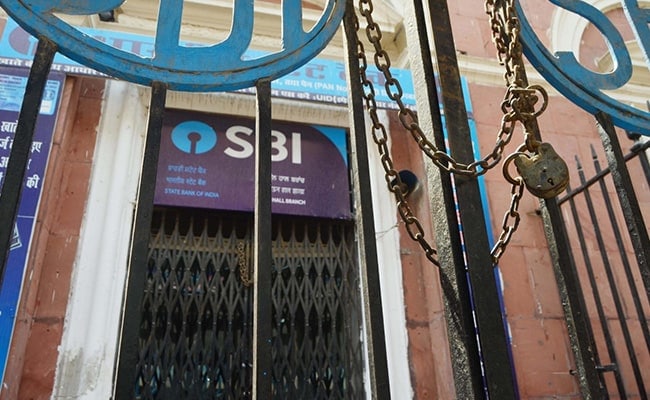
Banks and financial institutions always run the risk of being exposed to fraudulent activities and siphoning of funds through illegal means.
While several measures have been drafted by the Central Government as well as the Reserve Bank of India (RBI) to insulate banks from such activities, still, as per official estimates, incidents of frauds occur across banks and states.
In fact in some banks and states, such incidents have been reported in thousands.
In terms of fraudulent activities, the country's largest lender – State Bank of India (SBI) – topped the list with 14,431 cases, followed by Central Bank of India with 2,299, Union Bank of India with 1,184 fraud cases and Punjab National Bank with 1,040 fraud cases on the basis of occurrence.
These fraud cases were reported in these banks between 2018-19 and 2020-21, according to data compiled by the Finance Ministry.
In addition to this, as far as states are concerned, Maharashtra reported the maximum number of fraud cases in banks during the same period.
It reported a whopping 83,032 such cases, followed by Haryana (23,208 cases), Delhi (22,343), Tamil Nadu (20,328), Uttar Pradesh (14,841) and Karnataka with 11,878 cases.
While cases of fraud are often reported across banks and states, almost on a regular basis, there are several measures which financial institutions take to deter fraudsters and defaulters.
Let us have a look at some of these steps.
An online searchable database of frauds reported by banks, in the form of Central Fraud Registry, has been set up to enable timely identification, control and mitigation of fraud risk. Also banks carry out due diligence during the credit sanction process.
Government's framework for large value frauds in public sector banks mandates that an examination must be initiated for wilful default immediately upon reporting fraud to RBI. Also, a report on the borrower be sought from the Central Economic Intelligence Bureau in case an account turns into a non performing asset (NPA).
The Fugitive Economic Offenders Act, 2018 has been enacted which enables attachment of property of a fugitive economic offender, confiscation of such offender's property and disentitlement of the offender from defending any civil claim.
In addition to this, RBI has also issued a direction for classification and reporting of frauds by commercial banks and select financial institutions.
This is meant to direct the focus of banks on the aspects relating to prevention, early detection, prompt reporting to RBI and the investigating agencies and timely initiation of the staff accountability proceedings.

-
High US Salaries, No Green Card Certainty: The Financial Calculation Facing Indian H-1B Families

The suspension of PERM processing at eight technology employers does not cancel existing H-1B visas. What it does is force a question many Indian families have been avoiding: is the US salary worth tying your career and family plans to one employer?
-
Unhedged Position: Can India See An Indonesia-Style Time Correction?
The Nifty is trading below levels it first clocked in 2024. Is there, then, as I have suggested in the headline, potential that the current time correction drags on painfully for the next three-five, even ten years?
-
Navigating Friction And Energy Realities: An Analysis Of Marco Rubio's October Visit To India
Occurring at a critical juncture marked by stalled trade negotiations and escalating geopolitical pressures over global energy supplies, the visit offers a profound window into modern US-India relations.
-
India Exports Capital. Why Not Export Trusteeship?
The big question, then, is whether India can build an institution that global borrowers, investors, banks, and lawyers can trust, even without an Indian connection.
-
France's Economy & Politics Are In Crisis | The Reason Why
Let's look at how the French economy and politics evolved under Nicolas Sarkozy, Franois Hollande and Emmanuel Macron.
-
You May Inherit The Business. You Must Earn Its Credibility.
Succession tests the founder's ability to share authority as much as it tests the next generation's readiness to assume it.
-
Signing Deals Is One Thing; Making Them Work Is Another | The Week In Whys
Sometimes, things don't turn out as planned. Indian companies have lost some bids to rivals, some projects won't produce until 2030.
-
FOMC Wall, PERM Suspension, Hospital Stocks | Talking Points This Week
A PERM suspension would directly affect green-card sponsorship rather than H-1B visas, so the near-term earnings impact could remain relatively limited. The key question is whether this marks a new phase in US scrutiny of Indian IT.
-
Everything, Everywhere, All At Once: Dalal Street's Week To Forget | Joining The Dots
Visa curbs, a Starlink spat and cancer drug caps: what connects this week's shocks for Indian markets
-
India Is Going Abroad For Critical Minerals. But It May Take Years To Pay Off | The Reason Why
Although India's steps are in the right direction, they remain modest compared with India's growing dependence.









