Saving Schemes With No Tax Benefits But Good Returns: RDs Vs MIS Vs KVPs Vs SIPs
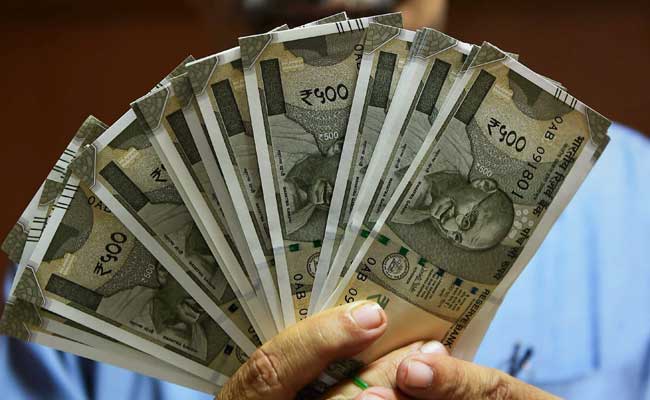
When planning your investments you should consider investing in saving schemes that may not be offering you income tax benefits but provide decent interest rates. Recurring deposits, post office monthly investment scheme, kisan vikas patra (KVP) and systematic investment plans in equity mutual funds are some of such investment options. Financial planners suggest that cutting down on the tax outgo should be just one of the goals of investment - the target should be to increase your savings and add on to your wealth. This can be achieved by investing in the above-mentioned saving schemes.
Given below is a comparison among recurring deposits, post office monthly investment schemes, kisan vikas patra (KVP), and systematic investment plans:
Recurring deposits (RDs): Recurring deposits require regular monthly contributions from customers. RDs help you build your wealth via your savings. One can choose between six months to 10 years. Interest earned is added to the income and taxed at applicable tax slabs.
Post office monthly investment scheme account: This scheme provides a similar option like RD, where one can invest small amounts every month for a slightly longer tenor of five years. There is a maximum cap of Rs. 9 lakh under joint ownership and Rs 4.5 lakh under single ownership. The interest rate is set each quarter and is payable monthly. The product, however, does not provide any tax benefits but is apt for customers looking at capital protection and moderate returns, said Puneet Kapoor, Sr. EVP, Kotak Mahindra Bank.
Kisan Vikas Patra (KVP): KVP certificates require a minimum investment of Rs 1,000 and in multiples of Rs 1,000. There is no maximum limit on the amount that can be invested in these certificates. KVPs fetch you an interest rate of 7.3 per cent, which is compounded annually, according to indiapost.gov.in. The amount invested doubles in 118months (9 years and 10months).
Systematic Investment Plans: "While the word equity rings a bell, investors need to understand that a disciplined SIP of a small amount in equity mutual funds significantly reduces the risk and can contribute to tax efficient superior wealth creation. For tenors greater than 10 years (children's higher education / retirement planning), returns in SIPs of good equity mutual funds have historically proven to be unparalleled," said Mr Kapoor. (Also Read: Mutual Fund Investment: Don't Confuse ELSS With SIP, Here's Why)
The key reason to invest in mutual funds is liquidity, says Lakshmi Iyer, CIO (Debt)- Head- Products, Kotak Mutual Fund.
"Diversification is the other benefit which cannot be undermined while making investment decisions. Also, MFs offer the entire suite of asset class offerings ranging from fixed income to equities to hybrids, gold, international funds etc. Hence, it tends to act as a 'one stop shop' for making financial investments," she added.
So every time you want to make investments, your prime focus should be to maximise your returns. However, one will be made to pay income tax on the income accruing on saving instruments. the quantum of income tax will depend on the tax slab one falls under. For instance, if your annual taxable income is above Rs 5 lakh, but below Rs 10 lakh, your tax liability on the income-bearing saving instruments will stand at 20 per cent (as per the tax slab). Whereas someone whose taxable income ranges between Rs 2.5 lakh and Rs 5 lakh, the tax liability will stand at 5 per cent by virtue of falling under the low tax bracket. So, your net savings on these savings schemes might rise (lower tax liability) or fall (higher tax liability) depending on the tax bracket you belong to.

-
Unhedged Position: Can India See An Indonesia-Style Time Correction?

The Nifty is trading below levels it first clocked in 2024. Is there, then, as I have suggested in the headline, potential that the current time correction drags on painfully for the next three-five, even ten years?
-
Navigating Friction And Energy Realities: An Analysis Of Marco Rubio's October Visit To India
Occurring at a critical juncture marked by stalled trade negotiations and escalating geopolitical pressures over global energy supplies, the visit offers a profound window into modern US-India relations.
-
India Exports Capital. Why Not Export Trusteeship?
The big question, then, is whether India can build an institution that global borrowers, investors, banks, and lawyers can trust, even without an Indian connection.
-
France's Economy & Politics Are In Crisis | The Reason Why
Let's look at how the French economy and politics evolved under Nicolas Sarkozy, Franois Hollande and Emmanuel Macron.
-
You May Inherit The Business. You Must Earn Its Credibility.
Succession tests the founder's ability to share authority as much as it tests the next generation's readiness to assume it.
-
Signing Deals Is One Thing; Making Them Work Is Another | The Week In Whys
Sometimes, things don't turn out as planned. Indian companies have lost some bids to rivals, some projects won't produce until 2030.
-
FOMC Wall, PERM Suspension, Hospital Stocks | Talking Points This Week
A PERM suspension would directly affect green-card sponsorship rather than H-1B visas, so the near-term earnings impact could remain relatively limited. The key question is whether this marks a new phase in US scrutiny of Indian IT.
-
Everything, Everywhere, All At Once: Dalal Street's Week To Forget | Joining The Dots
Visa curbs, a Starlink spat and cancer drug caps: what connects this week's shocks for Indian markets
-
India Is Going Abroad For Critical Minerals. But It May Take Years To Pay Off | The Reason Why
Although India's steps are in the right direction, they remain modest compared with India's growing dependence.
-
When Everyone Has AI, What Gives You An Edge?
India's young workforce is entering an uncertain world of work where powerful AI tools are becoming widely accessible. The advantage will belong to those who combine deep expertise with digital fluency, and the distinctly human capabilities that technology cannot manufacture.









