Satya Nadella Says No Gender Pay Gap at Microsoft
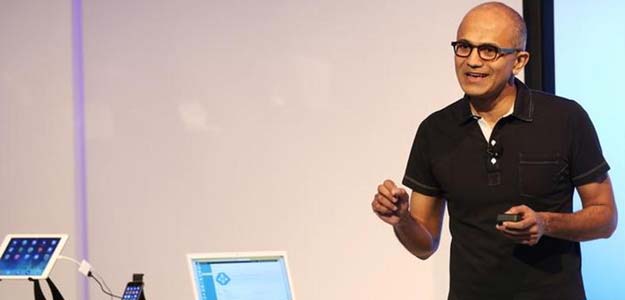
San Francisco: Satya Nadella, the Microsoft Corp Chief Executive who ignited a firestorm of protest earlier this month by suggesting women should not ask for pay raises, said on Monday that men and women are paid equally at his company.
Mr Nadella's statement, made at a presentation on cloud computing in San Francisco, runs counter to some limited data made public by employees, but is unverifiable given that Microsoft does not release details of its pay structure.
"I checked that it is something that we are enforcing," said Mr Nadella, when asked about equal pay. "We are in fact in good shape. Men and women get paid equally at Microsoft."
Mr Nadella said he was "humbled" by his experience on October 9, when he told a conference celebrating women in computing that women should not ask for pay raises but trust in "karma" to give them the salary they deserve. The remarks generated negative headlines and widespread criticism on social media.
Mr Nadella's latest comment is not backed up by numbers from job site Glassdoor, which show that men tend to earn more doing a similar job than women at Microsoft, although the data is based on a very small sample size of employees who choose to give pay figures to Glassdoor.
A male Microsoft senior software development engineer makes about $137,000 per year, according to Glassdoor, compared with about $129,000 for women. Only 29 per cent of Microsoft's more than 100,000 employees are female, according to figures recently released by the company.
Data from the Bureau of Labor Statistics shows that men earn 24 per cent more, on average, than women in the tech sector. The American Association of University Women found that women were paid 78 per cent of what equally qualified men received across the board last year.
However, one tech hiring site believes women are paid on a par with men. According to Dice, last year the average tech salary for men was $89,468 while women earned $81,214.
"On face value, it appears there's a gap, however when we compare for equal levels of experience, education and parallel job titles, the compensation gap disappears," said Courtney Chamberlain, a spokeswoman at Dice.
Maria Klawe, a Microsoft board member who has pushed the company to hire and promote more women, has said that the issue of equal pay is now likely to be discussed in Microsoft's boardroom.
Mr Nadella acknowledged on Monday that there was room for improvement on the issue within Microsoft. "We have made some progress," he said. "We have a lot more to do."
Copyright: Thomson Reuters 2014

-
Ten Things I Learnt This Samvat

Patience can be a trap. Cheap stocks can stay cheap. Leverage can wipe you out. What did Samvat 2082 teach us? Niraj Shah writes on 10 lessons from the year gone by.
-
Talking Points This Week: Tech Nerves, FII Buying, And A Faraway Banking Shock
The global markets are not shining this Diwali. The exception in the large markets is, India.
-
Midterm Rally Lasted A Day. The Hard Reality Of A Divided US May Last Two Years | Opinion
Between a contested AI boom, a debt ceiling that arrives in 2027 and a president with every incentive to act alone, the next two years may prove more volatile than the first day's rally suggests.
-
Blue Wave Will Derail the AI Trade but Won't Dismantle the AI Era | Unhedged Position
The Democrats' sweep of the US Congress will see politics collide with economic forces both over the long and short term.
-
It's Time To Take The GST Council's Bet On Trust Global
Payment records can prove India's services exports, and clear, proportionate rules can bring foreign digital sellers into the tax net.
-
Opinion | India at 38: From Innovation Overperformer to Innovation Powerhouse
India now has 453 VC-backed deep science startups, 18 of them late-stage, after 117 percent growth since 2020. Laurus Labs, at USD 9.3 billion, is the most valuable deep science company in any middle-income economy outside China.
-
Navigating Energy Crossroads: S Jaishankar's Call For Diversified Supply Chains At G20 Ministerial Meeting
As geopolitical fault lines continue to test maritime trade routes and commodity flows, Jaishankar's message remains pertinent: true economic resilience requires open markets, protected transit lines, and a genuine commitment to multilateral cooperation rather than coercion.
-
Indians Are Travelling, But Not Every Journey Is A Holiday | The Week In Whys
Pilgrims, patients and working women are the real travellers, and the system hasn't quite caught up with them.
-
Getting To Work Costs Women More | The Reason Why
It is not just about women paying more than men. It is about women paying much more in cities than in villages.









