SAT Upholds SEBI's Interim Order Against Zee's Punit Goenka, Subhash Chandra
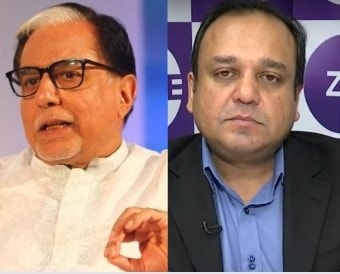
The Securities Appellate Tribunal has upheld market regulator SEBI's interim order against Zee Entertainment Enterprises Ltd.'s Subhash Chandra and Punit Goenka. The tribunal directed Chandra and Goenka to file a response to SEBI's order within two weeks, and also asked the regulator to fix a date for hearing within a week.
To remove any bias, SEBI is also directed to appoint another whole-time member who would hear the objections of parties. This because the whole time member who passed the interim order was also part of the settlement application which was rejected by the regulator.
The appellate tribunal had reserved its order on June 27.
SEBI had barred Goenka and Chandra from holding any directorial positions in any listed company on June 12, following allegations of fund diversion. According to the regulator, they siphoned Rs 200 crore of Zee's fixed deposit with Yes Bank Ltd. for the benefit of Zee's group companies. While being probed about this, Zee submitted that it had received the money back.
But the regulator alleged that the funds had originated from Zee's account. This, according to SEBI, was part of an elaborate scheme orchestrated by Chandra and Goenka to divert funds from Zee.
Both Goenka and Chandra approached the appellate tribunal on June 13.
Arguing for Goenka, Senior Advocate Janak Dwarkadas had questioned the urgency with which the order was passed without even giving him an opportunity to be heard. According to him, the order violates Goenka's right to natural justice and also his right to reputation—a right zealously upheld by the apex court of this country.
Chandra's counsel, Advocate Somasekhar Sundaresan, too, questioned the hastiness with which the order was passed. To him, the regulator has barred Chandra from holding a position without even checking whether he holds one or not. Chandra ceased to be the Chairman of Zee in August 2020.
However, according to SEBI, both Goenka and Chandra should have exercised their opportunity to defend before approaching the tribunal. They must demonstrate the genuineness of each transaction entered into with the associate companies to prove their innocence and can't get away with proving just one, the regulator had argued.
In its detailed order, the tribunal found merit in the arguments put forward by SEBI.
According to it, there is no violation of natural justice in the instant case, as the opportunity to be heard doesn't always have to be pre-decisional. It could be post-decisional where there is an imminent act to be prevented, such as the alleged diversion of funds in the present case.
The tribunal also pointed out that there was no delay on SEBI's part in passing the interim order as the information relating to the alleged diversion of funds undertaken in 2019–2020 only surfaced in 2023.
There is nothing on record to indicate that the details of the repayment made by the related entities were made known to the SEBI or Stock Exchanges in 2019-20.SAT Order
The tribunal also refused to entertain the argument of the promoters that the order is erroneous as it's solely based on the bank statements. The order, according to the tribunal, was based on objective facts indicating diversion of funds.
Moreover, as the parties have failed to provide any evidence to show that such an order is perverse, "we do not find any perversity, irregularity, illegality, or irrationality in the passing of the impugned order", the tribunal held.
Watch the full video here:

-
Talking Points This Week: Tech Nerves, FII Buying, And A Faraway Banking Shock

The global markets are not shining this Diwali. The exception in the large markets is, India.
-
Midterm Rally Lasted A Day. The Hard Reality Of A Divided US May Last Two Years | Opinion
Between a contested AI boom, a debt ceiling that arrives in 2027 and a president with every incentive to act alone, the next two years may prove more volatile than the first day's rally suggests.
-
Blue Wave Will Derail the AI Trade but Won't Dismantle the AI Era | Unhedged Position
The Democrats' sweep of the US Congress will see politics collide with economic forces both over the long and short term.
-
It's Time To Take The GST Council's Bet On Trust Global
Payment records can prove India's services exports, and clear, proportionate rules can bring foreign digital sellers into the tax net.
-
Opinion | India at 38: From Innovation Overperformer to Innovation Powerhouse
India now has 453 VC-backed deep science startups, 18 of them late-stage, after 117 percent growth since 2020. Laurus Labs, at USD 9.3 billion, is the most valuable deep science company in any middle-income economy outside China.
-
Navigating Energy Crossroads: S Jaishankar's Call For Diversified Supply Chains At G20 Ministerial Meeting
As geopolitical fault lines continue to test maritime trade routes and commodity flows, Jaishankar's message remains pertinent: true economic resilience requires open markets, protected transit lines, and a genuine commitment to multilateral cooperation rather than coercion.
-
Indians Are Travelling, But Not Every Journey Is A Holiday | The Week In Whys
Pilgrims, patients and working women are the real travellers, and the system hasn't quite caught up with them.
-
Getting To Work Costs Women More | The Reason Why
It is not just about women paying more than men. It is about women paying much more in cities than in villages.
-
AI Bias In Investing Cannot Be Eliminated, But It Can Be Governed
Framing is a particularly important example as identical financial information presented in terms of gains rather than losses can lead an LLM to reach a different assessment.