Samsung Profit Sinks 32% As Memory Chip Downturn Worsens
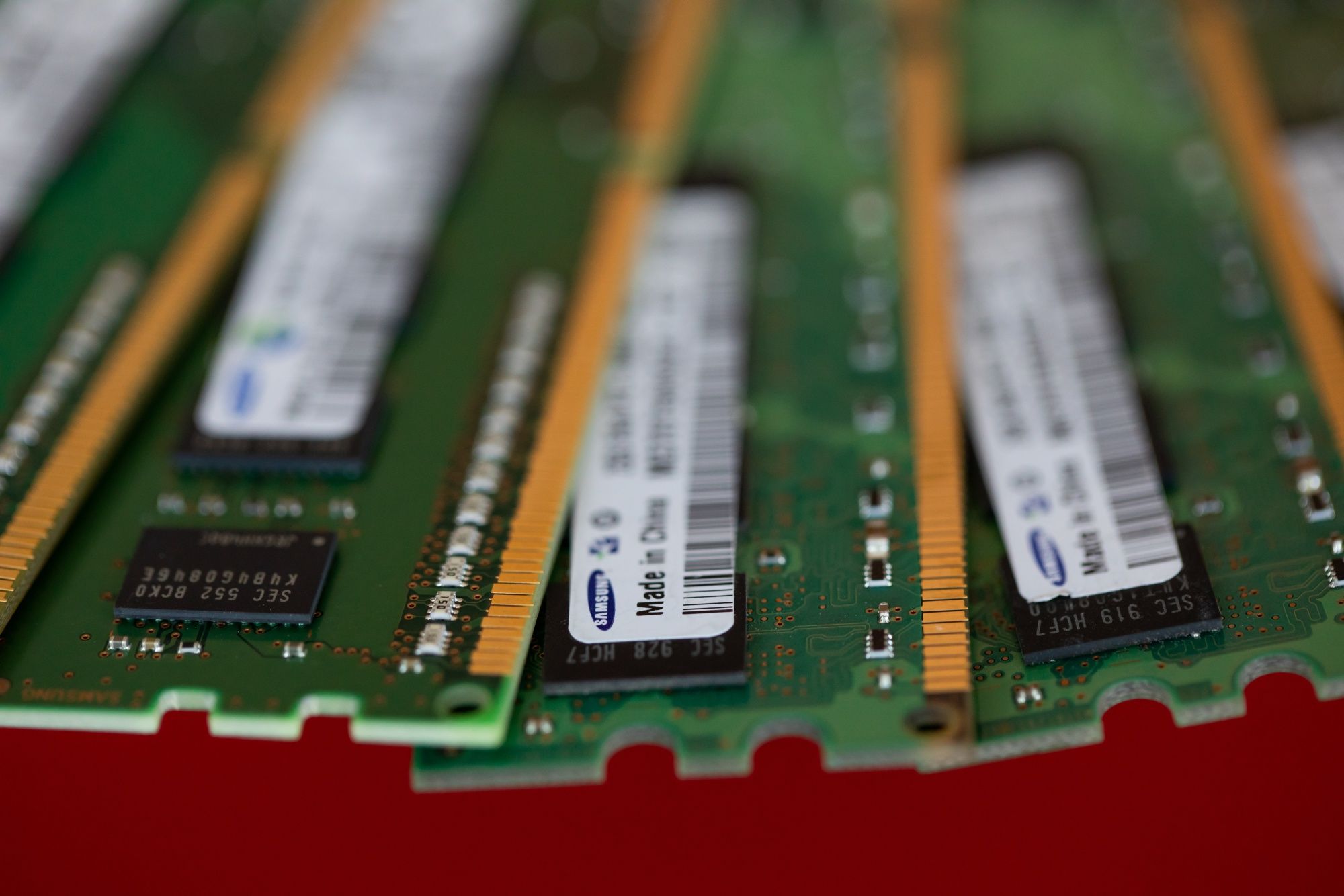
(Bloomberg) -- Samsung Electronics Co. reported its first profit drop since 2019, underscoring the depth of a global PC and memory chip downturn.
Operating profit fell by 32% to 10.8 trillion won ($7.7 billion) for the three months ended September, South Korea's largest company said Friday in a statement. Analysts had estimated 12.1 trillion won on average. Sales also missed estimates, coming in at 76 trillion won. Samsung will provide net income and details of divisional performance with its full report at the end of this month.

Global memory chipmakers warned in recent weeks that they are facing a tougher market as inventories build up and orders are being cut by data center as well as consumer tech clients after demand for PCs and smartphones weakened further than expected. Micron Technology Inc. and Kioxia Holdings Corp. are cutting output to try and rebalance supply and avert a price crash.
Shortly before Samsung's results, US processor and graphics chip maker Advanced Micro Devices Inc. also missed estimates with its third-quarter sales figures, which came in $1 billion shy of its own forecast. “Macroeconomic conditions drove lower than expected PC demand and a significant inventory correction,” AMD Chief Executive Officer Lisa Su said.
Samsung shares fell by as much as 2% in Seoul on Friday after the news.

“This downcycle is not merely driven by typical supply and demand dynamics, it's different from the past cycles due to geopolitical risks,” said Heo Pil-Seok, chief executive officer at Midas International Asset Management in Seoul. “The US government's exports controls would further limit IT companies' sales in China and a large chunk of demand for chips will be weakened. If AMD, Nvidia can't sell their chips in China, memory makers' earnings will deteriorate further.”
South Korea, home to the world's two largest memory chipmakers, reported a decline in chip output in August for the first time in more than four years, according to Statistics Korea data. Samsung compatriot SK Hynix Inc. said during its last earnings call that a significant adjustment to its capital expenditure next year was “inevitable.”

The sudden memory market crash comes after a series of macroeconomic shocks ranging from Russia's invasion of Ukraine to soaring inflation and gas prices along with US Fed rate hikes. Consumer sentiment has rapidly deteriorated and memory buyers like PC manufacturers have reduced orders and are using their existing stockpiles.
While electronics demand has crumbled this year, Morgan Stanley upgraded the semiconductor sector at the start of this week, which pushed Samsung and Hynix's share prices up on the expectation of a market rebound in the latter half of 2023.
TSMC, Chipmakers Rally After Morgan Stanley Calls a Recovery
Still, Samsung's chip business head Kyung Kyehyun has said the memory market's unlikely to find momentum for a recovery throughout next year. Kyung told employees at an internal event that Samsung cut its guidance for chip sales in the second half of this year by 32% compared to its forecast in April, according to the Korea Economic Daily.
“Due to the extremely sluggish demand, customers began to reduce inventory from the end of 2Q22,” said Song Myung-sup, an analyst at HI Investment & Securities, noting that DRAM and NAND prices fell by 15% in the third quarter. “With the exception of some big tech companies, clients are slashing their chip orders despite sharp price cuts.”
Samsung Warns Chip Industry Is Headed for Tough Close to 2022
(Updates with share price and AMD earnings)
More stories like this are available on bloomberg.com
©2022 Bloomberg L.P.

-
Love, Sex Aur Dhokha: The Audacious Plot To Spy On Jensen Huang

A Taipei dinner, a Singapore chip buyer and a suspected Chinese asset: inside the alleged spy operation that got close to NVIDIA's Jensen Huang.
-
Ten Things I Learnt This Samvat
Patience can be a trap. Cheap stocks can stay cheap. Leverage can wipe you out. What did Samvat 2082 teach us? Niraj Shah writes on 10 lessons from the year gone by.
-
Talking Points This Week: Tech Nerves, FII Buying, And A Faraway Banking Shock
The global markets are not shining this Diwali. The exception in the large markets is, India.
-
Midterm Rally Lasted A Day. The Hard Reality Of A Divided US May Last Two Years | Opinion
Between a contested AI boom, a debt ceiling that arrives in 2027 and a president with every incentive to act alone, the next two years may prove more volatile than the first day's rally suggests.
-
Blue Wave Will Derail the AI Trade but Won't Dismantle the AI Era | Unhedged Position
The Democrats' sweep of the US Congress will see politics collide with economic forces both over the long and short term.
-
It's Time To Take The GST Council's Bet On Trust Global
Payment records can prove India's services exports, and clear, proportionate rules can bring foreign digital sellers into the tax net.
-
Opinion | India at 38: From Innovation Overperformer to Innovation Powerhouse
India now has 453 VC-backed deep science startups, 18 of them late-stage, after 117 percent growth since 2020. Laurus Labs, at USD 9.3 billion, is the most valuable deep science company in any middle-income economy outside China.
-
Navigating Energy Crossroads: S Jaishankar's Call For Diversified Supply Chains At G20 Ministerial Meeting
As geopolitical fault lines continue to test maritime trade routes and commodity flows, Jaishankar's message remains pertinent: true economic resilience requires open markets, protected transit lines, and a genuine commitment to multilateral cooperation rather than coercion.
-
Indians Are Travelling, But Not Every Journey Is A Holiday | The Week In Whys
Pilgrims, patients and working women are the real travellers, and the system hasn't quite caught up with them.









