Samsung, Intel, Dell Team Up on Standards for Connected Gadgets

Samsung Electronics, Intel Corp and Dell have joined to establish standard ways for household gadgets like thermostats and light bulbs to talk to each other, at odds with a framework backed by Qualcomm, LG Electronics and other companies.
The new Open Interconnect Consortium, like the Qualcomm-supported AllSeen Alliance, aims to establish how smart devices work together in a trend increasingly called the Internet of Things.
Manufacturers are rolling out growing numbers of internet-connected burglar alarms, televisions and light switches. But like the early days of video cassette recorders, current smart home products are often incompatible with each other.
The new consortium, which also includes chipmakers Broadcom and Atmel, was announced in a news release late on Monday.
Doug Fisher, general manager of Intel's Software and Services Group, told Reuters that the framework to be developed by the new consortium would address security and other issues not adequately handled by the AllSeen group.
The potential emergence of smart household products made by manufacturers using two sets of incompatible standards would be incidental, he said.
"We're not out to create that. We just think the industry has spoken and there's this approach that's needed," Mr Fisher said, adding, "We're certainly welcoming others to participate."
Last week, Microsoft became the 51st member of the AllSeen Alliance, which also includes Sharp Corp and other consumer electronics manufacturers.
Rob Chandhok, senior vice president of Qualcomm Technologies Inc, compared the two competing standards groups to walled-off online services in the early 1990s before widespread internet use.
"It's better for us to have an industry-wide shared platform than to be divided," Mr Chandhok said. "I don't want to get to a 'Prodigy and CompuServe' of the Internet of Things."
Technology heavyweights Apple and Google are also pursuing their own ways of interconnecting household devices.
Apple, known for strictly controlling how other companies' products interact with its own, in June announced HomeKit, which will integrate control of devices like lights and thermostats.
Google's Nest has also partnered with companies including Whirlpool Corp and light bulb maker LIFX to integrate their products with its thermostats and smoke detectors.
Copyright: Thomson Reuters 2014

-
Why Amazon And Flipkart Are Struggling To Beat Meesho In India's Smaller Cities

With 274 million users and lowest-cost logistics, Meesho is defending its value commerce crown against giants like Amazon and Flipkart.
-
Why Prashant Jain's 3P Investment Managers Bought 2.5% Stake In This Healthcare Firm
After slowing acquisitions, Entero now has the opportunity to extract greater value from the network. The key, however, will be execution.
-
Taxing A Promise: The Unsettled Story Of GST On Corporate Guarantees
These concerns are particularly relevant for businesses in the infrastructure, real estate, power and EPC sectors, where guarantees run for several years over the duration of the project and involve substantial amounts.
-
Who Will Care When Women Work? That Is The Wrong Question
The debate on women and work becomes strangely patronising when even our most enlightened elites assume that care is a woman's natural duty.
-
AI Disruption Is Exponential, Businesses Need A Margin Of Safety: HDFC AMC's Navneet Munot
According to Munot, one of the biggest challenges in assessing AI's impact is that the pace of change is exponential rather than linear.
-
The AI Race Is Bigger Than AI Models | The Week In Whys
The AI race and the humanoid race may look like two different technology stories. But underneath, they are increasingly about the same thing: who controls the ecosystem needed to build the technology.
-
FCNR Deposits Beat Estimates, RBI To Pull Out Rs 6-7 Lakh Crore: Pranjul Bhandari
HSBC's chief India economist says the central bank must drain up to Rs 7 lakh crore of surplus liquidity within a fortnight, either through a cash reserve ratio hike or dollar sales, as Foreign Currency Non-Resident (Bank) deposits far outpace expectations
-
Joining The Dots | CAS Turmoil, The Large-Cap Debate And Zee's Almost Rs 22,000-Crore Haircut
Time bends on Dalal Street, Dylan's lyrics haunt the large-cap debate, and Zee's promoter picks up the bargain of the year.
-
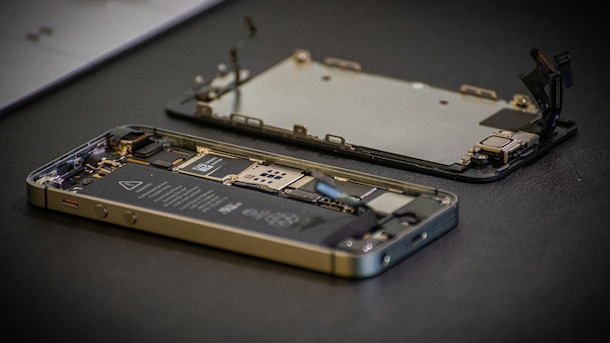
India Wants To Be Vietnam; Vietnam Wants To Be China | The Reason Why
India may become a global hub for smartphones. It could also make more camera modules, batteries and semiconductor packaging over the years.