Sam Bankman-Fried, 29, Heads Crypto Exchange Worth Billions
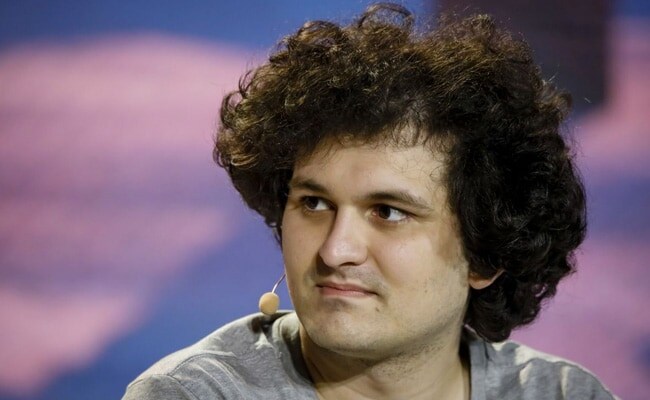
Sam Bankman-Fried donned a suit and tie this week, abandoning his preferred hoodie and dark T-shirt for a hearing before US Senators.
The lawmakers had summoned the 29-year-old multi-billionaire on Wednesday to discuss the regulation of digital assets in his capacity as co-founder and CEO of the cryptocurrency exchange platform FTX.
Less than three years after its founding, the company was just valued at $32 billion, a capitalization that puts it close to giants Coinbase and Binance.
The personal fortune of Mr Bankman-Fried, a vegan who sleeps four hours per night and who has become a public face of crypto money, is estimated at nearly $25 billion by Forbes magazine -- placing him among the top 70 richest people on the planet.
"It's been pretty bipartisan," the young boss told AFP of the hearing. "A lot of Senators are really interested in learning more about the space and learning how there can be more federal oversight."
From Hong Kong to the Bahamas
Son of Stanford Law School professors and a graduate of the elite Massachusetts Institute of Technology (MIT), Mr Bankman-Fried worked as a broker on Wall Street before turning to cryptocurrencies in 2017.
He observed large variations in price between the online platforms where people can buy and sell crypto money and took advantage of the gaps by buying and selling digital assets at very high frequency.
The difference in prices in 2018 was 5-25 percent between American and Japanese exchanges, he said, which meant that simply by moving assets from one platform to another he could make money.
"There was enormous demand for crypto coming out of Japan, and not nearly as many liquidity providers," he added.
The young entrepreneur created a cryptocurrency investment fund, Alameda Research, moved to Hong Kong and then launched FTX with Gary Wang, who is now the platform's chief technology officer.
Mr Bankman-Fried now lives in the Bahamas, where taxes are almost nil, and the platform has its headquarters in the Caribbean nation too.
He defends his choice of location by the fact that it is "one of the few countries that has a comprehensive licensing regime for cryptocurrencies and cryptocurrency exchanges."
In media appearances and on Twitter, where he goes by SBF, Mr Bankman-Fried has been a vocal advocate for smoother access to the crypto market for the general public, particularly in the United States.
"It would be healthy for everyone involved if there was a regulatory pathway to getting licensed and bringing federal oversight," he said.
A subsidiary for American clients, FTX US, opened in 2020.
The success of FTX has enabled the platform to forge prestigious partnerships, including with the newly retired American football legend Tom Brady and his wife, the Brazilian ex-model Gisele Bundchen.
The company will also run an ad during the American football finale Super Bowl on Sunday, promising to give away a number of bitcoins that will be determined by what time the commercial airs.
'Effective altruism'
Mr Bankman-Fried, who said he maintains a spartan lifestyle, identifies with the beliefs of "effective altruism," a movement which aims to use careful analysis to figure out how to use one's resources to help others the most.
"It's not just like, how do you do some good with your life, but if you want to do as much good as possible what do you focus on," said Mr Bankman-Fried, who has pledged to give away almost all of the wealth he will have made.
He estimates that he has already donated between $50-100 million to causes such as the fight for animal welfare, combatting neglected tropical diseases and reducing global warming.
Cryptocurrencies have faced withering criticism over the argument they contribute to Earth's catastrophic warming because their extraction process requires so much electricity, which can come from fossil fuels.
Mr Bankman-Fried said he believes the process of creating the cryptocurrency as well as the transactions will increasingly be done using renewable energy.
Aware of the staggering sums of money he's raising, Mr Bankman-Fried, who was among the largest donors to US President Joe Biden's 2020 campaign, has no problem with the amounts being made public.
"If you're trying to have a lot of positive impact in the world, it's probably going to be things that people end up seeing," he added.

-
The Economic Imperative: Analysing The Material Driving Force Behind India-Canada Strategic Reset

This economic complementarity is further reinforced by deep institutional investment ties and talent mobility, which form the bedrock of the bilateral framework.
-
Medicine Pricing: Where Must Profit Stop?
India must confront excessive margins, hidden incentives and regulatory gaps that threaten the integrity of medicine.
-
Why Amazon And Flipkart Are Struggling To Beat Meesho In India's Smaller Cities
With 274 million users and lowest-cost logistics, Meesho is defending its value commerce crown against giants like Amazon and Flipkart.
-
High US Salaries, No Green Card Certainty: The Financial Calculation Facing Indian H-1B Families
The suspension of PERM processing at eight technology employers does not cancel existing H-1B visas. What it does is force a question many Indian families have been avoiding: is the US salary worth tying your career and family plans to one employer?
-
Swiggy vs Eternal: Food Delivery's Two Rivals Are No Longer In The Same Race
Eternal is building a private AI assistant, dark.ai. Swiggy is still working out how to make Instamart pay, with an operating loss of Rs 895 crore in the July-September quarter while Blinkit stayed profitable.
-
Where You Live Shapes How You Get To Work | The Reason Why
Two-wheelers are the most popular way to get to work in India, accounting for nearly 43% of workplace commutes.
-
Unhedged Position: Can India See An Indonesia-Style Time Correction?
The Nifty is trading below levels it first clocked in 2024. Is there, then, as I have suggested in the headline, potential that the current time correction drags on painfully for the next three-five, even ten years?
-
Navigating Friction And Energy Realities: An Analysis Of Marco Rubio's October Visit To India
Occurring at a critical juncture marked by stalled trade negotiations and escalating geopolitical pressures over global energy supplies, the visit offers a profound window into modern US-India relations.
-
India Exports Capital. Why Not Export Trusteeship?
The big question, then, is whether India can build an institution that global borrowers, investors, banks, and lawyers can trust, even without an Indian connection.
-
France's Economy & Politics Are In Crisis | The Reason Why
Let's look at how the French economy and politics evolved under Nicolas Sarkozy, Franois Hollande and Emmanuel Macron.










