S&P Upgrades India's Credit Outlook to Stable
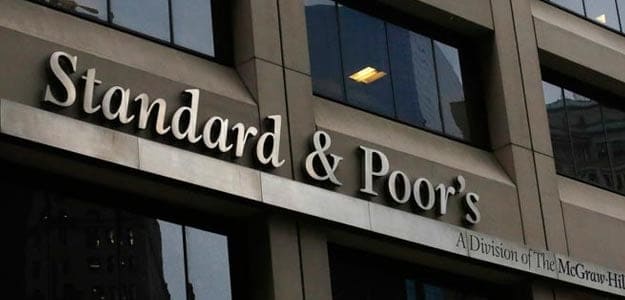
Global rating agency Standard & Poor's on Friday revised India's credit outlook to "stable" from "negative", acknowledging the improved political and economic environment in Asia's third largest economy. India's rating continues to remain at BBB minus, S&P said.
"India's improved political setting offers a conducive environment for reforms, which could boost growth prospects and improve fiscal management," the rating agency said in a statement.
"We believe the current administration will remedy, to varying degrees, the growth impediments--policy paralysis, energy supply bottlenecks, and administrative obstacles," it added.
S&P's rating boost comes at a time when Prime Minister Narendra Modi will be meeting CEOs of several Fortune 500 companies in the US to hard sell India as an investment destination.
(Read: PM Modi to Hard Sell India Story to Fortune 500 CEOs in US Visit)
Since coming to power in May 2014, the new government has liberalised defense manufacturing and insurance sectors and has vowed to simplify labour laws and implement goods and services tax (GST) quickly to boost growth.
Between April and June 2014, India registered its fastest growth in nine quarters and the new government has vowed to keep the fiscal deficit under control at 4.1 per cent of GDP.
"We expect the new administration to adhere to its stated fiscal consolidation program, even though we acknowledge that planned revenues may not fully materialize and subsidy cuts may be delayed," S&P said.
The announcement led to a sharp pullback in equity markets and rupee. The Sensex snapped a 3-day losing streak today, rising 157 points. The rupee also jumped 60 paise to 61.02 from a low of 61.62 per dollar. (Read the full story here)
Dr. Shubhada Rao, Senior President & Chief Economist at Yes Bank, told NDTV that the revision is a validation of macro-stability over the last one year.
"Pre-September 2013 was the time, when India was in extreme turbulence, the currency was volatile. Most of these concerns have been addressed and the growth prospects are looking better," she added. (Read what other experts said)
S&P said it could raise the rating if the economy grows faster and fiscal, external, or inflation metrics improve. It warned that it may lower the rating again if the government's structural reform agenda stalls.
Standard & Poor's and Fitch Ratings had lowered their outlook on India to "negative" in 2012, warning the country of a possible rating downgrade to "junk". However, Fitch had last year returned India's sovereign outlook to stable. (Read: Rating Upgrade Around the Corner for India, Says Bank of America)

-
High US Salaries, No Green Card Certainty: The Financial Calculation Facing Indian H-1B Families

The suspension of PERM processing at eight technology employers does not cancel existing H-1B visas. What it does is force a question many Indian families have been avoiding: is the US salary worth tying your career and family plans to one employer?
-
Unhedged Position: Can India See An Indonesia-Style Time Correction?
The Nifty is trading below levels it first clocked in 2024. Is there, then, as I have suggested in the headline, potential that the current time correction drags on painfully for the next three-five, even ten years?
-
Navigating Friction And Energy Realities: An Analysis Of Marco Rubio's October Visit To India
Occurring at a critical juncture marked by stalled trade negotiations and escalating geopolitical pressures over global energy supplies, the visit offers a profound window into modern US-India relations.
-
India Exports Capital. Why Not Export Trusteeship?
The big question, then, is whether India can build an institution that global borrowers, investors, banks, and lawyers can trust, even without an Indian connection.
-
France's Economy & Politics Are In Crisis | The Reason Why
Let's look at how the French economy and politics evolved under Nicolas Sarkozy, Franois Hollande and Emmanuel Macron.
-
You May Inherit The Business. You Must Earn Its Credibility.
Succession tests the founder's ability to share authority as much as it tests the next generation's readiness to assume it.
-
Signing Deals Is One Thing; Making Them Work Is Another | The Week In Whys
Sometimes, things don't turn out as planned. Indian companies have lost some bids to rivals, some projects won't produce until 2030.
-
FOMC Wall, PERM Suspension, Hospital Stocks | Talking Points This Week
A PERM suspension would directly affect green-card sponsorship rather than H-1B visas, so the near-term earnings impact could remain relatively limited. The key question is whether this marks a new phase in US scrutiny of Indian IT.
-
Everything, Everywhere, All At Once: Dalal Street's Week To Forget | Joining The Dots
Visa curbs, a Starlink spat and cancer drug caps: what connects this week's shocks for Indian markets
-
India Is Going Abroad For Critical Minerals. But It May Take Years To Pay Off | The Reason Why
Although India's steps are in the right direction, they remain modest compared with India's growing dependence.









