Rupee's Gains Swift In Reversal From 80 To 79 Per Dollar And Record Lows
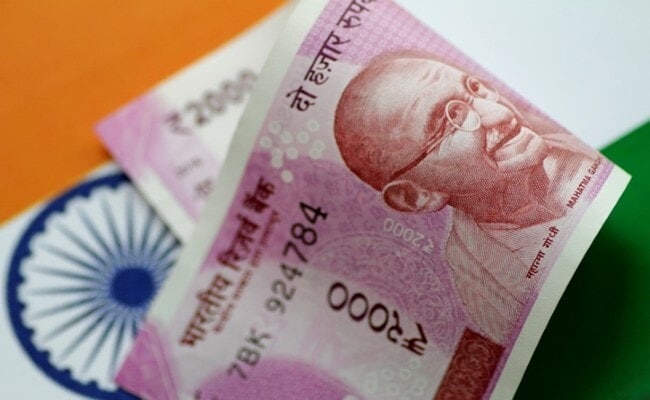
The rupee has made a significant and swift comeback to hit a one-month high in a reversal from repeated all-time lows when it breached 80 per dollar for the first time ever.
On Tuesday, the Indian currency hit a one-month high, strengthening for the fourth straight session, and was last changing hands below the 79 per dollar mark. The range of the rupee's moves also was below the 79-to-a-dollar mark for the first time since early July.
The reversal in the rupee's fortunes has been driven by foreign investors turning into net buyers of Indian assets and the rampant dollar stumbling to its lowest since mid-June on easing bets of aggressive Federal Reserve monetary action amid recession fears.
The dollar continued its decline on Tuesday, falling to its lowest in two months against the recovering Japanese yen and losing ground on other peers as investors continued to position for a less aggressive pace of Fed rate hikes.
The greenback fell as low as 130.595 yen in early trading, its lowest since June 6, and was last down 0.55 per cent, leaving it down 4 per cent in the past four sessions.
The greenback was also generally weaker, with sterling at $1.2256, just off a five-week peak overnight, and the euro was also on the front foot at $1.0294.
That sent the dollar index, which measures the greenback against six peers, to 105.03 in early trade, a one-month low.
International investors turned net buyers of Indian assets in July for the first time since October in a boost to the rupee, whose recovery has been even more dramatic than its collapse.
Indeed, foreign institutional investors (FIIs) were net buyers in the capital market on Monday, purchasing Indian shares worth Rs 2,320.61 crore, per the latest exchange data.
"Diminishing odds for more aggressive Fed rate hikes continue to weigh on the dollar," Kunal Sodhani, assistant vice president at Global Trading Center for FX and Rates Treasury at Shinhan Bank, told Reuters.
"Brent crude prices heading below $100 per barrel, along with the comeback of foreign institutional investor equity inflows, are assisting the rupee."
What has also helped is the fall in oil prices, which was one of the top reasons for the currency's declines since Russia invaded Ukraine and pushed crude prices to multi-decade highs.
India imports over 80 per cent of its oil needs, and the demand for dollars from crude importers weighed heavily on the domestic currency.
Oil prices edged lower on Tuesday, continuing a decline in the previous session, as investors worried about global crude demand following weak manufacturing data in several countries.
"Data releases over the past 24 hours have provided further evidence the global economy is slowing," National Australia Bank strategist Rodrigo Catril wrote in a note to clients, as reported by Reuters.
"Signs of a slowdown are building" in the United States, while "China's reopening activity burst is over," he said.
Investors now await the Reserve Bank of India's monetary policy decision on Friday, where the central bank is expected to raise its key interest rate.
However, according to a Reuters poll, there was no consensus among analysts on the size of the move, given the absence of any clear guidance from the central bank. Predictions from the 63 economists polled by Reuters ranged from a 25-bp to 50-bp hike.

-
High US Salaries, No Green Card Certainty: The Financial Calculation Facing Indian H-1B Families

The suspension of PERM processing at eight technology employers does not cancel existing H-1B visas. What it does is force a question many Indian families have been avoiding: is the US salary worth tying your career and family plans to one employer?
-
Unhedged Position: Can India See An Indonesia-Style Time Correction?
The Nifty is trading below levels it first clocked in 2024. Is there, then, as I have suggested in the headline, potential that the current time correction drags on painfully for the next three-five, even ten years?
-
Navigating Friction And Energy Realities: An Analysis Of Marco Rubio's October Visit To India
Occurring at a critical juncture marked by stalled trade negotiations and escalating geopolitical pressures over global energy supplies, the visit offers a profound window into modern US-India relations.
-
India Exports Capital. Why Not Export Trusteeship?
The big question, then, is whether India can build an institution that global borrowers, investors, banks, and lawyers can trust, even without an Indian connection.
-
France's Economy & Politics Are In Crisis | The Reason Why
Let's look at how the French economy and politics evolved under Nicolas Sarkozy, Franois Hollande and Emmanuel Macron.
-
You May Inherit The Business. You Must Earn Its Credibility.
Succession tests the founder's ability to share authority as much as it tests the next generation's readiness to assume it.
-
Signing Deals Is One Thing; Making Them Work Is Another | The Week In Whys
Sometimes, things don't turn out as planned. Indian companies have lost some bids to rivals, some projects won't produce until 2030.
-
FOMC Wall, PERM Suspension, Hospital Stocks | Talking Points This Week
A PERM suspension would directly affect green-card sponsorship rather than H-1B visas, so the near-term earnings impact could remain relatively limited. The key question is whether this marks a new phase in US scrutiny of Indian IT.
-
Everything, Everywhere, All At Once: Dalal Street's Week To Forget | Joining The Dots
Visa curbs, a Starlink spat and cancer drug caps: what connects this week's shocks for Indian markets
-
India Is Going Abroad For Critical Minerals. But It May Take Years To Pay Off | The Reason Why
Although India's steps are in the right direction, they remain modest compared with India's growing dependence.









