Rupee Worries Force India's Importers To Hedge Extra: Report
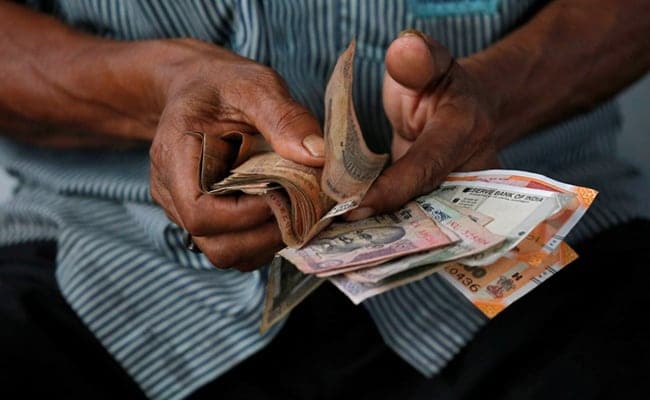
Worried about India's precarious external accounts and the weakening rupee, domestic importers are hedging a lot more of their currency exposures than they are required to.
The rupee is down about 7.5% versus the U.S. dollar this year, and headed for what could be its worst year in four.
Trading just shy of its 80.0650 per dollar record low reached last month, the rupee has been under pressure from a ballooning oil import bill, high domestic inflation and the Federal Reserve's aggressive interest rate rises that have elevated yields on the U.S. dollar.
That is in spite of the Reserve Bank of India's (RBI) concerted and steady efforts to defend the currency.
"We have a clear view right now. Considering India's trade deficit issues and Fed rate hike view, we think rupee will depreciate more, possibly up to the 82 level," said Rohit Maheshwari, CFO of Hero International B.V.
"Our normal policy is that 50% of the exposure should be hedged. But right now, we are hedging imports near to 80%, while leaving a large part of the exports unhedged."
Hero International is a subsidiary of Hero Cycles Ltd, the largest manufacturer of bicycles in India. Hero Cycles, an exporter to various countries in the Middle East, Africa, Asia, and Europe, is part of the Hero Motors Company.
India posted a record trade deficit of $30 billion in July, after exports contracted for the first time in almost one-and-a-half years.
Economists expect the current account deficit to widen significantly, with little or no support from investment flows.
Foreign investors have withdrawn almost $25 billion from Indian equity and debt markets so far in 2022, as money rushes back into higher yielding dollars.
FORWARDS, OPTIONS HEDGES
The Fed has raised rates by 225 basis points so far this year and economists expect it to increase rates by a further 100 basis points in 2022.
"Right now, there are a lot of risks around India's current account deficit and uncertainty about the Fed. This is why we are hedging almost 100% of our imports while leaving exports open to the extent allowed by our risk management policy," Anil Agarwal, CFO at New Delhi-based J.K. Fenner (India) Ltd, said.
"We are handling both imports and exports separately with the main aim of protecting margins and the budgeted rate."
J.K. Fenner is part of the India-headquartered J.K. Organisation. The group has a footprint in various countries across the globe with an annual turnover $4.5 billion, according to its website.
Given the risks, importers seem fine with the high cost of hedging. A simple forward contract to buy dollars for rupees in three months costs around 3.1%.
"The overall risk of rupee depreciation from current levels remains elevated. We are very worried about India's trade deficit," said Samir Lodha, managing director at QuantArt Market Solutions, a Mumbai-based firm that advises several large and medium-sized companies.
"We are advising importers to remain hedged with a relatively high hedge ratio. A combination of forwards and options works well for hedging purposes."
For companies that have some exports to offset their dollar liabilities, Lodha recommends a low to medium hedge ratio.
Hero's Maheshwari reckons forwards are better for hedges, since they are easier to cancel.
"Options are done selectively, and that too only simple structures like call spreads."
Agarwal, meanwhile, said he used seagull option structures and call spreads.
A call spread involves buying an option with the right to buy dollars, and offsetting its cost by selling another option. A seagull option reduces the cost further with the company making another option sale, alongside a call spread.
(Except for the headline, this story has not been edited by NDTV staff and is published from a syndicated feed.)

-
High US Salaries, No Green Card Certainty: The Financial Calculation Facing Indian H-1B Families

The suspension of PERM processing at eight technology employers does not cancel existing H-1B visas. What it does is force a question many Indian families have been avoiding: is the US salary worth tying your career and family plans to one employer?
-
Swiggy vs Eternal: Food Delivery's Two Rivals Are No Longer In The Same Race
Eternal is building a private AI assistant, dark.ai. Swiggy is still working out how to make Instamart pay, with an operating loss of Rs 895 crore in the July-September quarter while Blinkit stayed profitable.
-
Where You Live Shapes How You Get To Work | The Reason Why
Two-wheelers are the most popular way to get to work in India, accounting for nearly 43% of workplace commutes.
-
Unhedged Position: Can India See An Indonesia-Style Time Correction?
The Nifty is trading below levels it first clocked in 2024. Is there, then, as I have suggested in the headline, potential that the current time correction drags on painfully for the next three-five, even ten years?
-
Navigating Friction And Energy Realities: An Analysis Of Marco Rubio's October Visit To India
Occurring at a critical juncture marked by stalled trade negotiations and escalating geopolitical pressures over global energy supplies, the visit offers a profound window into modern US-India relations.
-
India Exports Capital. Why Not Export Trusteeship?
The big question, then, is whether India can build an institution that global borrowers, investors, banks, and lawyers can trust, even without an Indian connection.
-
France's Economy & Politics Are In Crisis | The Reason Why
Let's look at how the French economy and politics evolved under Nicolas Sarkozy, Franois Hollande and Emmanuel Macron.
-
You May Inherit The Business. You Must Earn Its Credibility.
Succession tests the founder's ability to share authority as much as it tests the next generation's readiness to assume it.
-
Signing Deals Is One Thing; Making Them Work Is Another | The Week In Whys
Sometimes, things don't turn out as planned. Indian companies have lost some bids to rivals, some projects won't produce until 2030.
-
FOMC Wall, PERM Suspension, Hospital Stocks | Talking Points This Week
A PERM suspension would directly affect green-card sponsorship rather than H-1B visas, so the near-term earnings impact could remain relatively limited. The key question is whether this marks a new phase in US scrutiny of Indian IT.









