Rupee Weakens Only A Touch To 82.41 As Dollar Takes A Breather
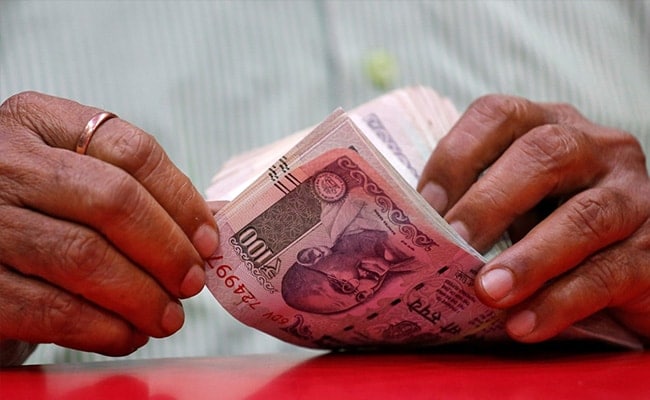
The rupee ended Friday only a touch weaker as the dollar rally paused after investors flocked back to stocks, with dip buyers aiding in the spectacular recovery, despite a red-hot US inflation reading on Thursday.
Bloomberg quoted the rupee last at 82.3875, after opening at 82.2738, compared to its previous close of 82.35 and well below its record low of 82.6950.
PTI reported that the domestic currency weakened 12 paise to close provisionally at 82.36 against the US dollar on Friday.
The greenback has been on a tear this year as the Federal Reserve increased interest rates aggressively to control inflation, which attracted capital back to the United States, and concerns about the world economy also increased demand for the dollar.
However, Thursday's stronger-than-expected inflation figures unexpectedly led to a rise in global stock markets and a decline in the dollar's value.
The dollar index moved marginally higher to 112.62, down 0.6 per cent from Thursday, as investors appeared to ignore data showing that US consumer prices rose more than anticipated in September.
In a report released on October 10 by Deutsche Bank analysts led by Chief Economist Michael Spencer, they predicted that pressure on emerging market (EM) currencies and bonds would last at least until mid-2023. After that, dollar strength may decline, according to a Bloomberg report.
"The pertinent question, then, is whether this stress will spread to the core of the asset class – the large emerging-market sovereigns that dominate investors' portfolios," the Deutsche strategists wrote.
Refinancing costs for emerging market governments who took out large loans in dollars when interest rates were low are rising, bringing to mind the debt crisis in Asia in the 1990s and igniting concerns about a wave of defaults, reported Bloomberg.
Investors are being reminded by the spike in yields of earlier emerging debt crises, particularly the one that engulfed Asia in 1997 and saw nation after country default due to collapsing domestic currencies.
The phrase "original sin," which economists originally used to define emerging countries' reliance on foreign currency debt, is forcing the unpleasant awareness that large portions of the developing world are still plagued by it.
"There will be countries that will default and restructure debt," Lisa Chua, New York-based Portfolio Manager at Hedge Fund Man Group, whose EM debt fund has outperformed 99 per cent of its peers this year with returns of 5 per cent, told Bloomberg.
Rising debt burdens are crowding out investment and reducing growth, "making it more challenging for many emerging markets to grow fast enough to stabilize their debt," she said.

-
Unhedged Position: Can India See An Indonesia-Style Time Correction?

The Nifty is trading below levels it first clocked in 2024. Is there, then, as I have suggested in the headline, potential that the current time correction drags on painfully for the next three-five, even ten years?
-
Navigating Friction And Energy Realities: An Analysis Of Marco Rubio's October Visit To India
Occurring at a critical juncture marked by stalled trade negotiations and escalating geopolitical pressures over global energy supplies, the visit offers a profound window into modern US-India relations.
-
India Exports Capital. Why Not Export Trusteeship?
The big question, then, is whether India can build an institution that global borrowers, investors, banks, and lawyers can trust, even without an Indian connection.
-
France's Economy & Politics Are In Crisis | The Reason Why
Let's look at how the French economy and politics evolved under Nicolas Sarkozy, Franois Hollande and Emmanuel Macron.
-
You May Inherit The Business. You Must Earn Its Credibility.
Succession tests the founder's ability to share authority as much as it tests the next generation's readiness to assume it.
-
Signing Deals Is One Thing; Making Them Work Is Another | The Week In Whys
Sometimes, things don't turn out as planned. Indian companies have lost some bids to rivals, some projects won't produce until 2030.
-
FOMC Wall, PERM Suspension, Hospital Stocks | Talking Points This Week
A PERM suspension would directly affect green-card sponsorship rather than H-1B visas, so the near-term earnings impact could remain relatively limited. The key question is whether this marks a new phase in US scrutiny of Indian IT.
-
Everything, Everywhere, All At Once: Dalal Street's Week To Forget | Joining The Dots
Visa curbs, a Starlink spat and cancer drug caps: what connects this week's shocks for Indian markets
-
India Is Going Abroad For Critical Minerals. But It May Take Years To Pay Off | The Reason Why
Although India's steps are in the right direction, they remain modest compared with India's growing dependence.
-
When Everyone Has AI, What Gives You An Edge?
India's young workforce is entering an uncertain world of work where powerful AI tools are becoming widely accessible. The advantage will belong to those who combine deep expertise with digital fluency, and the distinctly human capabilities that technology cannot manufacture.









