For Rupee, Asia's Only Losing Emerging Market Currency, More Losses Likely
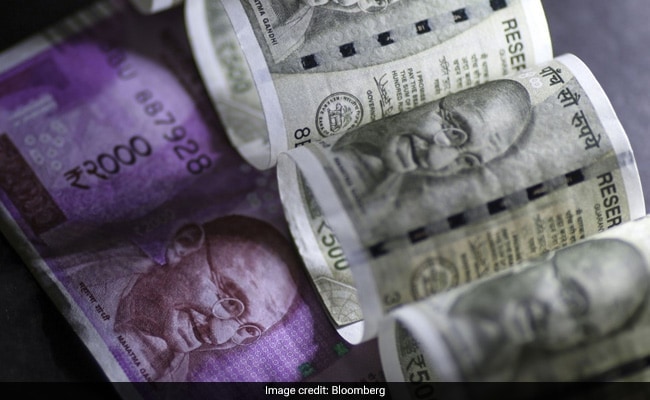
The rupee is the only emerging Asian currency to weaken this quarter and its losses may gather pace as a report this week is forecast to show economic growth slid to a six-year low.
The rupee, which has slumped almost 5 per cent from this year's high in July, is also under selling pressure due to escalating levels of public debt and a credit crunch among non-bank finance companies, known as shadow banks. Moody's Investors Service cut the country's credit rating outlook to negative this month, saying the economic slowdown was deeper and longer than it anticipated.
"The biggest risk emerging for India at this juncture is growth weakness," said Indranil Pan, chief economist at IDFC First Bank Ltd. in Mumbai. "That, along with fiscal risks, will probably cause the rupee to weaken. The poor growth conditions may lead to lower capital flows and hence could be a significant negative for the currency."
India's gross domestic product probably slowed to 4.6 per cent last quarter, which would be the least since the first three months of 2013, according to the median estimate in a Bloomberg survey before the data is released Friday. State Bank of India, the country's largest lender, predicts growth will slide to 4.2 per cent, a record low in data starting in 2012.

The rupee dropped to 72.2425 per dollar earlier this month, a whisker away from a nine-month low of 72.4075 set in September. A breach of support around those levels may see it weaken toward 73.0217, the 76.4 per cent retracement of its rally from October 2018 to July 2019, according to Fibonacci analysis. It closed at 71.715 on Friday.
The Reserve Bank of India has added to the rupee's downdraft by cutting its benchmark repurchase rate by a combined 135 basis points starting in February. That has pushed down bond yields and sapped foreign demand for the nation's debt.
At the same time, the RBI has boosted dollar purchases to increase rupee liquidity in the financial system, as shown by foreign-exchange reserves climbing to a record $448 billion.
A more pronounced growth slowdown than other regional emerging markets and one of the most aggressive rate-cutting cycles in Asia "has resulted in a major headwind for the rupee," said Peter Chia, a strategist at United Overseas Bank Ltd. in Singapore. "The RBI's rate cuts, almost twice the amount delivered by the Fed, have eroded the interest-rate advantage the rupee has over the dollar, denting its attractiveness as a high yielder."
Below are the key Asian economic data and events due this week:
- Monday, Nov. 25: Singapore CPI, BOJ bond purchases, Taiwan industrial production and Philippines budget balance
- Tuesday, Nov. 26: Japan services producer prices, Singapore industrial production and Reserve Bank of Australia Governor Lowes speech
- Wednesday, Nov. 27: RBNZ publishes financial stability report, New Zealand trade, China industrial profits
- Thursday, Nov. 28: Japan retail sales and foreign bond buying
- Friday, Nov. 29: India GDP, South Korea rate decision, Japan CPI, industrial production and jobless rate, South Korea industrial production, Thailand trade and FX reserves

-
Unhedged Position: Can India See An Indonesia-Style Time Correction?

The Nifty is trading below levels it first clocked in 2024. Is there, then, as I have suggested in the headline, potential that the current time correction drags on painfully for the next three-five, even ten years?
-
Navigating Friction And Energy Realities: An Analysis Of Marco Rubio's October Visit To India
Occurring at a critical juncture marked by stalled trade negotiations and escalating geopolitical pressures over global energy supplies, the visit offers a profound window into modern US-India relations.
-
India Exports Capital. Why Not Export Trusteeship?
The big question, then, is whether India can build an institution that global borrowers, investors, banks, and lawyers can trust, even without an Indian connection.
-
France's Economy & Politics Are In Crisis | The Reason Why
Let's look at how the French economy and politics evolved under Nicolas Sarkozy, Franois Hollande and Emmanuel Macron.
-
You May Inherit The Business. You Must Earn Its Credibility.
Succession tests the founder's ability to share authority as much as it tests the next generation's readiness to assume it.
-
Signing Deals Is One Thing; Making Them Work Is Another | The Week In Whys
Sometimes, things don't turn out as planned. Indian companies have lost some bids to rivals, some projects won't produce until 2030.
-
FOMC Wall, PERM Suspension, Hospital Stocks | Talking Points This Week
A PERM suspension would directly affect green-card sponsorship rather than H-1B visas, so the near-term earnings impact could remain relatively limited. The key question is whether this marks a new phase in US scrutiny of Indian IT.
-
Everything, Everywhere, All At Once: Dalal Street's Week To Forget | Joining The Dots
Visa curbs, a Starlink spat and cancer drug caps: what connects this week's shocks for Indian markets
-
India Is Going Abroad For Critical Minerals. But It May Take Years To Pay Off | The Reason Why
Although India's steps are in the right direction, they remain modest compared with India's growing dependence.
-
When Everyone Has AI, What Gives You An Edge?
India's young workforce is entering an uncertain world of work where powerful AI tools are becoming widely accessible. The advantage will belong to those who combine deep expertise with digital fluency, and the distinctly human capabilities that technology cannot manufacture.









