Rupee Sees Buying Interest As Hopes For Recovery Brighten
The US dollar was pinned down on Tuesday, as vaccine optimism boosted the British pound to an almost three-year high, while rising oil prices and buoyant expectations for global recovery supported commodity and trade-exposed currencies.
In trade thinned by Lunar New Year holidays in China and Monday's US holiday, the positive mood also weighed on the safe-haven yen which made a one-week low on the dollar overnight and fell to more than two-year lows on the euro and the Aussie.
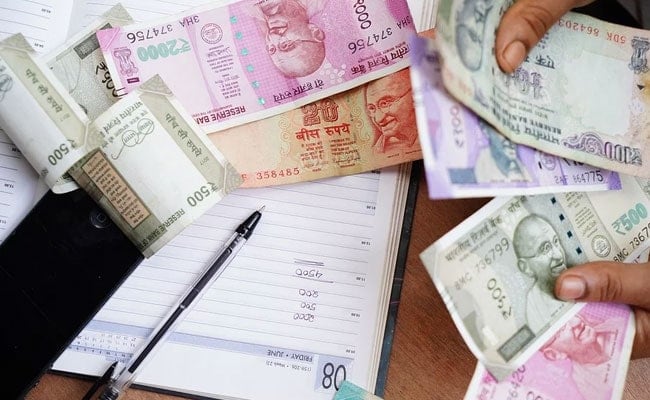
The rupee inched up 5 paise to 72.63 against the US dollar in opening trade on Tuesday amid a firm trend in the domestic equity market and subdued American currency.
The US dollar index, which measures the dollar against a basket of six major currencies, sat at 90.351, not far above a two-week low it struck last Wednesday.
The Chinese yuan, a favoured vehicle for playing the dollar's weakness in Asia, was on the brink of strengthening past 6.4 per dollar for the first time since mid-2018 and last stood at 6.4033 in offshore trade.
Recent equity gains — global stocks have climbed for a dozen days straight — have been matched by growing expectations for higher inflation, especially as central banks keep promising to keep rates low for a long time.
Those expectations were further boosted by a jump in oil prices this week, as a cold snap shuts Texan wells, and have driven US Treasury yields to their highest since March.
The risk-sensitive Australian dollar held near Monday's one-month high at $0.7785.
“The dollar tends to underperform when you see this broad positive sentiment in markets,” said Rodrigo Catril, senior currency strategist at National Australia Bank in Sydney.
“There are also inflationary pressures particularly coming from energy prices,” he said, which is pushing up nominal yields — adding another weight on the yen as that can attract flows from Japan — but keeping real returns on Treasuries steady.
Bitcoin hovered just short of $50,000 as profit taking paused the cryptocurrency's steep rally that has carried it more than 60 per cent higher in 2021 so far.
The yield on benchmark 10-year US Treasuries leapt five basis points to 1.2501 per cent in early Asia trade on Monday, while most major currencies were steady.
Sterling, which broke past $1.39 for the first time in almost three years on Monday, held at $1.3912. It also held steady at 87.15 pence per euro, its highest since May 2020.
Sterling has gained as much as 2.5 per cent on the dollar in less than two weeks as the aggressive rollout of Britain's Covid-19 vaccination programme has raised expectations its economy will be able to recover more swiftly than European peers.
The euro was steady at $1.2132 on Tuesday while the yen, which has dropped 2 per cent so far this year, nursed losses at 105.36 per dollar. The yen also hit its lowest since late 2018 against the euro and the Australian dollar and hit a three-year low on the Swiss franc.
“The yen has been the worst performing currency of 2021, with its negative correlation to US Treasury yields proving to be the biggest dampening factor,” said Francesco Pesole, currency strategist at Dutch bank ING in a note to clients.
“When adding weak safe-haven demand as the global recovery gathers pace, some additional trimming of yen net long positions may be on the cards.”
Ahead on Tuesday, investors are looking to eurozone growth estimates, a German sentiment survey and US manufacturing data to gauge the relative pace of the world's pandemic recovery.
The rupee is likely to strengthen 1.3 per cent and average 73.5 against the US dollar in the financial year 2022-23 compared with an average level of 74.4 in the financial year 2021-22.

-
Navigating Friction And Energy Realities: An Analysis Of Marco Rubio's October Visit To India

Occurring at a critical juncture marked by stalled trade negotiations and escalating geopolitical pressures over global energy supplies, the visit offers a profound window into modern US-India relations.
-
India Exports Capital. Why Not Export Trusteeship?
The big question, then, is whether India can build an institution that global borrowers, investors, banks, and lawyers can trust, even without an Indian connection.
-
France's Economy & Politics Are In Crisis | The Reason Why
Let's look at how the French economy and politics evolved under Nicolas Sarkozy, Franois Hollande and Emmanuel Macron.
-
You May Inherit The Business. You Must Earn Its Credibility.
Succession tests the founder's ability to share authority as much as it tests the next generation's readiness to assume it.
-
Signing Deals Is One Thing; Making Them Work Is Another | The Week In Whys
Sometimes, things don't turn out as planned. Indian companies have lost some bids to rivals, some projects won't produce until 2030.
-
FOMC Wall, PERM Suspension, Hospital Stocks | Talking Points This Week
A PERM suspension would directly affect green-card sponsorship rather than H-1B visas, so the near-term earnings impact could remain relatively limited. The key question is whether this marks a new phase in US scrutiny of Indian IT.
-
Everything, Everywhere, All At Once: Dalal Street's Week To Forget | Joining The Dots
Visa curbs, a Starlink spat and cancer drug caps: what connects this week's shocks for Indian markets
-
India Is Going Abroad For Critical Minerals. But It May Take Years To Pay Off | The Reason Why
Although India's steps are in the right direction, they remain modest compared with India's growing dependence.
-
When Everyone Has AI, What Gives You An Edge?
India's young workforce is entering an uncertain world of work where powerful AI tools are becoming widely accessible. The advantage will belong to those who combine deep expertise with digital fluency, and the distinctly human capabilities that technology cannot manufacture.
-
Wrong Labels, High Pesticide Residues Holding Back Agri Exports | The Reason Why
India needs stronger domestic food-safety and labelling standards, with best practices becoming part of everyday business for farmers, traders and food companies.










