Rupee To Hit Record Low Over Coming Year Amid Global Trade Tensions: Poll
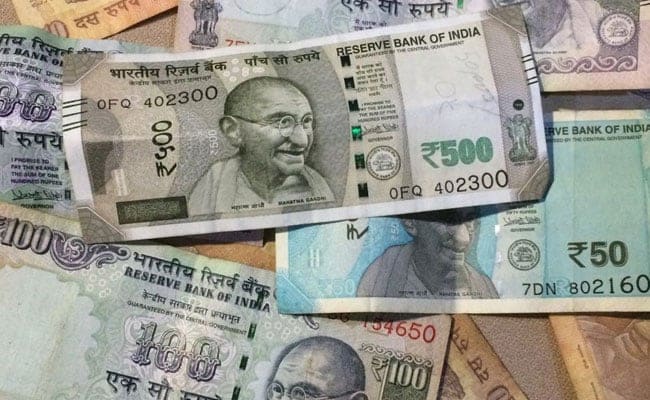
Bengaluru: India's battered rupee will trade in a tight range in the coming year but not far from its historic low, hampered by higher oil prices and as trade tensions hurt emerging markets, a Reuters poll found. The Indian currency has lost over 7 per cent this year, with worries over the US-China trade conflict pushing it to a new record low of 69.122 against the dollar in July, making it the worst performing Asian currency.
Taken after the Reserve Bank of India hiked rates to a two-year high on August 1, the latest poll of about 40 foreign exchange analysts showed the rupee is now expected to trade at 68.22 per dollar in a year from about 68.60 on Thursday.
While the 12-month ahead consensus is slightly better than expectations in a July poll, it largely reflects a recent strengthening in the rupee rather than a brightening outlook for the currency. This firmness is mostly because of the Reserve Bank of India's interest rate hikes, and hawkish bias.
"India has not been unscathed from the ongoing global trade tensions. China may have grabbed the bulk of the spotlight in terms of headlines, but the US is also reviewing its trade relationship with India," noted Gajan Mahadevan, FX strategist at Lloyds Bank.
"Already, higher crude oil prices and concerns over global trade have driven a dramatic shift wider in the trade deficit. Alas, other factors could also mean the Indian rupee is unable to gain significant ground against the US dollar despite two consecutive interest rate hikes from the RBI."
The widening current account deficit, due to higher global crude oil prices and steady capital outflows, has weighed on the rupee.
Oil prices have rallied for much of 2018 on tightening market conditions due to record demand and supply cuts led by the Middle East producers.
While India remains the fastest growing major economy, a weaker rupee, stubbornly high inflation, elevated oil prices and global trade tensions pose the biggest downside risks to the economy.
With the US Federal Reserve expected to continue its tightening cycle this year and next, the rupee may face a bumpy ride.
The International Monetary Fund said on Wednesday the RBI will need to tighten policy further in order to stabilise rising inflation that is largely driven by higher oil prices and a falling rupee.
A separate Reuters poll of economists showed retail inflation in India likely fell to a four-month low in July as normal monsoon rains helped lower food prices.
Inflation was expected to have eased to 4.51 per cent in July from a five-month high of 5.0 per cent the prior month.
However, such a result means inflation would remain above the RBI's medium-term target of 4 per cent for the ninth consecutive month.
"Headline consumer price inflation is likely to have dropped due to a fall in food inflation. But core inflation is likely to have remained elevated, underlining why the RBI felt it needed to act by tightening policy in its two most recent meetings," said Shilan Shah, senior Indian economist at Capital Economics.

-
High US Salaries, No Green Card Certainty: The Financial Calculation Facing Indian H-1B Families

The suspension of PERM processing at eight technology employers does not cancel existing H-1B visas. What it does is force a question many Indian families have been avoiding: is the US salary worth tying your career and family plans to one employer?
-
Unhedged Position: Can India See An Indonesia-Style Time Correction?
The Nifty is trading below levels it first clocked in 2024. Is there, then, as I have suggested in the headline, potential that the current time correction drags on painfully for the next three-five, even ten years?
-
Navigating Friction And Energy Realities: An Analysis Of Marco Rubio's October Visit To India
Occurring at a critical juncture marked by stalled trade negotiations and escalating geopolitical pressures over global energy supplies, the visit offers a profound window into modern US-India relations.
-
India Exports Capital. Why Not Export Trusteeship?
The big question, then, is whether India can build an institution that global borrowers, investors, banks, and lawyers can trust, even without an Indian connection.
-
France's Economy & Politics Are In Crisis | The Reason Why
Let's look at how the French economy and politics evolved under Nicolas Sarkozy, Franois Hollande and Emmanuel Macron.
-
You May Inherit The Business. You Must Earn Its Credibility.
Succession tests the founder's ability to share authority as much as it tests the next generation's readiness to assume it.
-
Signing Deals Is One Thing; Making Them Work Is Another | The Week In Whys
Sometimes, things don't turn out as planned. Indian companies have lost some bids to rivals, some projects won't produce until 2030.
-
FOMC Wall, PERM Suspension, Hospital Stocks | Talking Points This Week
A PERM suspension would directly affect green-card sponsorship rather than H-1B visas, so the near-term earnings impact could remain relatively limited. The key question is whether this marks a new phase in US scrutiny of Indian IT.
-
Everything, Everywhere, All At Once: Dalal Street's Week To Forget | Joining The Dots
Visa curbs, a Starlink spat and cancer drug caps: what connects this week's shocks for Indian markets
-
India Is Going Abroad For Critical Minerals. But It May Take Years To Pay Off | The Reason Why
Although India's steps are in the right direction, they remain modest compared with India's growing dependence.









