Rupee Starts On A Weak Note, With Risks Tilted To More Downside; RBI Eyed
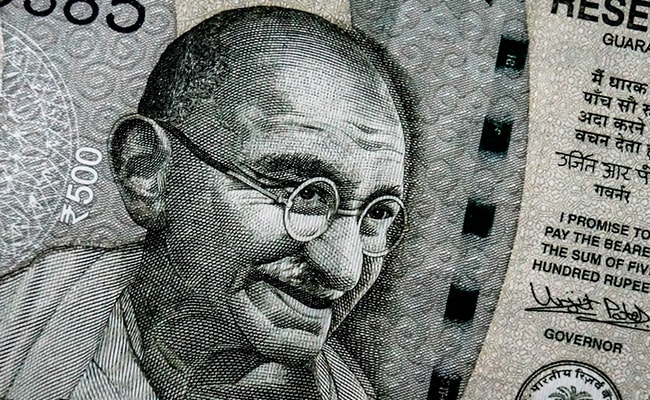
The rupee started on a weak note as crude prices rose more than $1 a barrel in early Asian trade on Wednesday on hopes of demand recovery in China, and persistent foreign fund outflows weighed on investor sentiment.
Brent crude futures were up $1.15 at $113.08 a barrel, while U.S. West Texas Intermediate (WTI) crude futures climbed over $1.5 to $114.02 a barrel, paring some losses after oil prices fell by around 2 per cent in the previous session.
PTI reported the rupee opened weak at 77.57 against the dollar, then gained some lost ground to 77.50, registering a fall of 6 paise over the last close of 77.44. It was moving in a tight range of 77.57 to 77.48 in early deals at the interbank foreign exchange.
Bloomberg quoted the partially-convertible rupee at 77.50.
While a higher opening in benchmark equities restricted the rupee's fall, Federal Reserve Chairman Jerome Powell's pledge that the central bank would ratchet up interest rates as high as needed to stifle a surge in inflation is likely to boost the greenback after the dollar fell to its lowest in nearly two weeks.
Despite the dollar's broader decline in the previous session, the rupee hit fresh record intra-day lows on Tuesday, weakening to as low as 77.7975.
However, the currency recovered after the Reserve Bank of India intervened.
The rupee's broad and deep sell-off started since Russia invaded Ukraine late in February, which resulted in a general foreign capital exodus from emerging markets as investors sought safe-haven assets.
In March, the rupee hit its first record low for the year, breaking below 76.9050 per dollar, which was last touched on April 22, 2020, amid the COVID-19 pandemic.
Reuters reported that the RBI sold $20.1 billion in March's spot foreign exchange market to support the rupee against the dollar.
Over the last two weeks, the Indian currency has now been hitting multiple record lows on the back of broad strength in the dollar and severe risk aversion.

-
Why Amazon And Flipkart Are Struggling To Beat Meesho In India's Smaller Cities

With 274 million users and lowest-cost logistics, Meesho is defending its value commerce crown against giants like Amazon and Flipkart.
-
High US Salaries, No Green Card Certainty: The Financial Calculation Facing Indian H-1B Families
The suspension of PERM processing at eight technology employers does not cancel existing H-1B visas. What it does is force a question many Indian families have been avoiding: is the US salary worth tying your career and family plans to one employer?
-
Swiggy vs Eternal: Food Delivery's Two Rivals Are No Longer In The Same Race
Eternal is building a private AI assistant, dark.ai. Swiggy is still working out how to make Instamart pay, with an operating loss of Rs 895 crore in the July-September quarter while Blinkit stayed profitable.
-
Where You Live Shapes How You Get To Work | The Reason Why
Two-wheelers are the most popular way to get to work in India, accounting for nearly 43% of workplace commutes.
-
Unhedged Position: Can India See An Indonesia-Style Time Correction?
The Nifty is trading below levels it first clocked in 2024. Is there, then, as I have suggested in the headline, potential that the current time correction drags on painfully for the next three-five, even ten years?
-
Navigating Friction And Energy Realities: An Analysis Of Marco Rubio's October Visit To India
Occurring at a critical juncture marked by stalled trade negotiations and escalating geopolitical pressures over global energy supplies, the visit offers a profound window into modern US-India relations.
-
India Exports Capital. Why Not Export Trusteeship?
The big question, then, is whether India can build an institution that global borrowers, investors, banks, and lawyers can trust, even without an Indian connection.
-
France's Economy & Politics Are In Crisis | The Reason Why
Let's look at how the French economy and politics evolved under Nicolas Sarkozy, Franois Hollande and Emmanuel Macron.
-
You May Inherit The Business. You Must Earn Its Credibility.
Succession tests the founder's ability to share authority as much as it tests the next generation's readiness to assume it.
-
Signing Deals Is One Thing; Making Them Work Is Another | The Week In Whys
Sometimes, things don't turn out as planned. Indian companies have lost some bids to rivals, some projects won't produce until 2030.










