Rupee Slides To 79.40 A Dollar, New Lifetime Low; Fast Forwarding To 80/$
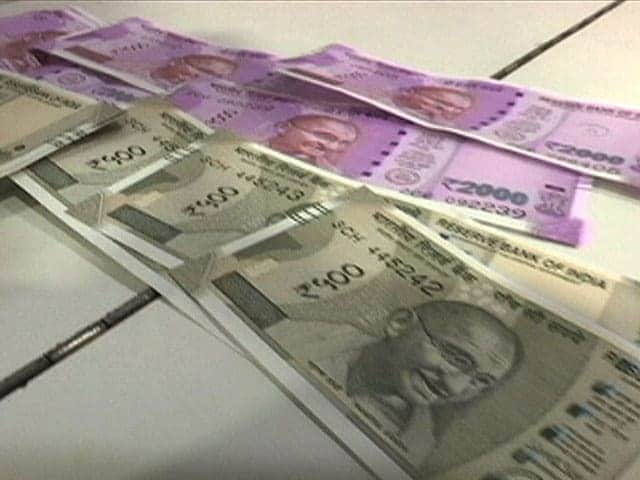
The rupee started the week on the back foot, weakening to a new intra-day record low of near 79.40 per dollar as investor concerns about a global recession and mixed sentiment in the crude markets offered support to the safe haven greenback.
Reuters quoted the partially convertible rupee at 79.38/39 per dollar, compared to its close of 79.25 on Friday. The currency had hit its previous life-low of 79.3750 last week.
PTI reported that the rupee fell to 79.33 against the US dollar in early trade, a 7 paise loss from its previous close of 79.26.
The rupee is now just a hop, skip and jump away from 80 per dollar, underscoring the dramatic collapse of the currency which started the year changing hands at around 74 against the greenback.
The dollar stood tall and gained as investor concerns about global economic growth offered support to the safe haven currency.
"The (dollar) could remain expensive until the risks around elevated global inflation, European energy security and China's growth outlook have been resolved," said analysts at Barclays in a note to clients, quoted Reuters.
While oil markets were unsteady on Monday, with Brent trading higher on supply concerns while West Texas Intermediate (WTI) dipped, as traders weighed supply concerns against worries about a recession or China's COVID-19 curbs hitting demand.
India and US inflation later in the week will drive market sentiment, with the cautious mood likely before.
Indian equity benchmarks started the week on a ginger note, stalling a three straight sessions of gains, as investors eye domestic and international inflation data, which will clarify the direction of monetary policy path.

-
High US Salaries, No Green Card Certainty: The Financial Calculation Facing Indian H-1B Families

The suspension of PERM processing at eight technology employers does not cancel existing H-1B visas. What it does is force a question many Indian families have been avoiding: is the US salary worth tying your career and family plans to one employer?
-
Unhedged Position: Can India See An Indonesia-Style Time Correction?
The Nifty is trading below levels it first clocked in 2024. Is there, then, as I have suggested in the headline, potential that the current time correction drags on painfully for the next three-five, even ten years?
-
Navigating Friction And Energy Realities: An Analysis Of Marco Rubio's October Visit To India
Occurring at a critical juncture marked by stalled trade negotiations and escalating geopolitical pressures over global energy supplies, the visit offers a profound window into modern US-India relations.
-
India Exports Capital. Why Not Export Trusteeship?
The big question, then, is whether India can build an institution that global borrowers, investors, banks, and lawyers can trust, even without an Indian connection.
-
France's Economy & Politics Are In Crisis | The Reason Why
Let's look at how the French economy and politics evolved under Nicolas Sarkozy, Franois Hollande and Emmanuel Macron.
-
You May Inherit The Business. You Must Earn Its Credibility.
Succession tests the founder's ability to share authority as much as it tests the next generation's readiness to assume it.
-
Signing Deals Is One Thing; Making Them Work Is Another | The Week In Whys
Sometimes, things don't turn out as planned. Indian companies have lost some bids to rivals, some projects won't produce until 2030.
-
FOMC Wall, PERM Suspension, Hospital Stocks | Talking Points This Week
A PERM suspension would directly affect green-card sponsorship rather than H-1B visas, so the near-term earnings impact could remain relatively limited. The key question is whether this marks a new phase in US scrutiny of Indian IT.
-
Everything, Everywhere, All At Once: Dalal Street's Week To Forget | Joining The Dots
Visa curbs, a Starlink spat and cancer drug caps: what connects this week's shocks for Indian markets
-
India Is Going Abroad For Critical Minerals. But It May Take Years To Pay Off | The Reason Why
Although India's steps are in the right direction, they remain modest compared with India's growing dependence.









