Rupee Off Record Lows As RBI Intervenes To Stem Further Losses
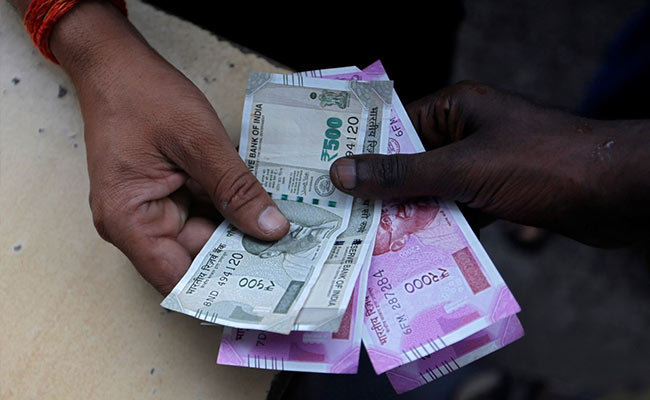
The rupee reversed from record lows after the Reserve Bank of India intervened in both the spot and the futures markets.
At the interbank foreign exchange, the rupee opened weak at 77.67 against the dollar, then lost further ground to hit its record intra-day low of 77.7975 to a dollar.
But the currency recouped some losses after the RBI intervened to stem the losses and was last at around 77.60 per dollar.
Reuters quoted traders and reported that the central bank started selling dollars via state-run banks at around 77.75 rupee levels helping the currency regain some ground.
According to traders, the RBI has been active in both spot and futures markets in recent weeks to help limit sharp volatility in the rupee.
"Given that the RBI has ample FX reserves, we expect the rupee to remain more stable and weaken less than most other EM currencies against the greenback over the next couple of years," Adam Hoyes, assistant economist at Capital Economics, said in a note.
After its previous record low close of 77.50 on Thursday, during which it hit a new intra-day weak level of 77.63 against the American currency, the rupee recovered to end at 77.31 on Friday as the RBI has intervened in the open market then as well to stem the volatility.
The interbank foreign exchange market in India was shut on Monday because of the Buddha Purnima holiday.
The currency had previously breached 77 against the dollar for the first time ever earlier in March.
And since then, what has not helped the rupee is the recent surge in inflation.
Indeed, the wholesale price-based inflation (WPI) accelerated to 15.08 per cent in April from a year ago; government data showed on Tuesday. Reuters reported that it was the highest since April 2005.
Last week, data showed retail inflation had surged to 7.79 per cent in April, its highest pace in eight years and above the upper end of the RBI's 2-6 per cent target range for the fourth straight month.
High inflation prints may force the central bank's hand into raising rates in its June policy review after unexpectedly raising them by 40 basis points in an out-of-turn meeting earlier this month.
"The Indian rupee has depreciated nearly 6 per cent in the past 1 year, in the process hitting multiple lows. The INR hit a fresh all-time low due to a rise in the dollar index and concerns around global economic growth," said Nish Bhatt, Founder & CEO of Millwood Kane International - an Investment consulting firm.
"We expect the currency to face pressure as inflation is on an upward spiral raising concerns about further rate action by the central bank," he added.
Emerging markets assets have taken a beating on foreign capital exodus driven by the dollar's appeal on a general increase in flight-to-safety trades.
The rally in Indian shares after losses for the second straight session helped prevent a further slide in the rupee.
But foreign funds have been net sellers of India's stocks and debt. They have sold more than $20 billion worth of shares and around $2 billion in debt in 2022.
The latest stock exchange data showed foreign institutional investors (FIIs) remained net sellers in the capital market as they offloaded Indian shares worth ₹ 1,788.93 crore on Monday.
"The rupee fell to a fresh all-time low as broader strength in the dollar continued and global crude oil prices continued to trade higher. Last week's inflation number released on the domestic front and from the US came in higher, disturbing the overall market sentiment," said Gaurang Somaiya, Forex & Bullion Analyst, Motilal Oswal Financial Services.
"We expect...the USDINR...in the range of 77.40 and 78.20," he added.

-
Navigating Energy Crossroads: S Jaishankar's Call For Diversified Supply Chains At G20 Ministerial Meeting

As geopolitical fault lines continue to test maritime trade routes and commodity flows, Jaishankar's message remains pertinent: true economic resilience requires open markets, protected transit lines, and a genuine commitment to multilateral cooperation rather than coercion.
-
Indians Are Travelling, But Not Every Journey Is A Holiday | The Week In Whys
Pilgrims, patients and working women are the real travellers, and the system hasn't quite caught up with them.
-
Getting To Work Costs Women More | The Reason Why
It is not just about women paying more than men. It is about women paying much more in cities than in villages.
-
AI Bias In Investing Cannot Be Eliminated, But It Can Be Governed
Framing is a particularly important example as identical financial information presented in terms of gains rather than losses can lead an LLM to reach a different assessment.
-
Joining The Dots | Dark Skies, Steady Diya: Why Hope Holds This Diwali
With war, a weak rupee and foreign outflows weighing on sentiment, policymakers at the NDTV World Summit and market veterans at NDTV Profit Ignite: Diwali Edition offered the same advice: stay invested and filter out the noise.
-
The Curious Case of Equitas Small Finance Bank And A CEO Who Quit For Stock
PN Vasudevan believes persistent investor concerns over a perceived conflict of interest had become a governance overhang on Equitas Small Finance Bank's stock, even as the lender improved profitability and asset quality.
-
Talking Points This Week: AI Cash Burn, A Tiger Comeback And An India That Still Finds Its Own Path
India is not immune to higher oil or tighter global liquidity, yet its earnings base is broader, its domestic policy levers are still available.
-
Foreign Investors Own Half Of HDFC Bank and ICICI Bank. An LTCG Cut Could Matter Most Here
Foreign portfolio investors have US$115 billion parked in HDFC Bank, ICICI Bank. If the government cuts long-term capital gains tax, Jefferies says returning foreign money could land here first.
-
'Never Seen This Level Of Negativity': Sandeep Tandon Says The Next Rally May Be Closer Than You Think
Veteran investor Sandeep Tandon says foreign selling is easing, large-caps are due a comeback and mid-caps are crowded, while he turns positive on gold, power and pharma this Diwali.
-
Indians Stay With Family, Not In Hotels | The Reason Why
India still lacks enough clean, reliable and affordable hotels for budget-conscious travellers.










