Rupee Recovers After Breaching 69 Level Against US Dollar
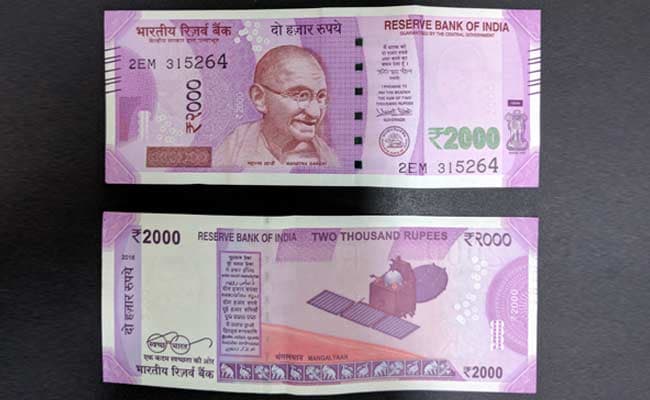
The rupee, on Friday, skidded to 69.03 against the US dollar in early deals before ending 8 paise higher at 68.87, reported Press Trust of india (PTI). Overseas, major currencies traded lower in early Asian trade as investors remained cautious ahead of the US tariffs imposition on Chinese goods. Appreciation of the American currency overseas, sustained foreign capital outflows and rising crude prices also impacted rupee's movement. Though the rupee briefly slipped below 69 levels in mid-morning deals, it managed to recoup losses on apparent intervention by the Reserve Bank, coupled with greenback selling by exporters.
Here are few things to know about Indian rupee's movement in forex market:
1. On Thursday, the Indian currency plunged for the second straight session to hit a fresh closing low of 68.95, sliding by 21 paise following a panic demand for the US dollar coupled with savage capital flight worries. Foreign portfolio investors (FPIs) sold shares worth Rs 159.37 crore on Thursday, as per provisional data.
2. The Indian currency stands out as one of the most vulnerable and worst performing currencies in Asia with an almost 8 per cent fall in the value against the resurgent dollar bull.
3. However, economic growth has picked up and India has retained its spot as the fastest growing major economy this year, still the rupee crashed to a life-time low of 69.10 on June 28 this year.
4. After an extraordinarily smooth ride in 2017, the home currency has been on a steady decline since April and. On July 2, the rupee had hit its life-time closing low of 68.80 a dollar. Prospect of a global trade war has increased and oil prices have risen sharply. US crude futures are up 13 per cent since June 1. These factors have been impacting the Indian currency movement.
5. According to a Reuters poll, global trade tensions and rising oil prices are expected to wane rupee over the next year also. The rupee has been stressed by a sell-off in emerging markets driven by the daily escalation in global trade tensions and on worries of a widening current account deficit from the rising price of oil.
6. "India is obviously one of those countries with higher exposure to commodities, especially oil imports, dragging the current account to a deeper stretch going forward and this is basically negative for Indian rupee," said Prakash Sakpal, Economist at ING.
7. According to a forex dealer, the government's announcement to hike minimum support price (MSP) of kharif crops is also expected to contribute to inflationary pressures in the economy and that may prompt Reserve Bank of India (RBI) to raise interest rates more steeply than expected.
8. Asian currencies and foreign exchange markets will likely be driven by how the current trade dynamics play out after the deadline passes for the United States to impose tariffs on some of the Chinese goods it imports, as mentioned by Reuters poll.
9. “Unless a solution to US making an exception for India on the trade embargo on crude from Iran is visible, we expect the rupee to continue to be under pressure and trade between 68.50-69.20”, said Salil Datar, CEO and executive director, Essel Finance VKC Forex.
10. Meanwhile, other analysts also believe that rupee will continue to stay around current levels. The expected policy tightening by the central bank would help the rupee, they said. "The reason we think that the rupee will strengthen, is our forecast for domestic monetary policy. There will be a couple of more rate hikes this year, which is slightly more than expected and that should provide some support to the currency. But also, we are forecasting a fall in oil prices over the remainder of this year. If that proves to be the case, then that should lead to some strength in the rupee", said Shilan Shah, Senior India Economist, Capital Economics. (With inputs from Agencies)

-
High US Salaries, No Green Card Certainty: The Financial Calculation Facing Indian H-1B Families

The suspension of PERM processing at eight technology employers does not cancel existing H-1B visas. What it does is force a question many Indian families have been avoiding: is the US salary worth tying your career and family plans to one employer?
-
Unhedged Position: Can India See An Indonesia-Style Time Correction?
The Nifty is trading below levels it first clocked in 2024. Is there, then, as I have suggested in the headline, potential that the current time correction drags on painfully for the next three-five, even ten years?
-
Navigating Friction And Energy Realities: An Analysis Of Marco Rubio's October Visit To India
Occurring at a critical juncture marked by stalled trade negotiations and escalating geopolitical pressures over global energy supplies, the visit offers a profound window into modern US-India relations.
-
India Exports Capital. Why Not Export Trusteeship?
The big question, then, is whether India can build an institution that global borrowers, investors, banks, and lawyers can trust, even without an Indian connection.
-
France's Economy & Politics Are In Crisis | The Reason Why
Let's look at how the French economy and politics evolved under Nicolas Sarkozy, Franois Hollande and Emmanuel Macron.
-
You May Inherit The Business. You Must Earn Its Credibility.
Succession tests the founder's ability to share authority as much as it tests the next generation's readiness to assume it.
-
Signing Deals Is One Thing; Making Them Work Is Another | The Week In Whys
Sometimes, things don't turn out as planned. Indian companies have lost some bids to rivals, some projects won't produce until 2030.
-
FOMC Wall, PERM Suspension, Hospital Stocks | Talking Points This Week
A PERM suspension would directly affect green-card sponsorship rather than H-1B visas, so the near-term earnings impact could remain relatively limited. The key question is whether this marks a new phase in US scrutiny of Indian IT.
-
Everything, Everywhere, All At Once: Dalal Street's Week To Forget | Joining The Dots
Visa curbs, a Starlink spat and cancer drug caps: what connects this week's shocks for Indian markets
-
India Is Going Abroad For Critical Minerals. But It May Take Years To Pay Off | The Reason Why
Although India's steps are in the right direction, they remain modest compared with India's growing dependence.









