Rupee Has Weathered The Global Storm; Worst Largely Over: Report
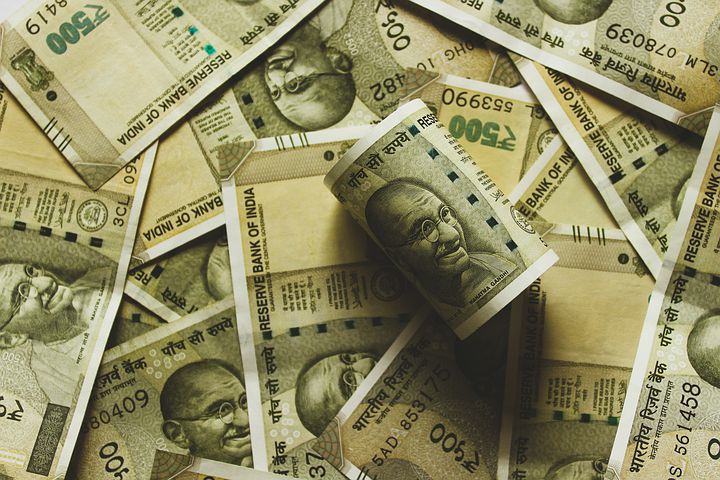
The rupee has weathered a storm in the face of heavy selling by foreign institutional investors, monetary policy tightening by the US Fed, and the ongoing war in Ukraine which led to high international oil prices.
Notably, the rupee has depreciated relatively lower against the US dollar in comparison to other major currencies. It has weakened around 8-10 per cent since the conflict began in Ukraine in late February 2022.
"It (rupee) may remain weak-to-volatile for a while, but we think the worst is largely over for the currency," Seshadri Sen, Head of Research at asset management company Alchemy Capital Management told ANI in a written response.
On being asked what was his view on the rupee not depreciating but the US dollar strengthening, Mr Sen said: "The rupee has been largely stable against the DXY dollar index, indicating that the depreciation is largely in line with global currencies. This is remarkable, given the external account headwinds the economy faces."
On foreign fund outflows from Indian financial markets, he believes the selling peaked in the first half of the calendar year 2022 and has abated since then.
"The continued tightening by the Fed has kept incremental buying at bay, in our view. We thought the continued strength of the economy and sustained earnings growth will bring the buyers back, probably sometime in FY24," Mr Sen said.
For the record, barring July and August when they were net buyers, foreign portfolio investors (FPIs) had been selling equities in the Indian markets for over a year, which started in October last year due to various reasons.
Fund inflows again seemed to have returned in November as data showed FPIs invested Rs 18,979 crore in Indian equities.
Tightening monetary policy in advanced economies including rising demand for dollar-denominated commodities, and strength in the US dollar had triggered a consistent outflow of funds from Indian markets. Investors typically prefer stable markets in times of high market uncertainty.
On the defence sector stocks outlook, as they have performed exceptionally well this year, Mr Sen was "constructive" on the sector as he sees a long "runway of growth" for Indian defence manufacturers.
"The only risk is that execution sometimes gets delayed and, given the lumpy nature of revenues, could lead to some volatility in revenue and income growth. It is an attractive sector for long-term investors."
Besides defence, he is positive on select financials, manufacturing, industrials, and capital goods sectors.
Faced with global headwinds, investors are largely into wait-and-watch mode at the present.
In this context, Sen recommended investors stay invested and not time the market.
"The equity portion of their strategic asset allocation should not be reduced, and SIPs should continue. Lumpsum investments could be staggered, but not beyond a quarter," Mr Sen said.
Responding to the question whether the Indian economy is insulated from the global slowdown and whether India is in a bright spot, he said India is less vulnerable to a global slowdown than many other emerging economies, as it has a large internal consumption base to help cushion the impact of slowing demand.
"(However) there will be some negative impact on exports for an interim period, but India should be able to weather that," he said.
The capital expenditure cycle has just started and could see a further leg-up from the private sector, Mr Sen added.

-
Why Amazon And Flipkart Are Struggling To Beat Meesho In India's Smaller Cities

With 274 million users and lowest-cost logistics, Meesho is defending its value commerce crown against giants like Amazon and Flipkart.
-
High US Salaries, No Green Card Certainty: The Financial Calculation Facing Indian H-1B Families
The suspension of PERM processing at eight technology employers does not cancel existing H-1B visas. What it does is force a question many Indian families have been avoiding: is the US salary worth tying your career and family plans to one employer?
-
Swiggy vs Eternal: Food Delivery's Two Rivals Are No Longer In The Same Race
Eternal is building a private AI assistant, dark.ai. Swiggy is still working out how to make Instamart pay, with an operating loss of Rs 895 crore in the July-September quarter while Blinkit stayed profitable.
-
Where You Live Shapes How You Get To Work | The Reason Why
Two-wheelers are the most popular way to get to work in India, accounting for nearly 43% of workplace commutes.
-
Unhedged Position: Can India See An Indonesia-Style Time Correction?
The Nifty is trading below levels it first clocked in 2024. Is there, then, as I have suggested in the headline, potential that the current time correction drags on painfully for the next three-five, even ten years?
-
Navigating Friction And Energy Realities: An Analysis Of Marco Rubio's October Visit To India
Occurring at a critical juncture marked by stalled trade negotiations and escalating geopolitical pressures over global energy supplies, the visit offers a profound window into modern US-India relations.
-
India Exports Capital. Why Not Export Trusteeship?
The big question, then, is whether India can build an institution that global borrowers, investors, banks, and lawyers can trust, even without an Indian connection.
-
France's Economy & Politics Are In Crisis | The Reason Why
Let's look at how the French economy and politics evolved under Nicolas Sarkozy, Franois Hollande and Emmanuel Macron.
-
You May Inherit The Business. You Must Earn Its Credibility.
Succession tests the founder's ability to share authority as much as it tests the next generation's readiness to assume it.
-
Signing Deals Is One Thing; Making Them Work Is Another | The Week In Whys
Sometimes, things don't turn out as planned. Indian companies have lost some bids to rivals, some projects won't produce until 2030.










