Rupee Falls To Lowest Against US Dollar In 16 Months, Breaches Key Level
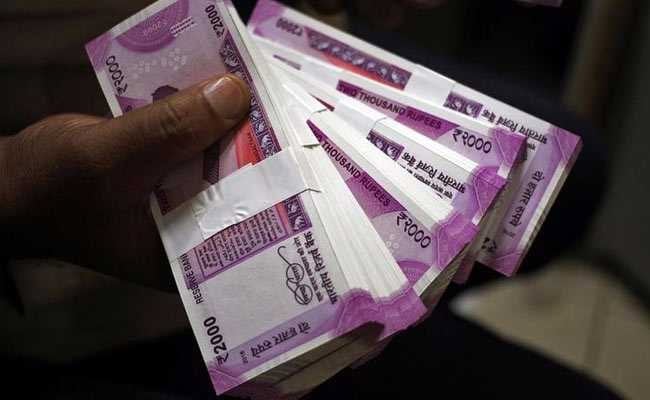
The Indian rupee (INR) today fell 56 paise against the US dollar amid volatile trade. The rupee ended at 68.07 against the US dollar, its lowest against the greenback since January 2017. The rupee had closed at 67.51 on Monday. The stock markets also remained volatile amid uncertainty over government formation in Karnataka. Though the BJP has emerged as the biggest party in the Karnataka elections, it is still short of majority, according to the latest trends. The Congress is making a bid to form a coalition government and has quickly arrived at an understanding with former prime minister Deve Gowda's regional party, the Janata Dal Secular.
Here are five things to know about dollar vs rupee trade (INR vs USD) today:
1. At day's low, the rupee fell to 68.13 against the US dollar. During the day, it traded in the range of 68.13 and 67.46.
2. Year-to-date, the rupee is down nearly 6 per cent against the US dollar amid rising oil prices. Since India imports bulk of its oil requirement, upward movement in prices of crude oil puts pressure on domestic inflation and current account deficit. Brent crude futures, the international benchmark for oil prices, today rose to as much as $78.62 per barrel, touching a three-and-a-half-year high.
3. Annual retail and wholesale inflation accelerated in April, mainly due to higher fuel and food prices. Some economists changed their views to expect a more hawkish Reserve Bank of India (RBI) at its policy meeting next month.
4. The rupee has also been hurt by outflows from domestic capital markets. So far this month, foreign portfolio investors have sold net $1.6 billion in debt and $650 million in equity, according to forex advisory firm IFA Global. The Sensex today gave up gains of over 400 points to end flat.
5. In global markets, dollar was higher against a basket of six major currencies. The dollar index against a basket of six major currencies edged up 0.2 per cent to 92.792 as easing trade tensions helped shore up the US dollar. The US 10-year bond yield had inched higher on Monday, as optimism over President Donald Trump's pledge to aid China's ZTE Corp helped assuage US-China trade frictions.

-
Navigating Friction And Energy Realities: An Analysis Of Marco Rubio's October Visit To India

Occurring at a critical juncture marked by stalled trade negotiations and escalating geopolitical pressures over global energy supplies, the visit offers a profound window into modern US-India relations.
-
India Exports Capital. Why Not Export Trusteeship?
The big question, then, is whether India can build an institution that global borrowers, investors, banks, and lawyers can trust, even without an Indian connection.
-
France's Economy & Politics Are In Crisis | The Reason Why
Let's look at how the French economy and politics evolved under Nicolas Sarkozy, Franois Hollande and Emmanuel Macron.
-
You May Inherit The Business. You Must Earn Its Credibility.
Succession tests the founder's ability to share authority as much as it tests the next generation's readiness to assume it.
-
Signing Deals Is One Thing; Making Them Work Is Another | The Week In Whys
Sometimes, things don't turn out as planned. Indian companies have lost some bids to rivals, some projects won't produce until 2030.
-
FOMC Wall, PERM Suspension, Hospital Stocks | Talking Points This Week
A PERM suspension would directly affect green-card sponsorship rather than H-1B visas, so the near-term earnings impact could remain relatively limited. The key question is whether this marks a new phase in US scrutiny of Indian IT.
-
Everything, Everywhere, All At Once: Dalal Street's Week To Forget | Joining The Dots
Visa curbs, a Starlink spat and cancer drug caps: what connects this week's shocks for Indian markets
-
India Is Going Abroad For Critical Minerals. But It May Take Years To Pay Off | The Reason Why
Although India's steps are in the right direction, they remain modest compared with India's growing dependence.
-
When Everyone Has AI, What Gives You An Edge?
India's young workforce is entering an uncertain world of work where powerful AI tools are becoming widely accessible. The advantage will belong to those who combine deep expertise with digital fluency, and the distinctly human capabilities that technology cannot manufacture.
-
Wrong Labels, High Pesticide Residues Holding Back Agri Exports | The Reason Why
India needs stronger domestic food-safety and labelling standards, with best practices becoming part of everyday business for farmers, traders and food companies.