Rupee Crashes Further Against A Surging Dollar On Global Recession Fears
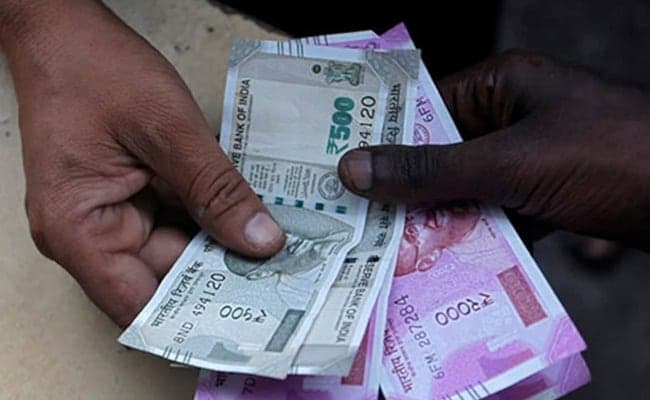
The rupee crashed early on Friday against a surging dollar on expectations of a jumbo-sized Federal Reserve rate hike next week and warnings from big world institutions of a recession in major economies.
Bloomberg quoted the rupee last at 79.8075 against the greenback after opening at 79.7962, compared to Thursday's close of 79.7012, fast approaching the psychologically key level of 80 per dollar.
PTI said the rupee fell 11 paise to 79.82 against the US dollar.
Adding to the rupee's troubles was a crash in domestic equity benchmarks.
While the dollar was slightly off its multi-year highs hit earlier this week, demand for the greenback remained robust due to predictions that the Fed would need to raise interest rates further to keep inflation under control.
The offshore yuan was forced to breach the crucial 7 per dollar level for the first time in more than two years driven by a rampant dollar, and it remained under pressure at 7.0032 in early Asian trade. The onshore unit yesterday closed at 6.9971 per dollar while teetering perilously near to the breakpoint.
"The dollar strength will persist, at least in the near term. The two key factors that are supporting the U.S. dollar are still in place, so we've got very hawkish market pricing for the FOMC...and also, we've got this worsening global growth outlook," Carol Kong, senior associate for international economics and currency strategy at Commonwealth Bank of Australia, told Reuters.
"As long as the prospect for the global economy is still weak, the US dollar can remain strong and perhaps edge a little bit higher."
The International Monetary Fund and the World Bank warned that major central banks around the world could hike their way into a recession.

-
Navigating Friction And Energy Realities: An Analysis Of Marco Rubio's October Visit To India

Occurring at a critical juncture marked by stalled trade negotiations and escalating geopolitical pressures over global energy supplies, the visit offers a profound window into modern US-India relations.
-
India Exports Capital. Why Not Export Trusteeship?
The big question, then, is whether India can build an institution that global borrowers, investors, banks, and lawyers can trust, even without an Indian connection.
-
France's Economy & Politics Are In Crisis | The Reason Why
Let's look at how the French economy and politics evolved under Nicolas Sarkozy, Franois Hollande and Emmanuel Macron.
-
You May Inherit The Business. You Must Earn Its Credibility.
Succession tests the founder's ability to share authority as much as it tests the next generation's readiness to assume it.
-
Signing Deals Is One Thing; Making Them Work Is Another | The Week In Whys
Sometimes, things don't turn out as planned. Indian companies have lost some bids to rivals, some projects won't produce until 2030.
-
FOMC Wall, PERM Suspension, Hospital Stocks | Talking Points This Week
A PERM suspension would directly affect green-card sponsorship rather than H-1B visas, so the near-term earnings impact could remain relatively limited. The key question is whether this marks a new phase in US scrutiny of Indian IT.
-
Everything, Everywhere, All At Once: Dalal Street's Week To Forget | Joining The Dots
Visa curbs, a Starlink spat and cancer drug caps: what connects this week's shocks for Indian markets
-
India Is Going Abroad For Critical Minerals. But It May Take Years To Pay Off | The Reason Why
Although India's steps are in the right direction, they remain modest compared with India's growing dependence.
-
When Everyone Has AI, What Gives You An Edge?
India's young workforce is entering an uncertain world of work where powerful AI tools are becoming widely accessible. The advantage will belong to those who combine deep expertise with digital fluency, and the distinctly human capabilities that technology cannot manufacture.
-
Wrong Labels, High Pesticide Residues Holding Back Agri Exports | The Reason Why
India needs stronger domestic food-safety and labelling standards, with best practices becoming part of everyday business for farmers, traders and food companies.










