Rising Defaults Spark Rules That Drag Bond Sales To 2008 Low
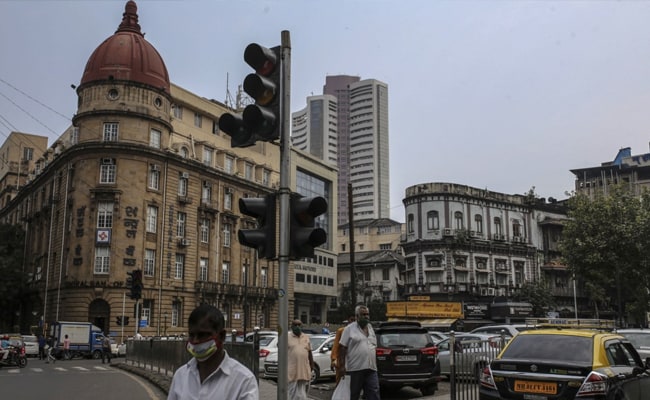
Rising defaults have prompted India to tighten oversight of corporate bond sales, causing issuance to slump in a blow to a long-sought goal of expanding the market.
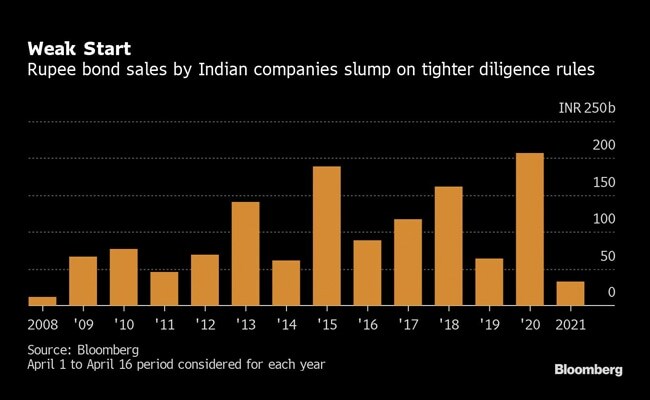
Offerings of rupee notes have fallen to Rs 4,380 crore ($584 million) this month, the slowest start to a financial year since 2008. That's due in part to rules that took effect April 1 strengthening the role of trustees for secured bonds backed by assets. Such offerings have made up about 60 per cent of India's total domestic issuance in the last 10 years.
Firms defaulted on at least Rs 5,200 crore of domestic bonds so far this year, the most on record for a similar period. That comes as a setback as Covid-19 cases surge recently. It also reverses the trend from last year when unprecedented stimulus helped the pace of non-repayment slow from an all-time high in 2019.
What The New Rules Do
- Starting this month, bond trustees need to evaluate and ensure that assets backing bonds are at all times adequate to discharge the interest and principal amount.
- They have to carry out checks and validate that the issuer has the necessary permissions from lenders in case the company creates any further charge on the asset.
- The trustees also need to provide 'due diligence certificates' to the issuer at the time of filing a draft offer agreement and before the notes are listed.
What's Next
- Some bond arrangers see the slowdown in the primary market as temporary, and expect issuance to pick up as companies comply with the new regulations.
- Issuance of unsecured bonds, which aren't covered by the rules, may roll on. Bankers say offerings of such notes from government-owned companies that tend to sell them should continue apace.
- State-run REC Ltd. is seeking bids for as much as Rs 4,000 crore of unsecured notes maturing in 2024 on Monday.
(Except for the headline, this story has not been edited by NDTV staff and is published from a syndicated feed.)

-
Where You Live Shapes How You Get To Work | The Reason Why

Two-wheelers are the most popular way to get to work in India, accounting for nearly 43% of workplace commutes.
-
High US Salaries, No Green Card Certainty: The Financial Calculation Facing Indian H-1B Families
The suspension of PERM processing at eight technology employers does not cancel existing H-1B visas. What it does is force a question many Indian families have been avoiding: is the US salary worth tying your career and family plans to one employer?
-
Unhedged Position: Can India See An Indonesia-Style Time Correction?
The Nifty is trading below levels it first clocked in 2024. Is there, then, as I have suggested in the headline, potential that the current time correction drags on painfully for the next three-five, even ten years?
-
Navigating Friction And Energy Realities: An Analysis Of Marco Rubio's October Visit To India
Occurring at a critical juncture marked by stalled trade negotiations and escalating geopolitical pressures over global energy supplies, the visit offers a profound window into modern US-India relations.
-
India Exports Capital. Why Not Export Trusteeship?
The big question, then, is whether India can build an institution that global borrowers, investors, banks, and lawyers can trust, even without an Indian connection.
-
France's Economy & Politics Are In Crisis | The Reason Why
Let's look at how the French economy and politics evolved under Nicolas Sarkozy, Franois Hollande and Emmanuel Macron.
-
You May Inherit The Business. You Must Earn Its Credibility.
Succession tests the founder's ability to share authority as much as it tests the next generation's readiness to assume it.
-
Signing Deals Is One Thing; Making Them Work Is Another | The Week In Whys
Sometimes, things don't turn out as planned. Indian companies have lost some bids to rivals, some projects won't produce until 2030.
-
FOMC Wall, PERM Suspension, Hospital Stocks | Talking Points This Week
A PERM suspension would directly affect green-card sponsorship rather than H-1B visas, so the near-term earnings impact could remain relatively limited. The key question is whether this marks a new phase in US scrutiny of Indian IT.
-
Everything, Everywhere, All At Once: Dalal Street's Week To Forget | Joining The Dots
Visa curbs, a Starlink spat and cancer drug caps: what connects this week's shocks for Indian markets









