The Rise Of India's New Billionaires As Business Dynasties Flounder
India is going through one of the greatest periods of wealth creation -- and destruction -- all at the same time.
A new breed of self-made entrepreneurs is vaulting into the ranks of the wealthy, offsetting billions lost by debt-burdened industrialists and members of the country's old dynasties. The changes are set to help India's ultra-rich population grow at the world's fastest pace.
It's a shift shaped partly by a debt-fueled expansion that left businesses from power generation to airlines with $190 billion in soured loans. Over the past few years, Prime Minister Narendra Modi's government has cracked down on delinquent borrowers, and banks moved to seize their assets, a dramatic change for a country where the wealthy once enjoyed almost complete protection.
While old business clans continue to dominate the country's rich lists, a tenfold expansion in its economy since its opening in the 1990s has spawned new tycoons in fields like technology. The number of billionaires in India more than doubled to 119 between 2013 and 2018, according to Knight Frank. And the country will lead the global growth in ultrahigh net worth individuals, with its numbers rising 39 percent to 2,697 by 2023, the researcher estimates.
"The business environment has improved over the years," said Charles Dhanaraj, a professor at the Fox School of Business at Temple University in Philadelphia. "The availability of venture capital and private equity has changed the opportunity space for promising businesses. So we should see more of these startups and scaleups in the coming years."
Here are some well-known names who have seen a shift in their fortunes:
Old Money
Telecom Troubles:

Anil Ambani, the younger brother of Asia's richest man, inherited some of the newer businesses of Reliance Industries Ltd. in 2005 as part of a settlement with older sibling, Mukesh, following the death of their father Dhirubhai Ambani three years earlier. Now, more than a decade later, the younger Ambani has been fending off creditors and fighting multiple cases in courts amid his phone carrier Reliance Communications Ltd.'s slide into bankruptcy. A representative for Anil Ambani didn't comment. The value of his holdings in companies has plunged to about $120 million from a net worth of at least $31 billion in 2008, according to the Bloomberg Billionaires Index.
A Boom and Crash:
The first-generation entrepreneurs, Shashi and Ravi Ruia, started the Essar Group in 1969 as a construction company. Later they diversified into new businesses, investing about $18 billion between 2008 and 2012. The excessive leverage across the group and some adverse policy actions forced them to sell many of their assets. The Ruia brothers were jointly worth more than $4 billion at the start of 2015, and have since lost their billionaire status, according to the Bloomberg Billionaires Index.
The Turbine Maker:
Tulsi Tanti's Suzlon Energy Ltd. purchased German REpower Systems for nearly $2 billion in 2007 to be hailed as a global company, but things went downhill from there. Once the world's top turbine maker, Suzlon's debt-driven expansion caused one of India's largest corporate debt default in 2012. Seven years later Tanti is struggling to repair his company's finances. Tanti, who had a net worth of more than $5.7 billion in 2007, has lost his billionaire status, according to data compiled by Bloomberg.
The Beer Baron:

After inheriting his father's liquor empire, Vijay Mallya, started Kingfisher Airlines Ltd. Struggling to repay lenders, the carrier was grounded seven years later. Mallya is currently fighting an extradition case in London after fleeing India. Lenders have sought to recover as much as $1.5 billion from the man known as "the king of good times'' for his flamboyant lifestyle.
New Money
Retail Tycoons:

Sachin Bansal and Binny Bansal, who aren't related, created Flipkart, India's largest online retailer, within a decade. Last year, they sold their company to Walmart Inc., becoming billionaires. Binny left shortly after, with Walmart said to have conducted an inquiry into a consensual relationship he had with a woman. He still holds 4 percent of Flipkart and a board seat. Sachin exited Flipkart at the time of the Walmart acquisition.
The Payment Guru:

Vijay Shekhar Sharma founded One97 Communications in 2000 when fewer than 10 million Indians were online. Business at his Paytm digital payment unit soared after the government eliminated 500- and 1,000-rupee banknotes at the end of 2016. An August 2018 funding round valued One97 at more than $10 billion, people familiar with the matter said at the time. Sharma currently owns 15 percent of the company, according to a person familiar with the matter.
Laws of Motion:
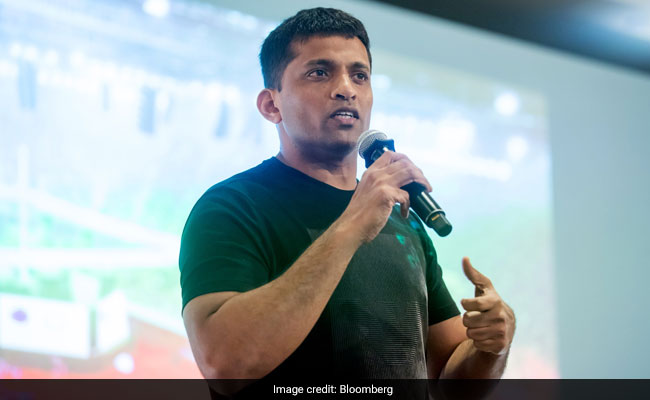
Byju Raveendran, chief executive of Bangalore-based Think & Learn Pvt., launched the Byju's K-12 education app in 2015. His videos explain fractions of the laws of motion at a conceptual level, drawing almost 30 million users from 1,700 cities. A December funding round valued it at $3.6 billion. Raveendran, his wife and brother together own about 36 percent, according to Raveendran.

-
Talking Points This Week: Tech Nerves, FII Buying, And A Faraway Banking Shock

The global markets are not shining this Diwali. The exception in the large markets is, India.
-
Midterm Rally Lasted A Day. The Hard Reality Of A Divided US May Last Two Years | Opinion
Between a contested AI boom, a debt ceiling that arrives in 2027 and a president with every incentive to act alone, the next two years may prove more volatile than the first day's rally suggests.
-
Blue Wave Will Derail the AI Trade but Won't Dismantle the AI Era | Unhedged Position
The Democrats' sweep of the US Congress will see politics collide with economic forces both over the long and short term.
-
It's Time To Take The GST Council's Bet On Trust Global
Payment records can prove India's services exports, and clear, proportionate rules can bring foreign digital sellers into the tax net.
-
Opinion | India at 38: From Innovation Overperformer to Innovation Powerhouse
India now has 453 VC-backed deep science startups, 18 of them late-stage, after 117 percent growth since 2020. Laurus Labs, at USD 9.3 billion, is the most valuable deep science company in any middle-income economy outside China.
-
Navigating Energy Crossroads: S Jaishankar's Call For Diversified Supply Chains At G20 Ministerial Meeting
As geopolitical fault lines continue to test maritime trade routes and commodity flows, Jaishankar's message remains pertinent: true economic resilience requires open markets, protected transit lines, and a genuine commitment to multilateral cooperation rather than coercion.
-
Indians Are Travelling, But Not Every Journey Is A Holiday | The Week In Whys
Pilgrims, patients and working women are the real travellers, and the system hasn't quite caught up with them.
-
Getting To Work Costs Women More | The Reason Why
It is not just about women paying more than men. It is about women paying much more in cities than in villages.
-
AI Bias In Investing Cannot Be Eliminated, But It Can Be Governed
Framing is a particularly important example as identical financial information presented in terms of gains rather than losses can lead an LLM to reach a different assessment.









