Revenue Secretary Says Ready For GST, Anti-Profiteering Rules Soon
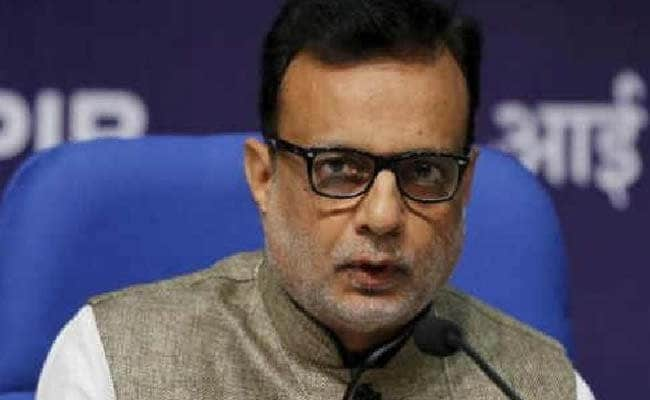
New Delhi: India is ready to launch the Goods and Services Tax (GST) on July 1, the official steering the process told Reuters, saying the technology that will drive it is robust and dismissing fears the tax is too complicated.
Hasmukh Adhia, revenue secretary at the Finance Ministry, also said rules would be issued "soon" to deter unscrupulous businesses from exploiting the tax reform to gouge customers.
The biggest tax reform in India's 70-year history as an independent nation would, overnight, unify its $2-trillion economy and 1.3 billion people into a single market, tearing down trade barriers between more than 30 states and territories.
It would also require firms to file at least three online tax returns monthly into the GST Network, a massive IT back-end that will process up to 5 billion invoices a month.
The compliance burden and the tax's complex structure - it has four main rates ranging from 5 to 28 percent - have sparked fears of initial chaos.
In particular, businesses worry that they will struggle to reconcile invoices, blocking the flow of tax credits down supply chains, forcing them to commit time and effort to resolving disputes and reworking budgets.
Adhia, viewed as close to Prime Minister Narendra Modi, dismissed those fears outright and ruled out a delay to a reform that has been more than a decade in the making.
"Everything is ready. We will roll out on July 1," he said in an interview at his office in North Block, a sandstone edifice in the heart of New Delhi dating from the British colonial era.
MOVING THE GOALPOSTS
The reform represents an unprecedented exercise in fiscal federalism. A GST Council that brings together the federal and state governments has met 16 times to thrash out how the tax will work. It meets again on Sunday.
The tax rates for goods and services were only worked out in recent weeks and, at the council's meeting last weekend, several were amended following complaints by businesses.
Still, Adhia said, the multi-rate structure is far simpler than India's existing federal and state taxes - even if he would have preferred a flatter structure.
"This is a great step for simplification - although not the ideal GST that we should have," he said. "It is a technological marvel, as well as a fiscal marvel."
PROGRESSIVE TAX
The multi-rate structure of the GST exempts or imposes a low rate of tax on essential items, while the top rate of 28 percent applies to items such as consumer durables.
Adhia said the GST would be reviewed on an ongoing basis, adding that he would like to see the top rate reduced in future.
"I'm not at all happy with my 28 percent slab. It's a very odd number. One should try to bring it down," he said.
Where the headline rate of tax goes up under GST, the government will be vigilant in seeking to prevent profiteering. "We will come out with our anti-profiteering rules soon," Adhia said, without elaborating.
He dismissed speculation that the GST Network might crash, or data security be compromised, after launch.
"We have a contingency plan for everything - don't worry," he said. "Every angle is secure. It is the best system."
Adhia said he expected the GST to overcome initial hiccoughs and help businesses become more efficient over time, by cutting logistics and inventory costs, freeing them to invest and grow.
"The economy will become more efficient and we should see greater benefits coming to everybody," he said.
(Except for the headline, this story has not been edited by NDTV staff and is published from a syndicated feed.)

-
Midterm Rally Lasted A Day. The Hard Reality Of A Divided US May Last Two Years | Opinion

Between a contested AI boom, a debt ceiling that arrives in 2027 and a president with every incentive to act alone, the next two years may prove more volatile than the first day's rally suggests.
-
Blue Wave Will Derail the AI Trade but Won't Dismantle the AI Era | Unhedged Position
The Democrats' sweep of the US Congress will see politics collide with economic forces both over the long and short term.
-
It's Time To Take The GST Council's Bet On Trust Global
Payment records can prove India's services exports, and clear, proportionate rules can bring foreign digital sellers into the tax net.
-
Opinion | India at 38: From Innovation Overperformer to Innovation Powerhouse
India now has 453 VC-backed deep science startups, 18 of them late-stage, after 117 percent growth since 2020. Laurus Labs, at USD 9.3 billion, is the most valuable deep science company in any middle-income economy outside China.
-
Navigating Energy Crossroads: S Jaishankar's Call For Diversified Supply Chains At G20 Ministerial Meeting
As geopolitical fault lines continue to test maritime trade routes and commodity flows, Jaishankar's message remains pertinent: true economic resilience requires open markets, protected transit lines, and a genuine commitment to multilateral cooperation rather than coercion.
-
Indians Are Travelling, But Not Every Journey Is A Holiday | The Week In Whys
Pilgrims, patients and working women are the real travellers, and the system hasn't quite caught up with them.
-
Getting To Work Costs Women More | The Reason Why
It is not just about women paying more than men. It is about women paying much more in cities than in villages.
-
AI Bias In Investing Cannot Be Eliminated, But It Can Be Governed
Framing is a particularly important example as identical financial information presented in terms of gains rather than losses can lead an LLM to reach a different assessment.
-
Joining The Dots | Dark Skies, Steady Diya: Why Hope Holds This Diwali
With war, a weak rupee and foreign outflows weighing on sentiment, policymakers at the NDTV World Summit and market veterans at NDTV Profit Ignite: Diwali Edition offered the same advice: stay invested and filter out the noise.









