Retail Sales Growth Slows In December Amid Omicron-Led Curbs
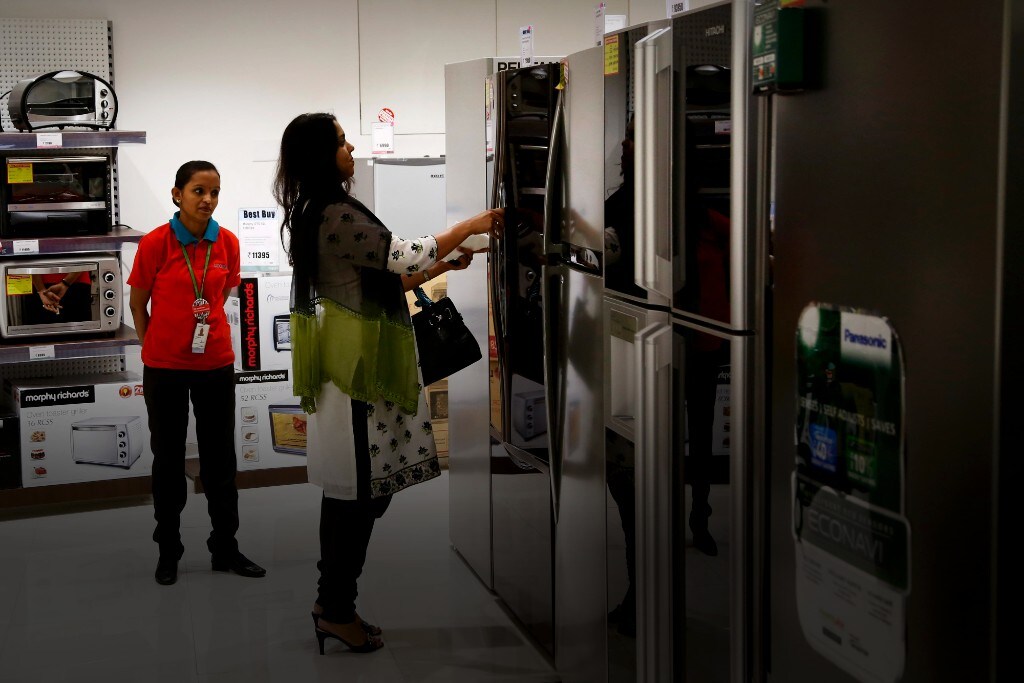
Retail sales growth slowed sequentially in December as concerns about the rapid spread of the Omicron variant of coronavirus kept shoppers at home, amid fresh curbs imposed to combat the third wave.
Sales grew 7% in December 2021 compared to December 2019 or pre-pandemic levels, showed the monthly retail business survey released by the Retailers Association of India. However, it fell from 9% in November and 14% in October—a sign of uneven recovery. December is usually considered a high-sales month for the retail sector.
“Business was on a steady growth trajectory during most of December, but the pace of growth was seen as dropping off significantly towards the last week of December, due to the fresh set of curbs imposed in most parts of the country," Kumar Rajagopalan, chief executive officer at Retailers Association of India, told BloombergQuint.
The impact was more visible in discretionary spends for categories such as beauty, wellness and personal care. Sales in the segment fell 7% in December after growing 3% in November. Furniture and home furnishing also reported a 5% dip in sales compared to the pre-pandemic sales in December 2019, the survey showed.
Spending on consumer durables, apparel and clothing, and sports goods, too, fell. Consumers, however, spent more on quick service restaurants, food, grocery and footwear. Jewellery sales also rose during the month on the back of the wedding season.
Impact To Be Largely Muted
The third wave is rapidly spreading with new cases rising to nearly 1,68,000 on Tuesday, although death rates remain low. Yet, economists said that the adverse economic impact of the third wave should be muted in comparison to the previous two waves, even as services will take a larger hit.
“Voluntary pullbacks and restrictions such as night curfews and on-contact intensive services are starting to bite, as evidenced by the fall in mobility and airline traffic,” Nomura economists Sonal Varma and Aurodeep Nandi wrote in a note on Jan. 10.
The Nomura India Business Resumption Index, a weekly tracker of the pace at which economic activity is normalising, fell sharply to 109.9 for the week ending Jan. 9, from 119.8 during the prior week.
The drop was largely due to a 50 percentage point weekly fall in the Apple driving index. The Google retail and recreation mobility index dropped 5.6 percentage points, while workplace mobility slipped 0.7 percentage points.
The labour participation rate inched down to 40% from 40.6% in the prior week, with the unemployment rate up by 0.7 percentage points to 7.3%, said Nomura. The index is now 10 percentage points above pre-pandemic levels.
East India Sees Steepest Fall
Retailers in east India reported the steepest decline in business with six percentage points drop in sales month-on-month, according to the survey.
Those in the western part of the country saw business plunge by 2 percentage points to 9% in December, while retailers in the southern region saw a 1 percentage point dip.
North India, however, reported a 4 percentage point sales growth in December to 10%.
The association, Rajagopalan said, has appealed to the Ministry of Home Affairs and the Ministry of Health and Family Welfare to instruct states to refrain from imposing restrictions based on positivity rate, and instead consider hospitalisations as the criteria to determine the severity of restrictions.
“Doing so will avoid unnecessary panic among citizens and businesses while minimising the impact on livelihoods,” he said.

-
Navigating Energy Crossroads: S Jaishankar's Call For Diversified Supply Chains At G20 Ministerial Meeting

As geopolitical fault lines continue to test maritime trade routes and commodity flows, Jaishankar's message remains pertinent: true economic resilience requires open markets, protected transit lines, and a genuine commitment to multilateral cooperation rather than coercion.
-
Indians Are Travelling, But Not Every Journey Is A Holiday | The Week In Whys
Pilgrims, patients and working women are the real travellers, and the system hasn't quite caught up with them.
-
Getting To Work Costs Women More | The Reason Why
It is not just about women paying more than men. It is about women paying much more in cities than in villages.
-
AI Bias In Investing Cannot Be Eliminated, But It Can Be Governed
Framing is a particularly important example as identical financial information presented in terms of gains rather than losses can lead an LLM to reach a different assessment.
-
Joining The Dots | Dark Skies, Steady Diya: Why Hope Holds This Diwali
With war, a weak rupee and foreign outflows weighing on sentiment, policymakers at the NDTV World Summit and market veterans at NDTV Profit Ignite: Diwali Edition offered the same advice: stay invested and filter out the noise.
-
The Curious Case of Equitas Small Finance Bank And A CEO Who Quit For Stock
PN Vasudevan believes persistent investor concerns over a perceived conflict of interest had become a governance overhang on Equitas Small Finance Bank's stock, even as the lender improved profitability and asset quality.
-
Talking Points This Week: AI Cash Burn, A Tiger Comeback And An India That Still Finds Its Own Path
India is not immune to higher oil or tighter global liquidity, yet its earnings base is broader, its domestic policy levers are still available.
-
Foreign Investors Own Half Of HDFC Bank and ICICI Bank. An LTCG Cut Could Matter Most Here
Foreign portfolio investors have US$115 billion parked in HDFC Bank, ICICI Bank. If the government cuts long-term capital gains tax, Jefferies says returning foreign money could land here first.
-
'Never Seen This Level Of Negativity': Sandeep Tandon Says The Next Rally May Be Closer Than You Think
Veteran investor Sandeep Tandon says foreign selling is easing, large-caps are due a comeback and mid-caps are crowded, while he turns positive on gold, power and pharma this Diwali.
-
Indians Stay With Family, Not In Hotels | The Reason Why
India still lacks enough clean, reliable and affordable hotels for budget-conscious travellers.










