Renting Homes May Be More Beneficial Than Buying: Study
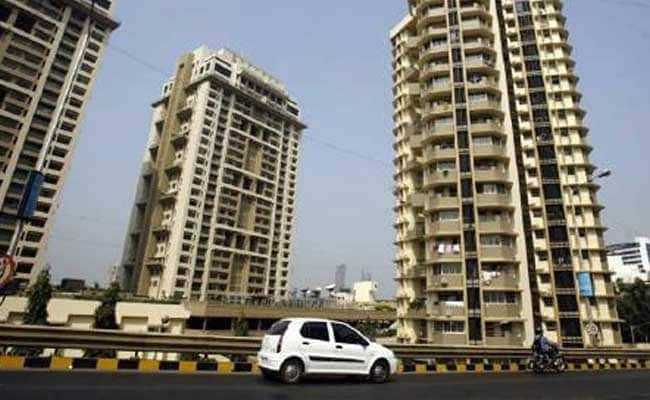
London: Renting a house may be financially more beneficial than owning one, according to a new research which claims that people often overlook the costs of building insurance and property maintenance when buying homes.
The prospect of no longer having to pay rent, known as imputed rent, is often cited as a major incentive to owning a home.
However, Isaac Tabner from the University of Stirling in the UK has argued that many buyers overlook costs included in their rent, such as building insurance and property maintenance.
He believes a failure to properly account for these outgoings can cause householders to overestimate the financial benefits of owning versus renting.
"Individual circumstances and market conditions play a big part in determining whether it is smarter to rent or buy, but this research should help households, financial planners and policy-makers make an informed choice," said Tabner.
The new research provides a step-by-step explanation of how households can objectively compare the costs of renting versus buying a home, while taking their own personal circumstances and macro-economic conditions into account.
In reviewing transaction costs, imputed rental yields, opportunity costs, inflation and the length of time owning a home, the study also shows that - during periods of deflation or zero inflation - people who rent are financially better-off than those who own their home.
Even when economic conditions are favourable, households may need to own their home for between five and 10 years before returns from the rent they are no longer paying are sufficient to compensate for the high transaction costs of buying.
However, increases in inflation and imputed rent, tip the balance in favour of ownership.
"It is often thought that buying a house makes more financial sense in the long run: however renting is frequently more worthwhile than buying for financially-constrained households, as well as households likely to relocate within 10 years," said Tabner.
The research charts how deflation or rising interest rates without a corresponding increase in wages, has the potential to impact negatively on homeowners.
The study shows that, for someone purchasing a home with no mortgage, deflation of just one per cent per year can result in an equivalent loss of half the present purchase value of their home if they hold it for 45 years.
By contrast, inflation - including wages - of two per cent per year, results in the same individual gaining 50 per cent of the present purchase value of their home if held for around 28 years.
The study was published in the journal International Review of Financial Analysis.
(This story has not been edited by NDTV staff and is auto-generated from a syndicated feed.)

-
It's Time To Take The GST Council's Bet On Trust Global

Payment records can prove India's services exports, and clear, proportionate rules can bring foreign digital sellers into the tax net.
-
Opinion | India at 38: From Innovation Overperformer to Innovation Powerhouse
India now has 453 VC-backed deep science startups, 18 of them late-stage, after 117 percent growth since 2020. Laurus Labs, at USD 9.3 billion, is the most valuable deep science company in any middle-income economy outside China.
-
Navigating Energy Crossroads: S Jaishankar's Call For Diversified Supply Chains At G20 Ministerial Meeting
As geopolitical fault lines continue to test maritime trade routes and commodity flows, Jaishankar's message remains pertinent: true economic resilience requires open markets, protected transit lines, and a genuine commitment to multilateral cooperation rather than coercion.
-
Indians Are Travelling, But Not Every Journey Is A Holiday | The Week In Whys
Pilgrims, patients and working women are the real travellers, and the system hasn't quite caught up with them.
-
Getting To Work Costs Women More | The Reason Why
It is not just about women paying more than men. It is about women paying much more in cities than in villages.
-
AI Bias In Investing Cannot Be Eliminated, But It Can Be Governed
Framing is a particularly important example as identical financial information presented in terms of gains rather than losses can lead an LLM to reach a different assessment.
-
Joining The Dots | Dark Skies, Steady Diya: Why Hope Holds This Diwali
With war, a weak rupee and foreign outflows weighing on sentiment, policymakers at the NDTV World Summit and market veterans at NDTV Profit Ignite: Diwali Edition offered the same advice: stay invested and filter out the noise.
-
The Curious Case of Equitas Small Finance Bank And A CEO Who Quit For Stock
PN Vasudevan believes persistent investor concerns over a perceived conflict of interest had become a governance overhang on Equitas Small Finance Bank's stock, even as the lender improved profitability and asset quality.
-
Talking Points This Week: AI Cash Burn, A Tiger Comeback And An India That Still Finds Its Own Path
India is not immune to higher oil or tighter global liquidity, yet its earnings base is broader, its domestic policy levers are still available.










