Renewable Energy Companies Welcomes National Hydrogen Policy
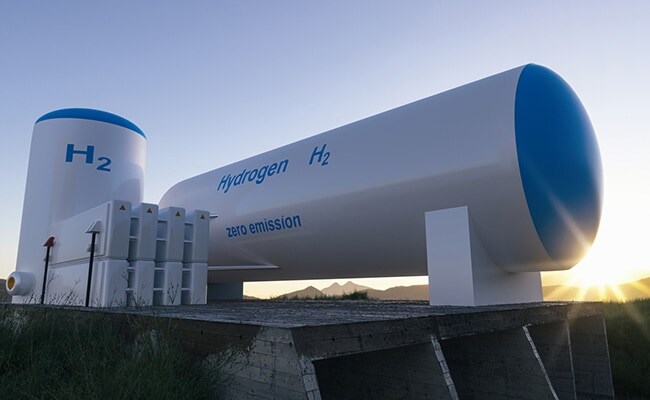
Renewable energy companies on Thursday welcomed National Hydrogen Policy but sought clarity on charges for intra-state wheeling of electricity. Manoj K Upadhyay, founder and chairman, ACME Group said, the policy is the first concrete step in the direction of creating a favourable regulatory and enabling environment for the green hydrogen and ammonia sector in India.
The government has tried to address some of the key demands of the industry in terms of open access, grid banking and faster approvals for green hydrogen and ammonia projects," he said welcoming the provisions to set up bunkers near ports for the export of green ammonia.
Going forward, it will be important to build upon the first phase of the policy and for the government to subsequently come up with policy measures for initial demand creation by means of mandatory green hydrogen and ammonia purchase obligations and at the same time, an equivalent of PLI scheme for green ammonia to make India competitive globally, he added.
ReNew Power Chief Commercial Officer Mayank Bansal said the policy is "a very good step in the right direction as India looks to become a net-zero economy by 2070 and will add to the momentum to that crucial goal." "Currently, manufacturing green hydrogen is a costly proposition and in cognizance of this, the government has correctly waived inter-state transmission charges for a period of 25 years, which will help in bringing down the cost of green hydrogen.
"The government has also allowed banking of power for 30 days, which will help improve the utilization of capital-intensive electrolyser assets," he said.
The firm however sought more clarity on application of cross-subsidy surcharge and additional cross-subsidy surcharge since the policy allows production at different locations by different parties.
"Further, the decision to include biomass as a fuel for generation of green hydrogen is a step in the right direction," added Bansal.
He said it's a much-needed initiative and now state governments should take the cue from this policy and extend benefits such as waiver of intra-state transmission charges and electricity duty.
"This will help the cause of making India a green hydrogen hub," said Bansal.
Anish De, National Head - Energy, Natural Resources and Chemicals, KPMG in India, said transmission charges waiver till 2025 is open ended in terms of capacity.
"Double edged sword - if a lot of capacity comes in it will be policy success but at the cost of other transmission users and ratepayers. There is already a lot or noise on high transmission charges," he said.
Stating that not all capacity will be on inter-state, he said, how state regulators play needs to be seen. "They are not obliged by law to comply on charges." "Cross subsidy surcharge implications need to be understood especially for third party developers. The policy talks of own or third party development in the same breath, but the law sees it differently," he added.
Anvesha Thakker, Partner and Lead, Renewable Energy, KPMG in India, said green hydrogen is one of the most critical clean energy sources for decarbonizing India's energy needs and enhancing energy security in a sustainable manner.
"In the newly announced Green Hydrogen Policy, the government has touched upon several factors to bring down costs and improve ease of implementation of green hydrogen/ green ammonia projects," he said.
"However, the policy needs to address the expectations of hydrogen producers by providing clarity on demand side measures such as hydrogen purchase obligations. Similarly, there is no clarity as yet on measures to facilitate localization of electrolyzer manufacturing. Further, there is no mention of derivatives of green hydrogen other than green ammonia, such as methanol."

-
Opinion | India at 38: From Innovation Overperformer to Innovation Powerhouse

India now has 453 VC-backed deep science startups, 18 of them late-stage, after 117 percent growth since 2020. Laurus Labs, at USD 9.3 billion, is the most valuable deep science company in any middle-income economy outside China.
-
Navigating Energy Crossroads: S Jaishankar's Call For Diversified Supply Chains At G20 Ministerial Meeting
As geopolitical fault lines continue to test maritime trade routes and commodity flows, Jaishankar's message remains pertinent: true economic resilience requires open markets, protected transit lines, and a genuine commitment to multilateral cooperation rather than coercion.
-
Indians Are Travelling, But Not Every Journey Is A Holiday | The Week In Whys
Pilgrims, patients and working women are the real travellers, and the system hasn't quite caught up with them.
-
Getting To Work Costs Women More | The Reason Why
It is not just about women paying more than men. It is about women paying much more in cities than in villages.
-
AI Bias In Investing Cannot Be Eliminated, But It Can Be Governed
Framing is a particularly important example as identical financial information presented in terms of gains rather than losses can lead an LLM to reach a different assessment.
-
Joining The Dots | Dark Skies, Steady Diya: Why Hope Holds This Diwali
With war, a weak rupee and foreign outflows weighing on sentiment, policymakers at the NDTV World Summit and market veterans at NDTV Profit Ignite: Diwali Edition offered the same advice: stay invested and filter out the noise.
-
The Curious Case of Equitas Small Finance Bank And A CEO Who Quit For Stock
PN Vasudevan believes persistent investor concerns over a perceived conflict of interest had become a governance overhang on Equitas Small Finance Bank's stock, even as the lender improved profitability and asset quality.
-
Talking Points This Week: AI Cash Burn, A Tiger Comeback And An India That Still Finds Its Own Path
India is not immune to higher oil or tighter global liquidity, yet its earnings base is broader, its domestic policy levers are still available.
-
Foreign Investors Own Half Of HDFC Bank and ICICI Bank. An LTCG Cut Could Matter Most Here
Foreign portfolio investors have US$115 billion parked in HDFC Bank, ICICI Bank. If the government cuts long-term capital gains tax, Jefferies says returning foreign money could land here first.










