Relief For Home Buyers: Cabinet Clears Ordinance For Bankruptcy Code Amendments
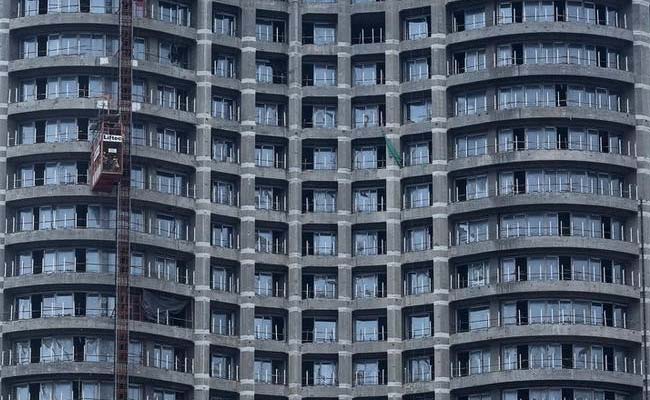
The Cabinet on Wednesday approved promulgation of an ordinance to amend the Insolvency and Bankruptcy Code (IBC). The ordinance proposes to classify home buyers as "financial creditors" at par with lenders to help them swiftly get refunds from the defaulting real estate companies. The amendment was introduced comes months after a new Section 29A was added into the bankruptcy code in November, introducing four layers of ineligibility for potential bidders.
The amendment was mooted on the suggestions of a 14-member government appointed committee. The Insolvency Law Committee had last month recommended to the Ministry of Corporate Affairs, that home buyers should be treated as financial creditors, which will allow them to equitably participate in an insolvency resolution process.
Briefing reporters after the meeting of the Union Cabinet, Minister for Law and Justice Ravi Shankar Prasad said, "It's a new legislation...the Cabinet has approved it".
Mr Prasad, however, didn't divulge any more details citing constitutional provisions. He said, "An Ordinance, till it is approved by the President, I cannot speak about the details".
The Cabinet panel has also suggested relaxations for micro, small and medium enterprises (MSMEs) under the IBC.
With realty firms, such as Jaypee Infratech, facing insolvency proceedings, the ordinance, once approved by President Ramnath Kovind and promulgated, will provide relief for home buyers facing hardships due to incomplete real estate projects.
Under the code, financial creditor implies any person to whom a financial debt is owed. The financial debt can include money borrowed for interest.
The panel had suggested that the government should exempt MSMEs from application of certain provisions of the code. "Illustratively, since usually only promoters of an MSME are likely to be interested in acquiring it, applicability of section 29A has been restricted only to disqualify wilful defaulters from bidding for MSMEs," it had noted. Section 29A of the Code pertains to ineligibility criteria for bidders.
Besides, the panel had suggested that only those who contributed to defaults of the company or are otherwise undesirable should be ineligible from bidding for stressed assets under the Code.
For withdrawal of resolution application in exception circumstances, the panel has suggested that in such cases, there should be approval from the Committee of Creditors (CoC) with ninety per cent of voting share.
"In order to facilitate successful implementation of the resolution plan by the successful bidder, it has been proposed to allow one year time to obtain necessary statutory clearances from central, state and other authorities or such time as specified in the relevant law, whichever is later," the committee said.
In January, the IBC was amended to prevent unscrupulous persons from misusing the law. Wilful defaulters and those whose accounts have been classified as non-performing assets, among others, are barred from bidding for stressed assets. The IBC, which came into force on December 2016, provides for market-determined and time-bound insolvency resolution process.
Last week Tata Steel, in a first successful acquisition of a bankrupt firm under the IBC provisions, acquired Bhushan Steel that was unable to pay to its creditors. "Settlements of the amounts equivalent to Rs. 35,200 crore towards financial creditors of Bhushan Steel is being undertaken as per the terms of resolution plan as approved by the NCLT on May 15," announced Tata Steel on Friday.
(With PTI inputs)

-
A New Samvat Wishlist: Inclusive Prosperity And Human Development

India has strengthened its economic foundations through infrastructure, digital access and enterprise. Its next growth chapter must deepen productivity, create better livelihoods and widen participation in prosperity.
-
Love, Sex Aur Dhokha: The Audacious Plot To Spy On Jensen Huang
A Taipei dinner, a Singapore chip buyer and a suspected Chinese asset: inside the alleged spy operation that got close to NVIDIA's Jensen Huang.
-
Ten Things I Learnt This Samvat
Patience can be a trap. Cheap stocks can stay cheap. Leverage can wipe you out. What did Samvat 2082 teach us? Niraj Shah writes on 10 lessons from the year gone by.
-
Talking Points This Week: Tech Nerves, FII Buying, And A Faraway Banking Shock
The global markets are not shining this Diwali. The exception in the large markets is, India.
-
Midterm Rally Lasted A Day. The Hard Reality Of A Divided US May Last Two Years | Opinion
Between a contested AI boom, a debt ceiling that arrives in 2027 and a president with every incentive to act alone, the next two years may prove more volatile than the first day's rally suggests.
-
Blue Wave Will Derail the AI Trade but Won't Dismantle the AI Era | Unhedged Position
The Democrats' sweep of the US Congress will see politics collide with economic forces both over the long and short term.
-
It's Time To Take The GST Council's Bet On Trust Global
Payment records can prove India's services exports, and clear, proportionate rules can bring foreign digital sellers into the tax net.
-
Opinion | India at 38: From Innovation Overperformer to Innovation Powerhouse
India now has 453 VC-backed deep science startups, 18 of them late-stage, after 117 percent growth since 2020. Laurus Labs, at USD 9.3 billion, is the most valuable deep science company in any middle-income economy outside China.
-
Navigating Energy Crossroads: S Jaishankar's Call For Diversified Supply Chains At G20 Ministerial Meeting
As geopolitical fault lines continue to test maritime trade routes and commodity flows, Jaishankar's message remains pertinent: true economic resilience requires open markets, protected transit lines, and a genuine commitment to multilateral cooperation rather than coercion.









