Reliance's New Energy Business Set To Rival O2C Segment In Next 5-7 Years: Mukesh Ambani
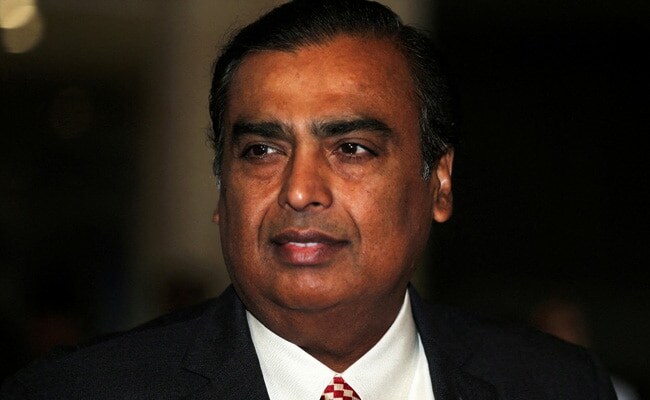
Reliance Industries Ltd.'s new energy business is poised to become as significant as its oil-to-chemicals segment, with investments of up to Rs 75,000 crore and a vision to make India a global leader in green and clean energy, according to Chairman Mukesh Ambani.
The company's Dhirubhai Ambani Green Energy Giga Manufacturing Complex in Jamnagar will be the world's largest and most modern ecosystem, leveraging emerging technologies like AI, IoT, and robotics, Ambani, told shareholders at the company's 47th annual general meeting. This integrated value chain will maximise margins and enable the company to introduce next-gen products with higher efficiency and reduced lifecycle costs, Ambani said.
“We believe that our New Energy business will be truly unique—delivering cash flows that are less cyclical and more predictable. I am, therefore, confident that in the next 5 to 7 years, our New Energy growth engine can aim to deliver an earning capacity, like what our existing O2C (Oil-to- Chemicals) business earns and what it has achieved over the last four decades,” Ambani said.
RIL has leased arid wasteland in Kutch to generate 150 billion units of electricity, meeting nearly 10% of India's energy requirements. The company is building its own transmission infrastructure to deliver stable, renewable energy round-the-clock, starting in 2026, he said.
With access to 2,000 acres of land at Kandla port, Reliance will have an integrated coastal infrastructure for production, storage, evacuation, and shipping of green fuels, ensuring maximum value for its green fuel molecules, he said.
Major Highlights On The New Energy Business:
Bioenergy
Investing in 55 compressed biogas plants by 2025, generating over 30,000 direct and indirect jobs.
Establishing the world's largest bioenergy deep-tech R&D centre at Jamnagar.
Energy plantation pilot on 1,000 acres of arid wasteland to create a self-sustaining ecosystem.
Solar Energy
Commencing production of solar photovoltaic modules by the end of 2024.
Initial annual capacity of 10 GW, with plans for modular expansion.
Developing high-efficiency solar panels with cell efficiency exceeding 26%.
Energy Storage
Constructing an integrated advanced chemistry-based battery manufacturing facility with 30 GWh annual capacity at Jamnagar.
Production to commence by the second half of 2025.
Plans to integrate backward to cell manufacturing and battery chemical production.
Green Hydrogen and Green Fuels
Establishing a fully automated, multi-GW electrolyser manufacturing facility on the west coast of India by 2026.
Building capabilities for futuristic electrolysis-based technologies to reduce energy efficiency and capital costs.
Dhirubhai Ambani Green Energy Giga Manufacturing Complex to be the world's largest and most modern ecosystem.
Leased arid wasteland in Kutch to generate 150 billion units of electricity.
Building transmission infrastructure for round-the-clock renewable energy delivery.
Integrated coastal infrastructure at Kandla port for green fuel production and shipping.

-
Blue Wave Will Derail the AI Trade but Won't Dismantle the AI Era | Unhedged Position

The Democrats' sweep of the US Congress will see politics collide with economic forces both over the long and short term.
-
It's Time To Take The GST Council's Bet On Trust Global
Payment records can prove India's services exports, and clear, proportionate rules can bring foreign digital sellers into the tax net.
-
Opinion | India at 38: From Innovation Overperformer to Innovation Powerhouse
India now has 453 VC-backed deep science startups, 18 of them late-stage, after 117 percent growth since 2020. Laurus Labs, at USD 9.3 billion, is the most valuable deep science company in any middle-income economy outside China.
-
Navigating Energy Crossroads: S Jaishankar's Call For Diversified Supply Chains At G20 Ministerial Meeting
As geopolitical fault lines continue to test maritime trade routes and commodity flows, Jaishankar's message remains pertinent: true economic resilience requires open markets, protected transit lines, and a genuine commitment to multilateral cooperation rather than coercion.
-
Indians Are Travelling, But Not Every Journey Is A Holiday | The Week In Whys
Pilgrims, patients and working women are the real travellers, and the system hasn't quite caught up with them.
-
Getting To Work Costs Women More | The Reason Why
It is not just about women paying more than men. It is about women paying much more in cities than in villages.
-
AI Bias In Investing Cannot Be Eliminated, But It Can Be Governed
Framing is a particularly important example as identical financial information presented in terms of gains rather than losses can lead an LLM to reach a different assessment.
-
Joining The Dots | Dark Skies, Steady Diya: Why Hope Holds This Diwali
With war, a weak rupee and foreign outflows weighing on sentiment, policymakers at the NDTV World Summit and market veterans at NDTV Profit Ignite: Diwali Edition offered the same advice: stay invested and filter out the noise.
-
The Curious Case of Equitas Small Finance Bank And A CEO Who Quit For Stock
PN Vasudevan believes persistent investor concerns over a perceived conflict of interest had become a governance overhang on Equitas Small Finance Bank's stock, even as the lender improved profitability and asset quality.









