Mukesh Ambani's $4 Billion Investment Hurt By Glut In Natural Gas
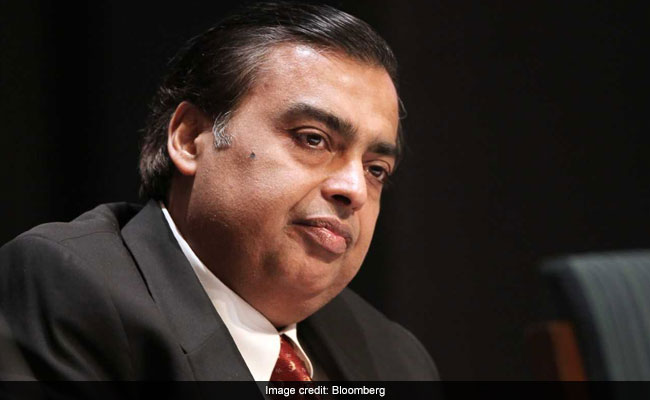
A global glut in natural gas is threatening to undermine a $4 billion investment by Reliance Industries Ltd. aimed at boosting profits at the world's largest oil refining complex.
The project made all the sense in the world when energy magnate Mukesh Ambani's conglomerate announced it in 2012: convert petroleum coke, or petcoke, one of the cheapest and dirtiest refinery by-products, into gas needed to power the massive Jamnagar complex on India's west coast. Then it hit about three years of delays, and global gas markets crashed amid a growing supplies of liquefied cargoes from the US, Australia and Russia.
The 10 synthetic gasifiers that make up the project are now finally commissioned. But the imported LNG they're meant to displace has fallen from about $15 per million British thermal units in 2012 to less than $5.
And that price slump has reduced the project's viability, according to a person with knowledge of the company's finances.
Reliance predicted in 2014 that the project would boost Jamnagar's refining margins by as much as $2 a barrel. Now, Mumbai-based brokerage Centrum Broking Ltd. sees an uplift of about $1.30 to $1.50 a barrel by the 2021-2022 fiscal year, according to a July 21 report by analysts Probal Sen and Akshay Mane.
"It's not the most conducive environment to bring the petcoke project on stream," said Somshankar Sinha, head of India equity research at Jefferies Financial Group Inc. "The LNG surplus has caused prices to fall much more than the usual decline in summer months," the Mumbai-based analyst added. Jefferies said it expects a full ramp-up of Reliance's project in financial year 2021.
Project Status
The gasifiers, originally scheduled to begin operations in 2016, are now in the final stages of being stabilized and integrated with other facilities, with an expected increase to full capacity in March, according to people with knowledge of operations, who asked not to be identified as information isn't public.
Reliance has said the units are still profitable at current LNG prices and it will cut down on imports of the fuel when they come online. "Whenever it comes, gasification will be cost-effective," Joint Chief Financial Officer V Srikanth said in Mumbai last month.
With the plant still not fully operational, the company is still importing LNG, recently picking up several cargoes for delivery between July and October. Meanwhile, it has also been selling petcoke, according to a trader who distributes the product.
Reliance spokesman Tushar Pania didn't respond to an email seeking comment.
Refining Returns
A recovery in LNG prices "should aid economics for the gasifier," according to Centrum Broking, even as LNG prices are set to stay low due to surging supplies from producers such as the US shale drillers.
Based on the forward curve for Asia's dominant LNG benchmark for supplies in Japan and South Korea, the super-chilled gas is priced at between $5.50 and $8 per million Btu from 2020 to 2023. Prompt LNG prices are pegged at around $4.70 per MMBtu.
Low LNG spot prices could encourage Reliance to take more spot volumes in the coming quarters, although the company won't shift its long-term strategy away from eliminating petcoke residue, said Senthil Kumaran, a Singapore-based analyst at industry consultant FGE.
The payoffs from Reliance's investment in gasifiers, however, "won't be as rich as it was originally thought," he added.

-
Navigating Energy Crossroads: S Jaishankar's Call For Diversified Supply Chains At G20 Ministerial Meeting

As geopolitical fault lines continue to test maritime trade routes and commodity flows, Jaishankar's message remains pertinent: true economic resilience requires open markets, protected transit lines, and a genuine commitment to multilateral cooperation rather than coercion.
-
Indians Are Travelling, But Not Every Journey Is A Holiday | The Week In Whys
Pilgrims, patients and working women are the real travellers, and the system hasn't quite caught up with them.
-
Getting To Work Costs Women More | The Reason Why
It is not just about women paying more than men. It is about women paying much more in cities than in villages.
-
AI Bias In Investing Cannot Be Eliminated, But It Can Be Governed
Framing is a particularly important example as identical financial information presented in terms of gains rather than losses can lead an LLM to reach a different assessment.
-
Joining The Dots | Dark Skies, Steady Diya: Why Hope Holds This Diwali
With war, a weak rupee and foreign outflows weighing on sentiment, policymakers at the NDTV World Summit and market veterans at NDTV Profit Ignite: Diwali Edition offered the same advice: stay invested and filter out the noise.
-
The Curious Case of Equitas Small Finance Bank And A CEO Who Quit For Stock
PN Vasudevan believes persistent investor concerns over a perceived conflict of interest had become a governance overhang on Equitas Small Finance Bank's stock, even as the lender improved profitability and asset quality.
-
Talking Points This Week: AI Cash Burn, A Tiger Comeback And An India That Still Finds Its Own Path
India is not immune to higher oil or tighter global liquidity, yet its earnings base is broader, its domestic policy levers are still available.
-
Foreign Investors Own Half Of HDFC Bank and ICICI Bank. An LTCG Cut Could Matter Most Here
Foreign portfolio investors have US$115 billion parked in HDFC Bank, ICICI Bank. If the government cuts long-term capital gains tax, Jefferies says returning foreign money could land here first.
-
'Never Seen This Level Of Negativity': Sandeep Tandon Says The Next Rally May Be Closer Than You Think
Veteran investor Sandeep Tandon says foreign selling is easing, large-caps are due a comeback and mid-caps are crowded, while he turns positive on gold, power and pharma this Diwali.










