Reliance-BP To Get 'Ruby' From South Korea To Boost Gas Output
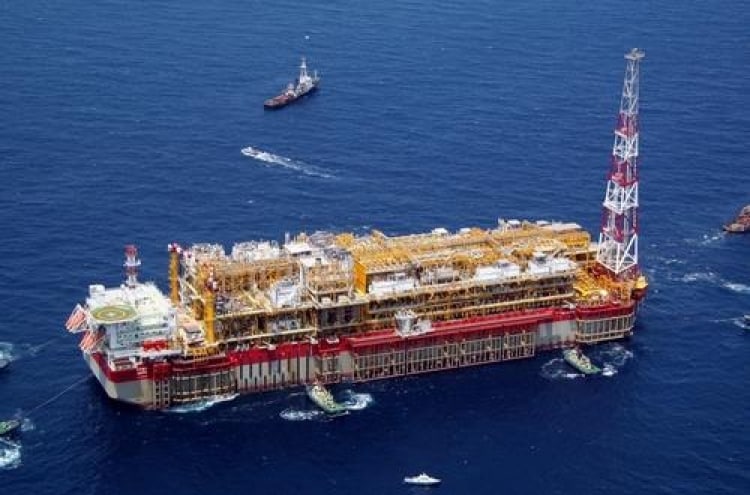
Ruby, a floating production storage and offloading vessel destined for Reliance Industries Ltd's MJ deep-water oil and gas development project in KG-D6 block, has set sail from South Korea, partner BP plc's CEO Bernard Looney said.
MJ is the third and last of a set of discoveries that Reliance and its partner BP of UK are developing in the eastern offshore block. The two will use a floating production system at high-sea in the Bay of Bengal to bring to production the deepest gas discovery in the KG-D6 block.
"'Ruby' has just set sail for the 5000-km journey from South Korea to Kakinada, India where she'll help ramp up domestic gas production.
"I've been in this industry for many (many) years but the sheer size and engineering genius of vessels like this still amazes me. A big thanks to the teams at bp and Reliance Industries Limited, for making this happen safely and efficiently," Looney wrote in a LinkedIn post.
The MJ-1 gas find is located about 2,000 metres directly below the Dhirubhai-1 and 3 (D1 and D3) fields -- the first and the largest fields in KG-D6 block. MJ-1 is estimated to hold a minimum of 0.988 Trillion cubic feet (Tcf) of contingent resources. The field also has oil deposits which would be produced using a floating system, called FPSO.
"It is indeed a big achievement for the JV and we will not only increase gas production for the people of India, we will help the nation save close to USD 10 billion in import costs! "On full operations we will be close to 30 per cent of India's gas production. This is a true proud moment for me and my extended RIL-bp team in India," Sashi Mukundan, bp India head, said replying to Looney's post.
The Ruby was built by South Korea's Samsung Heavy Industries, with the engineering, procurement, construction and installation contract awarded in 2019. The double-hulled vessel has a crude production capacity of 60,000 barrels per day and about 12.7 million cubic metres per day of gas.
Reliance and BP are spending about USD 5 billion on further development of KG-D6 through three different projects in block KG-D6 -- R Cluster, Satellite Cluster and MJ -- which together are expected to produce around 30 million standard cubic metres per day of natural gas by 2023.
R-Cluster started production in December 2020 and the Satellite Cluster came onstream in April last year. MJ is expected to come on stream before the end of the year.
While R-Cluster has a plateau gas production of about 12.9 mmscmd, Satellite Cluster will have a peak output of 6 mmscmd.
The MJ field will have a peak output of 12 mmscmd. Combined gas output from the R-Cluster and Satellite Cluster stood at more than 19 mmscmd during April-June quarter, according to Reliance.
Oil-to-telecom conglomerate RIL has so far made 19 gas discoveries in the KG-D6 block. Of these, D-1 and D-3 -- the largest among the lot -- were brought into production from April 2009 and MA, the only oilfield in the block, was put to production in September 2008.
While the MA field stopped producing in 2019, the output from D-1 and D-3 ceased in February 2020. Other discoveries have either been surrendered or taken away by the government for not meeting timelines for beginning production.
Reliance is the operator of the block with a 66.67 per cent participating interest and BP holds a 33.33 per cent stake.

-
Unhedged Position: Can India See An Indonesia-Style Time Correction?

The Nifty is trading below levels it first clocked in 2024. Is there, then, as I have suggested in the headline, potential that the current time correction drags on painfully for the next three-five, even ten years?
-
Navigating Friction And Energy Realities: An Analysis Of Marco Rubio's October Visit To India
Occurring at a critical juncture marked by stalled trade negotiations and escalating geopolitical pressures over global energy supplies, the visit offers a profound window into modern US-India relations.
-
India Exports Capital. Why Not Export Trusteeship?
The big question, then, is whether India can build an institution that global borrowers, investors, banks, and lawyers can trust, even without an Indian connection.
-
France's Economy & Politics Are In Crisis | The Reason Why
Let's look at how the French economy and politics evolved under Nicolas Sarkozy, Franois Hollande and Emmanuel Macron.
-
You May Inherit The Business. You Must Earn Its Credibility.
Succession tests the founder's ability to share authority as much as it tests the next generation's readiness to assume it.
-
Signing Deals Is One Thing; Making Them Work Is Another | The Week In Whys
Sometimes, things don't turn out as planned. Indian companies have lost some bids to rivals, some projects won't produce until 2030.
-
FOMC Wall, PERM Suspension, Hospital Stocks | Talking Points This Week
A PERM suspension would directly affect green-card sponsorship rather than H-1B visas, so the near-term earnings impact could remain relatively limited. The key question is whether this marks a new phase in US scrutiny of Indian IT.
-
Everything, Everywhere, All At Once: Dalal Street's Week To Forget | Joining The Dots
Visa curbs, a Starlink spat and cancer drug caps: what connects this week's shocks for Indian markets
-
India Is Going Abroad For Critical Minerals. But It May Take Years To Pay Off | The Reason Why
Although India's steps are in the right direction, they remain modest compared with India's growing dependence.
-
When Everyone Has AI, What Gives You An Edge?
India's young workforce is entering an uncertain world of work where powerful AI tools are becoming widely accessible. The advantage will belong to those who combine deep expertise with digital fluency, and the distinctly human capabilities that technology cannot manufacture.









