Reliance AGM 2023: Solar Module Facility, Battery Manufacturing Plant On The Anvil
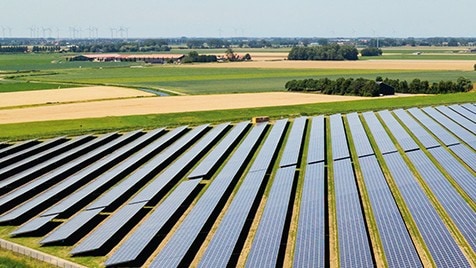
Reliance Industries Ltd. has given top priority to commissioning its integrated solar module facility by 2025 and following it up with the giga-scale battery manufacturing plant by 2026, as part of its plan to become carbon neutral by 2035.
RIL Chairperson and Managing Director Mukesh Ambani told shareholders at its 46th Annual General Meeting in Mumbai that they are well on the way to building the new energy ecosystem of manufacturing solar, wind, batteries, hydrogen, and bio-energy platforms. And, as a top priority, it plans to deliver a fully integrated solar photovoltaic manufacturing ecosystem by 2025.
"RIL's integrated giga-scale solar module manufacturing plant will convert sand into solar PV modules and will include the manufacturing of PV modules, cells, wafers and ingots, polysilicon, and glass at a single location in Jamnagar," he said.
He said the company is also planning to set up its gigawatt-scale battery manufacturing plant on concurrent priority by 2026.
The plant will produce battery chemicals, cells and packs, and containerised energy storage solutions. As part of an integrated ecosystem, it will also include a battery recycling facility, according to Ambani. The battery production will start with the lithium-iron-phosphate chemistry at the cheapest price points, Ambani said.
"We are also focused on commercialisation of our sodium-ion battery technology. The company plans to commercialise the sodium-ion cell production at megawatt level by 2025 and rapidly scale up to giga-scale thereafter."
Wind Power Generation And Turbine Manufacturing
The company also plans to venture into wind power generation and wind turbine manufacturing, as the integration of energy storage with wind and solar power generation is critical to providing grid-connected, round-the-clock electricity. "We have made significant progress in developing a manufacturing ecosystem critical to achieving cost-efficient wind power generation at giga-scale," Ambani said.
He said one of the significant cost drivers in the manufacturing of wind blades is carbon fibre, and RIL's foray into manufacturing it at a large scale will help them integrate and reduce the cost of wind turbines.
The company plans to partner with global technology players in wind equipment manufacturing to provide cost-efficient solutions. It also plans to enable the installation of at least 100 GW of renewable energy generation by 2030.
The company is on its way to integrate batteries with wind and solar generation at the megawatt-scale in the next few quarters in Jamnagar, Gujarat, he said. "It will be followed by grid-scale deployment of batteries to convert intermittently captured photons into electrons and make them available round the clock for our captive requirements as well as for India's growing energy needs."
Green Hydrogen Update
RIL has set the roadmap to achieve its targeted cost of electrolysers and production of green hydrogen. This will be achieved through the solar and wind energy storage manufacturing ecosystems, Ambani said.
"In collaboration with our technology partners, we are firmly on our way to successfully demonstrate this first at MW scale," he said. "We will leverage our engineering capabilities, large-scale manufacturing, and localisation to optimise this at giga-scale."
The company will set up an integrated giga-scale electrolyser manufacturing facility in Jamnagar. This will enable it to establish large-scale green hydrogen production, gradually transition to captive requirements, and simultaneously integrate with green ammonia and green methanol production for domestic and international markets.
To Set Up 100 Compressed Biogas Plants In Five Years
The company has focused on bioenergy generation by using non-cattle-feed biomass to resolve India's massive pollution-related issues over stubble burning.
RIL claims to have become India's largest bioenergy producer. "After setting up two demo units for compressed biogas at Jamnagar, we have commissioned the first commercial-scale CBG plant at Barabanki in Uttar Pradesh in a record time of just 10 months," Ambani said.
The company plans to ramp it to 25 CBG plants across India and scale it to 100 in the next five years.
It will consume 5.5 million metric tonnes of agro-residue and organic waste and help mitigate nearly 2 million metric tonnes of carbon emissions. It will also help produce 2.5 MT of organic manure annually. This would result in a reduction of about 0.7 million metric tonnes per year of imported liquefied natural gas, he said.

-
Navigating Energy Crossroads: S Jaishankar's Call For Diversified Supply Chains At G20 Ministerial Meeting

As geopolitical fault lines continue to test maritime trade routes and commodity flows, Jaishankar's message remains pertinent: true economic resilience requires open markets, protected transit lines, and a genuine commitment to multilateral cooperation rather than coercion.
-
Indians Are Travelling, But Not Every Journey Is A Holiday | The Week In Whys
Pilgrims, patients and working women are the real travellers, and the system hasn't quite caught up with them.
-
Getting To Work Costs Women More | The Reason Why
It is not just about women paying more than men. It is about women paying much more in cities than in villages.
-
AI Bias In Investing Cannot Be Eliminated, But It Can Be Governed
Framing is a particularly important example as identical financial information presented in terms of gains rather than losses can lead an LLM to reach a different assessment.
-
Joining The Dots | Dark Skies, Steady Diya: Why Hope Holds This Diwali
With war, a weak rupee and foreign outflows weighing on sentiment, policymakers at the NDTV World Summit and market veterans at NDTV Profit Ignite: Diwali Edition offered the same advice: stay invested and filter out the noise.
-
The Curious Case of Equitas Small Finance Bank And A CEO Who Quit For Stock
PN Vasudevan believes persistent investor concerns over a perceived conflict of interest had become a governance overhang on Equitas Small Finance Bank's stock, even as the lender improved profitability and asset quality.
-
Talking Points This Week: AI Cash Burn, A Tiger Comeback And An India That Still Finds Its Own Path
India is not immune to higher oil or tighter global liquidity, yet its earnings base is broader, its domestic policy levers are still available.
-
Foreign Investors Own Half Of HDFC Bank and ICICI Bank. An LTCG Cut Could Matter Most Here
Foreign portfolio investors have US$115 billion parked in HDFC Bank, ICICI Bank. If the government cuts long-term capital gains tax, Jefferies says returning foreign money could land here first.
-
'Never Seen This Level Of Negativity': Sandeep Tandon Says The Next Rally May Be Closer Than You Think
Veteran investor Sandeep Tandon says foreign selling is easing, large-caps are due a comeback and mid-caps are crowded, while he turns positive on gold, power and pharma this Diwali.
-
Indians Stay With Family, Not In Hotels | The Reason Why
India still lacks enough clean, reliable and affordable hotels for budget-conscious travellers.










