Relationship With India Is Solid: OPEC Secretary General
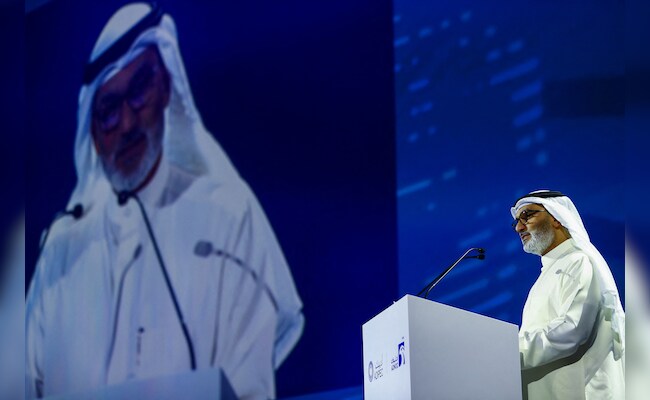
The relationship between India and Organization of Petroleum Exporting Countries (OPEC) is solid and it is forging ahead into other dimensions such as investments, OPEC Secretary General Haitham Al Ghais said on the sidelines of India Energy Week in Bengaluru.
In an exclusive interaction with ANI, the OPEC Secretary General said that reduced oil import by India doesn't affect the relationship and most OPEC countries have very strong and historical ties with India and OPEC stands ready to continue supplying India with its requirements of oil.
"Not only crude oil but also there are many countries within OPEC which supply petroleum products LPG. On the question of its a diverse relationship, which is dating back to hundreds of years ago, the relationship between India and OPEC countries is solid...," OPEC Secretary said.
He also said the collective decision to cut output in October was the right move and added that credit should be given to the OPEC alliance for its constructive role in supporting global market stability.
"Due recognition should be given for our constructive and positive role in supporting global market stability including to remind ourselves that the G20 and major consumers around the world commended us for our historical actions taken since 2020," Haitham Al Ghais said on Monday.
The OPEC Secretary General said, "Demand of crude oil is rising and we are under investment. Global economy is expanding."
"OPEC countries are investing in hydrogen, biofuels. We need to invest more to cater the energy demand," Haitham Al Ghais further said.
OPEC, an alliance that includes members of the OPEC and others including Russia, agreed last year to cut its production target by 2 million barrels a day, about 2 per cent of world demand, from November until the end of 2023 to support the market.
"We held the Joint Ministerial Monitoring Committee (JMMC) meeting on February 1 where we reviewed everything holistically, from a pure technical perspective, and came to the conclusion that the decision taken collectively in October was the correct decision," Al Ghais said.
"At OPEC we are always closely monitoring the market, including demand, as it evolves after China opening up," Haitham Al Ghais said.
"We believe there is great confidence and trust in the OPEC group and its decisions where we have proven time and again that we are ready to act immediately and respond to the dynamic nature of the market," he said.
OPEC currently has 13 members, with the five founders having since been joined by Algeria, Angola, Congo, Equatorial Guinea, Gabon, Libya, Nigeria and the United Arab Emirates. Its headquarters is in the Austrian capital -- Vienna.
In 2016, OPEC formed an alliance with other oil-producing nations to create OPEC . The 10 countries now in OPEC include Russia, Kazakhstan, Azerbaijan, Mexico and Oman.
The mission of the OPEC is to coordinate and unify the petroleum policies of its member countries and ensure the stabilisation of oil markets in order to secure an efficient, economic and regular supply of petroleum to consumers, a steady income to producers and a fair return on capital for those investing in the petroleum industry.
(Except for the headline, this story has not been edited by NDTV staff and is published from a syndicated feed.)

-
Navigating Friction And Energy Realities: An Analysis Of Marco Rubio's October Visit To India

Occurring at a critical juncture marked by stalled trade negotiations and escalating geopolitical pressures over global energy supplies, the visit offers a profound window into modern US-India relations.
-
India Exports Capital. Why Not Export Trusteeship?
The big question, then, is whether India can build an institution that global borrowers, investors, banks, and lawyers can trust, even without an Indian connection.
-
France's Economy & Politics Are In Crisis | The Reason Why
Let's look at how the French economy and politics evolved under Nicolas Sarkozy, Franois Hollande and Emmanuel Macron.
-
You May Inherit The Business. You Must Earn Its Credibility.
Succession tests the founder's ability to share authority as much as it tests the next generation's readiness to assume it.
-
Signing Deals Is One Thing; Making Them Work Is Another | The Week In Whys
Sometimes, things don't turn out as planned. Indian companies have lost some bids to rivals, some projects won't produce until 2030.
-
FOMC Wall, PERM Suspension, Hospital Stocks | Talking Points This Week
A PERM suspension would directly affect green-card sponsorship rather than H-1B visas, so the near-term earnings impact could remain relatively limited. The key question is whether this marks a new phase in US scrutiny of Indian IT.
-
Everything, Everywhere, All At Once: Dalal Street's Week To Forget | Joining The Dots
Visa curbs, a Starlink spat and cancer drug caps: what connects this week's shocks for Indian markets
-
India Is Going Abroad For Critical Minerals. But It May Take Years To Pay Off | The Reason Why
Although India's steps are in the right direction, they remain modest compared with India's growing dependence.
-
When Everyone Has AI, What Gives You An Edge?
India's young workforce is entering an uncertain world of work where powerful AI tools are becoming widely accessible. The advantage will belong to those who combine deep expertise with digital fluency, and the distinctly human capabilities that technology cannot manufacture.
-
Wrong Labels, High Pesticide Residues Holding Back Agri Exports | The Reason Why
India needs stronger domestic food-safety and labelling standards, with best practices becoming part of everyday business for farmers, traders and food companies.










