Regulator Okays Commercial Use Of GM Mustard, Activists Raise A Stink
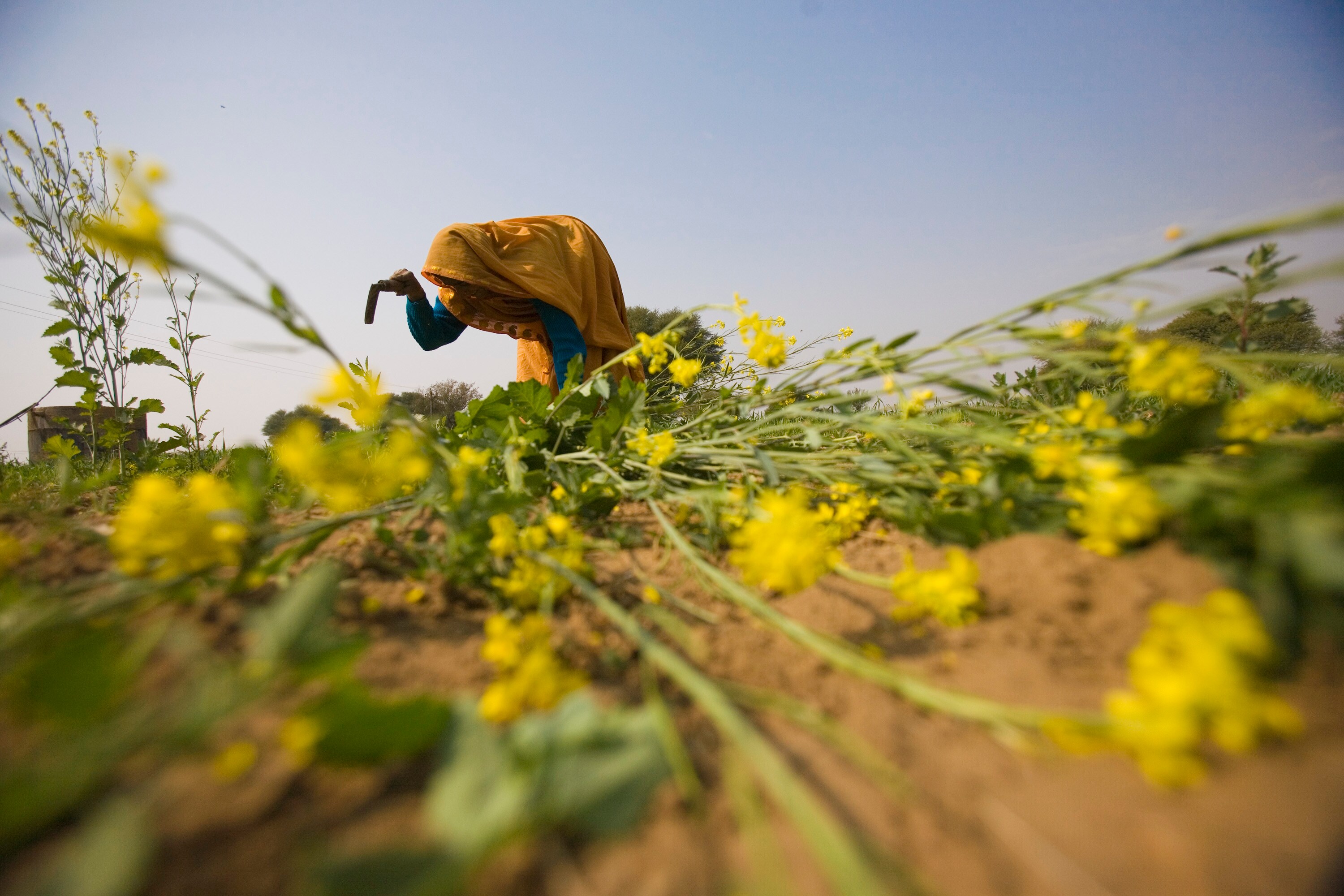
India's genetically modified (GM) crops regulator on Thursday recommended the commercial use of genetically modified mustard in a submission to the environment ministry amid opposition by anti-GM groups, including Rashtriya Swayamsevak Sangh-affiliated bodies.
In its submission, the Genetic Engineering Appraisal Committee (GEAC), the nodal regulator for GM crops, has given a "positive" recommendation but "with certain conditions".
With its green signal, the GEAC has pushed the hybrid plant developed by scientists at the Delhi University closer to becoming the country's first edible GM crop.
The environment ministry has to now take a final call on this.
Opposition To Genetically Modified Crops
RSS-affiliate Swadeshi Jagran Manch (SJM) criticised the move saying allowing the commercial use of GM mustard would impact allied agri-activities.
Some anti-GM activists asserted that in okaying the commercial use of GM mustard, the GEAC has "yet again proven" to be "unscientific and uncaring" of the health of citizens.
They said Environment Minister Anil Madhav should uphold BJP's manifesto promise that GM foods will not be allowed and reject the GM mustard "just like the Bt brinjal variety was rejected seven years ago".
The GEAC, which is under the the ministry, on Thursday reviewed a report of a sub-committee constituted to look into the safety angle of the commercial roll-out of GM mustard. It has also imposed a number of conditions while recommending commercial use.
“The agenda of GM mustard came up in a meeting of the GEAC today. It has given a positive recommendation. It has recommended the approval of GM Mustard for commercial release,” a Ministry official told the PTI.
The Centre for Genetic Manipulation of Crop Plants (CGMCP), Delhi University South Campus, had submitted an application to the GEAC for the environmental release of GM mustard (Brassica juncea) hybrid DMH-11 and the use of parental events (varuna bn 3.6 and EH2 mod bs 2.99) for the development of a new generation of hybrids.
The environment ministry had received over 700 comments from various stakeholders, including farmers and researchers, on the Assessment of Food and Environmental Safety (AFES) report on GM Mustard, which it had earlier posted on the ministry website.
The application was submitted in 2015 after which several rounds of meeting were held by the GEAC. The sub-committee also convened meetings with experts.
The GEAC also heard the views of various NGOs not in favour of giving an approval to GM crops.
An anti-GM group had earlier alleged that the sub-committee did not have any health expert and three of its members have conflict of interest.
Coalition for a GM-Free India had questioned whether the risk assessment report given by the sub-committee, which has claimed that the hybrid does not pose any risk to biodiversity or agro-ecosystem, was even "reliable and scientific" as it had no health experts in it.
Thursday's decision, which many of the anti-GM activists were unaware of, got sharp reactions from Swadeshi Jagran Manch (SJM).
We are against the commercial use of any genetically modified crops, including the GM mustard. And we will request that the government should not allow its commercial cultivation.Ashwani Mahajan, Co-convenor, SJM
The productivity of existing desi varieties are higher than this newly developed GM mustard, Mahajan claimed. He added that the GM mustard variety would impact allied sectors such as beekeepers, orchards and ayurvedic medicine makers and practitioners.
Environment activist Vandana Shiva had opposed the GM mustard earlier, saying it is "illegal" and developers have done "fraud science".
Bharatiya Kisan Union (BKU) General Secretary Yudhvir Singh said the GM mustard technology would not lead to increase in productivity but "monopolise" the seed market.
'Sarson Satyagraha', a broad platform of hundreds of organisations representing farmers, consumers and scientists, said the GEAC ignored questions raised by scientists and chose to function behind a "shroud of secrecy".
"Earlier in the case of Bt brinjal too, they behaved irresponsibly and shamelessly unscientific. In this case, it is a hazardous herbicide tolerant food crop at that, which has direct implications for a large number of Indian farmers, agricultural workers and consumers," the body condemning the approval said in a statement.

-
Navigating Energy Crossroads: S Jaishankar's Call For Diversified Supply Chains At G20 Ministerial Meeting

As geopolitical fault lines continue to test maritime trade routes and commodity flows, Jaishankar's message remains pertinent: true economic resilience requires open markets, protected transit lines, and a genuine commitment to multilateral cooperation rather than coercion.
-
Indians Are Travelling, But Not Every Journey Is A Holiday | The Week In Whys
Pilgrims, patients and working women are the real travellers, and the system hasn't quite caught up with them.
-
Getting To Work Costs Women More | The Reason Why
It is not just about women paying more than men. It is about women paying much more in cities than in villages.
-
AI Bias In Investing Cannot Be Eliminated, But It Can Be Governed
Framing is a particularly important example as identical financial information presented in terms of gains rather than losses can lead an LLM to reach a different assessment.
-
Joining The Dots | Dark Skies, Steady Diya: Why Hope Holds This Diwali
With war, a weak rupee and foreign outflows weighing on sentiment, policymakers at the NDTV World Summit and market veterans at NDTV Profit Ignite: Diwali Edition offered the same advice: stay invested and filter out the noise.
-
The Curious Case of Equitas Small Finance Bank And A CEO Who Quit For Stock
PN Vasudevan believes persistent investor concerns over a perceived conflict of interest had become a governance overhang on Equitas Small Finance Bank's stock, even as the lender improved profitability and asset quality.
-
Talking Points This Week: AI Cash Burn, A Tiger Comeback And An India That Still Finds Its Own Path
India is not immune to higher oil or tighter global liquidity, yet its earnings base is broader, its domestic policy levers are still available.
-
Foreign Investors Own Half Of HDFC Bank and ICICI Bank. An LTCG Cut Could Matter Most Here
Foreign portfolio investors have US$115 billion parked in HDFC Bank, ICICI Bank. If the government cuts long-term capital gains tax, Jefferies says returning foreign money could land here first.
-
'Never Seen This Level Of Negativity': Sandeep Tandon Says The Next Rally May Be Closer Than You Think
Veteran investor Sandeep Tandon says foreign selling is easing, large-caps are due a comeback and mid-caps are crowded, while he turns positive on gold, power and pharma this Diwali.










