Regional Leaders Emboldened By Political Absence Of Congress
The shrinking electoral footprint of the Congress party has emboldened several regional parties and their patriarchs to try and expand their political and social base in different parts of the country. The aspirations of strong regional leaders are significant because only 18 months are left for the 2024 general election.
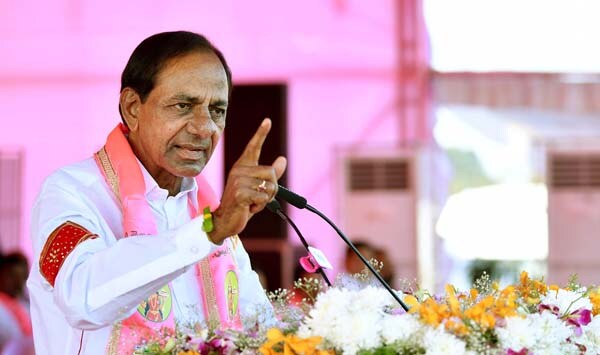
The latest to join the race of regional leaders who have openly announced their national ambitions is two-time Chief Minister K Chandrashekhar Rao, who on Wednesday changed the name of his party Telangana Rashtra Samithi to Bharat Rashtra Samithi.
Taking the first step towards its expansion plan, Rao, along with former chief minister of Karnataka and leader of the Janata Dal (Secular), HD Kumaraswamy, has announced that the two parties will contest the upcoming assembly elections in Karnataka together. The state polls in Karnataka are expected to take place in May 2023 when the term of the current Karnataka assembly will end. The decision to take part in Karnataka polls will be the first test of KCR to form an alliance outside his own state to contest elections.
“The time has come to take the Telangana model of development to the people of the country. The reason for which Telangana Rashtra Samithi (TRS) was formed in 2001 was achieved with the formation of the state and now Telangana is the number one state in the country,” K Chandrashekhar Rao, chief minister of Telangana, said on Wednesday. He went on to say that BRS will offer an alternative model of development.
Among the regional leaders who have been taking steps to promote their national ambitions are Bihar Chief Minister Nitish Kumar, who has been meeting political leaders of different regional parties in Haryana, Jharkhand, West Bengal, Karnataka, Tamil Nadu and also the Aam Aadmi Party, which has governments in Delhi and Punjab. Similarly, West Bengal chief minister, Mamata Banerjee, has also been meeting senior political leaders of these states, and now KCR has also joined the race.
Delhi Chief Minister Arvind Kejriwal is also one of the candidates who has been working for the political growth of AAP and has managed to form governments in Delhi and Punjab. AAP is also planning to contest elections in Gujarat and Himachal Pradesh, while it has already contested polls in Uttarakhand, Goa and in some pockets of Uttar Pradesh.
The choice of the states where regional leaders with national ambitions have targeted places where the Congress has little or negligible presence. The extent of the vacuum of Congress party in some of the important states can be understood from the fact that the last time the Congress had a chief minister in Uttar Pradesh was in 1989, and the party could only win one out of 80 Lok Sabha seats in 2019 general elections.
Another instance of the Congress's absence is in West Bengal, where it has been out of power since 1977, and in Gujarat, where it lost power to the Bharatiya Janata Party in 1995 and it has been 27 years since the Congress has been out of power in the state.
“We have one specific question and that is why do these parties want to fight against Congress which is already weak? The Bihar unity model is a perfect example, and we firmly believe that no single political party can counter the political strength of the BJP. There should be no untouchability, and there is no space for it. KCR, too, has to become part of a grand alliance to fight against the BJP. We welcome his decision to stand against the BJP,” said KC Tyagi, senior leader of Janata Dal (United).
It is interesting that regional chieftains like Nitish Kumar, KCR, and Mamata Banerjee had met leaders of several states, including Jharkhand, Haryana, Karnataka, Delhi, Uttar Pradesh, Andhra Pradesh, Tamil Nadu and Left parties in the 2019 general elections. The Congress only won 10 out of the total 319 Lok Sabha seats in these states, whereas the ruling BJP won 170 seats on its own.
Political analysts believe the national ambition of all regional leaders has made it evident that they may not want to accept Rahul Gandhi as the prime ministerial candidate of the opposition parties against the ruling BJP.
“It is clear that most of these regional leaders have a sense that Congress is declining and the leadership of the party is weak. The vote share of the Congress is also declining, so all these regional leaders are trying to strengthen their political parties before the 2024 general elections. These developments also indicate that regional leaders may not accept Rahul Gandhi or any member of the Gandhi family to be the prime ministerial candidate against the BJP,” said Sanjay Kumar, is professor and co-director of Lokniti, a research programme at the Centre for the Study of Developing Societies.
Gyan Verma was Senior Editor (Politics) at Mint. He has been a journalist for nearly two decades and writes on the politics and intersection of policy and politics.
The views expressed here are those of the author, and do not necessarily represent the views of BQ Prime or its editorial team.

-
Love, Sex Aur Dhokha: The Audacious Plot To Spy On Jensen Huang

A Taipei dinner, a Singapore chip buyer and a suspected Chinese asset: inside the alleged spy operation that got close to NVIDIA's Jensen Huang.
-
Ten Things I Learnt This Samvat
Patience can be a trap. Cheap stocks can stay cheap. Leverage can wipe you out. What did Samvat 2082 teach us? Niraj Shah writes on 10 lessons from the year gone by.
-
Talking Points This Week: Tech Nerves, FII Buying, And A Faraway Banking Shock
The global markets are not shining this Diwali. The exception in the large markets is, India.
-
Midterm Rally Lasted A Day. The Hard Reality Of A Divided US May Last Two Years | Opinion
Between a contested AI boom, a debt ceiling that arrives in 2027 and a president with every incentive to act alone, the next two years may prove more volatile than the first day's rally suggests.
-
Blue Wave Will Derail the AI Trade but Won't Dismantle the AI Era | Unhedged Position
The Democrats' sweep of the US Congress will see politics collide with economic forces both over the long and short term.
-
It's Time To Take The GST Council's Bet On Trust Global
Payment records can prove India's services exports, and clear, proportionate rules can bring foreign digital sellers into the tax net.
-
Opinion | India at 38: From Innovation Overperformer to Innovation Powerhouse
India now has 453 VC-backed deep science startups, 18 of them late-stage, after 117 percent growth since 2020. Laurus Labs, at USD 9.3 billion, is the most valuable deep science company in any middle-income economy outside China.
-
Navigating Energy Crossroads: S Jaishankar's Call For Diversified Supply Chains At G20 Ministerial Meeting
As geopolitical fault lines continue to test maritime trade routes and commodity flows, Jaishankar's message remains pertinent: true economic resilience requires open markets, protected transit lines, and a genuine commitment to multilateral cooperation rather than coercion.
-
Indians Are Travelling, But Not Every Journey Is A Holiday | The Week In Whys
Pilgrims, patients and working women are the real travellers, and the system hasn't quite caught up with them.









