Regional Banks May Need To Sell $63 Billion In Bonds Under Rule
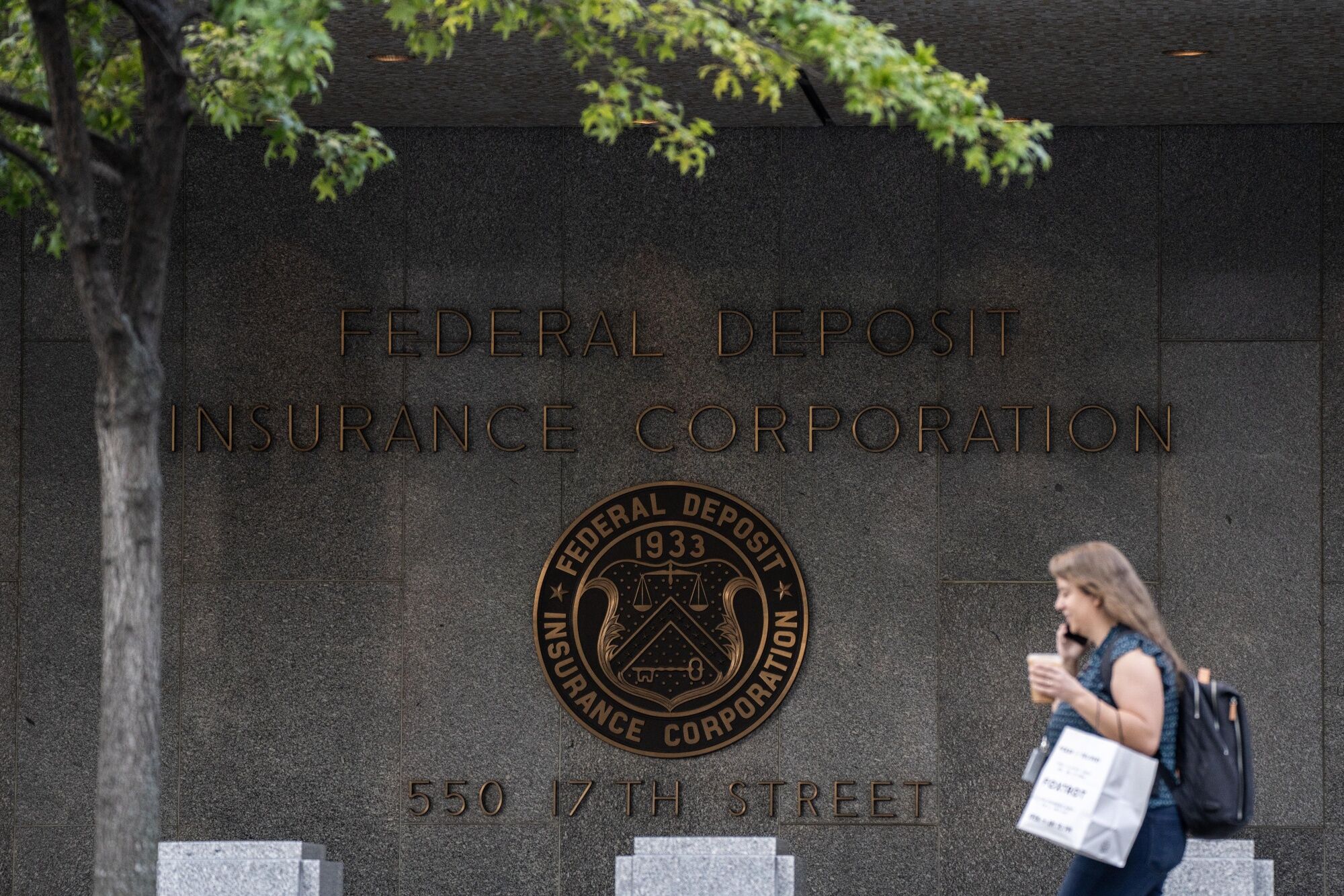
(Bloomberg) -- US regional banks may need to raise significant amounts of additional debt to comply with new regulatory requirements, but the extra capital might not be enough to prevent future failures, according to research published Wednesday.
Eighteen regional lenders might need $63 billion of new holding-company debt to comply with rules by the Federal Deposit Insurance Corp., the Federal Reserve and the Office of the Comptroller of the Currency, according to a note by Bloomberg Intelligence analysts Arnold Kakuda and Nicholas Beckwith.
The regulations were drafted by the three agencies to safeguard financial institutions after a series of regional bank failures that began in March. The debt deficit of the banks — including the likes of Truist Financial Corp., PNC Financial Services Group and M&T Bank Corp. — could climb to $75 billion if regulators' overhaul of Basel III is implemented, according to BI, referring to the international banking supervision group's effort to refine its approach to capital rules.
Under the new rules, banks with $100 billion of assets or more will need to issue enough long-term debt to cover capital losses in times of severe stress, requirements that previously only applied to bigger financial institutions. Regional banks with more than $250 billion of assets may have a $17 billion bail-in debt shortfall. Midsized regional banks with $100 billion to $250 billion of assets may also become more active debt issuers to tackle their potential debt shortfall of $46 billion.
The rules are less onerous than previously expected, as regional firms won't have to meet total loss-absorbing capacity requirements, which could have led to a shortfall of about $157 billion, according to BI. Still, impacted lenders will likely need to issue more bonds to meet the new regulations, with Truist, PNC, Citizens Financial Group Inc., M&T and First Citizens expected to lead the pack, they said.
A buffer of long-term debt like the one proposed by regulators would likely have prevented the collapse of Silicon Valley Bank earlier this year, FDIC Chairman Martin Gruenberg said during a public meeting at the end of August when regulators unveiled the proposals. “The agencies believe that the presence of a substantial layer of liabilities that absorbs losses ahead of uninsured depositors could have reduced the likelihood of those depositors running,” the FDIC and Fed said in a joint notice at the time.
However, that logic assumes depositors understand and stay up-to-date on the bank's capital structure, CreditSights strategist Jesse Rosenthal wrote in a note.
“When panic strikes and there's effectively zero cost for switching banks in the digital age, are fiduciaries (loosely defined) really going to take the risk?” Rosenthal wrote. “[Long-term debt] should lower the risk of uninsured depositors being locked out of their funds on the Monday after failure, but it doesn't reduce it to zero by any stretch.”
In other words, long-term debt requirements likely would not have prevented Silicon Valley Bank from collapsing, he wrote, nor would they have a significant or lasting impact on bank liquidity. The impact of the new regulations will more likely be felt in post-failure resolution by insulating the FDIC from losses after the bank has failed, according to Rosenthal.
Truist, PNC, Citizens, M&T and First Citizens did not respond to requests for comment.
More stories like this are available on bloomberg.com
©2023 Bloomberg L.P.

-
Navigating Energy Crossroads: S Jaishankar's Call For Diversified Supply Chains At G20 Ministerial Meeting

As geopolitical fault lines continue to test maritime trade routes and commodity flows, Jaishankar's message remains pertinent: true economic resilience requires open markets, protected transit lines, and a genuine commitment to multilateral cooperation rather than coercion.
-
Indians Are Travelling, But Not Every Journey Is A Holiday | The Week In Whys
Pilgrims, patients and working women are the real travellers, and the system hasn't quite caught up with them.
-
Getting To Work Costs Women More | The Reason Why
It is not just about women paying more than men. It is about women paying much more in cities than in villages.
-
AI Bias In Investing Cannot Be Eliminated, But It Can Be Governed
Framing is a particularly important example as identical financial information presented in terms of gains rather than losses can lead an LLM to reach a different assessment.
-
Joining The Dots | Dark Skies, Steady Diya: Why Hope Holds This Diwali
With war, a weak rupee and foreign outflows weighing on sentiment, policymakers at the NDTV World Summit and market veterans at NDTV Profit Ignite: Diwali Edition offered the same advice: stay invested and filter out the noise.
-
The Curious Case of Equitas Small Finance Bank And A CEO Who Quit For Stock
PN Vasudevan believes persistent investor concerns over a perceived conflict of interest had become a governance overhang on Equitas Small Finance Bank's stock, even as the lender improved profitability and asset quality.
-
Talking Points This Week: AI Cash Burn, A Tiger Comeback And An India That Still Finds Its Own Path
India is not immune to higher oil or tighter global liquidity, yet its earnings base is broader, its domestic policy levers are still available.
-
Foreign Investors Own Half Of HDFC Bank and ICICI Bank. An LTCG Cut Could Matter Most Here
Foreign portfolio investors have US$115 billion parked in HDFC Bank, ICICI Bank. If the government cuts long-term capital gains tax, Jefferies says returning foreign money could land here first.
-
'Never Seen This Level Of Negativity': Sandeep Tandon Says The Next Rally May Be Closer Than You Think
Veteran investor Sandeep Tandon says foreign selling is easing, large-caps are due a comeback and mid-caps are crowded, while he turns positive on gold, power and pharma this Diwali.










