Reckitt Benckiser Names PepsiCo's Laxman Narasimhan As Next Chief Executive Officer
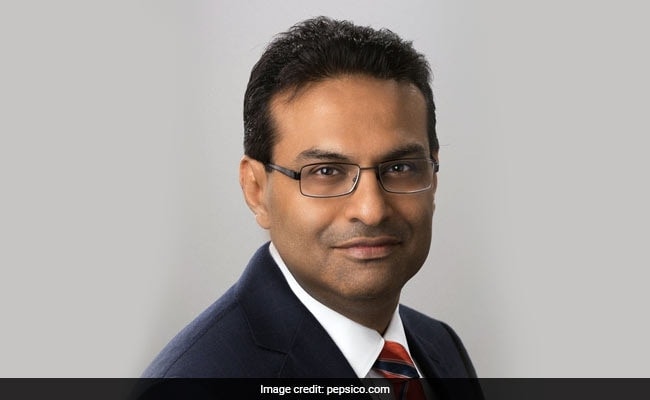
British consumer goods giant Reckitt Benckiser on Wednesday named PepsiCo executive Laxman Narasimhan as its next chief executive officer, to succeed Rakesh Kapoor. Mr Narasimhan, PepsiCo's global chief commercial officer, will join Reckitt as CEO-designate and be appointed to the board on July 16.
He will become group CEO on September 1, the company said in a statement.
Mr Narasimhan joins Reckitt at a time the company is struggling with slower growth, little pricing power and changing consumer habits. Unilever, Campbell Soup, British American Tobacco and PepsiCo have all named new CEOs in recent months, charging a new generation to rekindle growth as the industry heavyweights try to fight back against media-savvy upstarts.
Mr Narasimhan's initial priorities will be to boost performance, especially in the health business, and to drive the Lysol maker's plan to split into two separate business units - one for health and one for hygiene and home products - under the same parent company, Reckitt said in a statement. Narasimhan led Strategy, Global Category Groups and Global R&D in his capacity as Chief Commercial Officer at PepsiCo.
Prior to that, he headed the beverage maker's Latin America, Europe and Sub-Saharan Africa operations managing annual sales of 14.5 billion pounds ($18.5 billion) and at one time was also the Chief Financial Officer of the company's Americas Foods business. PepsiCo named Ram Krishnan, currently CEO Greater China, as its new chief commercial officer.
As CEO of Reckitt, Mr Narasimhan will get a salary of 950,000 pounds and will be eligible to participate in the company's annual bonus plan with a target of 120 per cent of salary, Reckitt said.
Mr Kapoor said in January he would leave by the end of 2019 after more than eight years at the helm.

-
High US Salaries, No Green Card Certainty: The Financial Calculation Facing Indian H-1B Families

The suspension of PERM processing at eight technology employers does not cancel existing H-1B visas. What it does is force a question many Indian families have been avoiding: is the US salary worth tying your career and family plans to one employer?
-
Navigating Friction And Energy Realities: An Analysis Of Marco Rubio's October Visit To India
Occurring at a critical juncture marked by stalled trade negotiations and escalating geopolitical pressures over global energy supplies, the visit offers a profound window into modern US-India relations.
-
India Exports Capital. Why Not Export Trusteeship?
The big question, then, is whether India can build an institution that global borrowers, investors, banks, and lawyers can trust, even without an Indian connection.
-
France's Economy & Politics Are In Crisis | The Reason Why
Let's look at how the French economy and politics evolved under Nicolas Sarkozy, Franois Hollande and Emmanuel Macron.
-
You May Inherit The Business. You Must Earn Its Credibility.
Succession tests the founder's ability to share authority as much as it tests the next generation's readiness to assume it.
-
Signing Deals Is One Thing; Making Them Work Is Another | The Week In Whys
Sometimes, things don't turn out as planned. Indian companies have lost some bids to rivals, some projects won't produce until 2030.
-
FOMC Wall, PERM Suspension, Hospital Stocks | Talking Points This Week
A PERM suspension would directly affect green-card sponsorship rather than H-1B visas, so the near-term earnings impact could remain relatively limited. The key question is whether this marks a new phase in US scrutiny of Indian IT.
-
Everything, Everywhere, All At Once: Dalal Street's Week To Forget | Joining The Dots
Visa curbs, a Starlink spat and cancer drug caps: what connects this week's shocks for Indian markets
-
India Is Going Abroad For Critical Minerals. But It May Take Years To Pay Off | The Reason Why
Although India's steps are in the right direction, they remain modest compared with India's growing dependence.
-
When Everyone Has AI, What Gives You An Edge?
India's young workforce is entering an uncertain world of work where powerful AI tools are becoming widely accessible. The advantage will belong to those who combine deep expertise with digital fluency, and the distinctly human capabilities that technology cannot manufacture.










