RBI’s New Bank CEO Rules: How Long Does Uday Kotak Get To Stay?
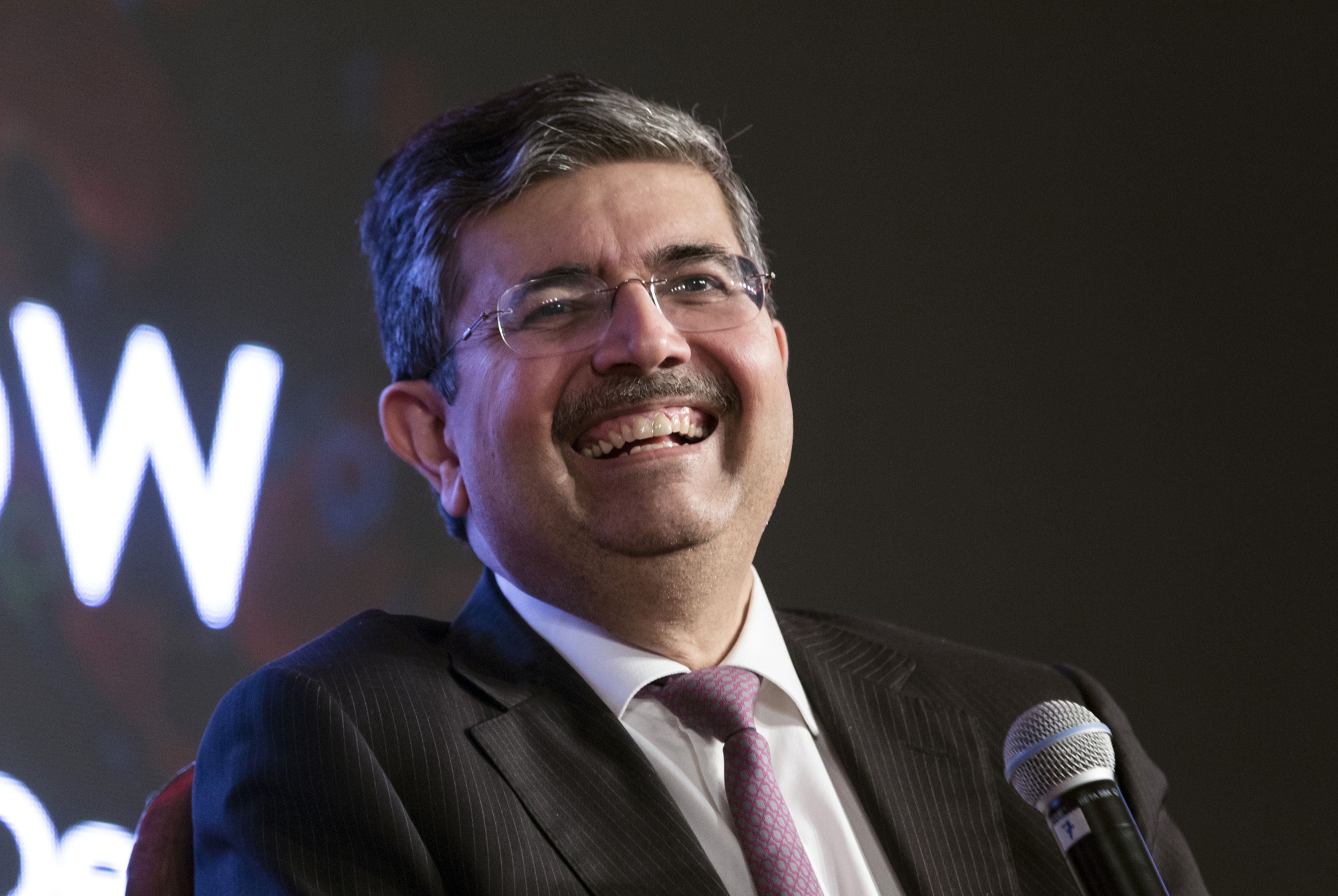
It was in June 2020 that the Reserve Bank of India first proposed, in a discussion paper, that it would cap the tenure of chief executives of private banks. The RBI had suggested a maximum 15-year tenure for chief executives and 10 years for promoter CEOs, with a transition period of up to two years suggested to appoint a successor.
The final guidelines released on Monday follow along similar lines with some departures. While the maximum tenure of a private bank CEO has been capped at 15 years, for promoter CEOs, the RBI has prescribed a term of 12 years at most. Banks have been asked to be in compliance with the rules by October 2021. The RBI, however, has said existing CEOs can continue till the end of their current term.
The nuances of the final policy vis-a-vis the discussion paper will mean small relief for Kotak Mahindra Bank, which was seen to be the most impacted by the RBI's new rules.
- Under the discussion paper's prescribed rules, and on the assumption that the rules are applicable from April 1, 2021, Uday Kotak would have had two years till April 2023 to appoint a successor, Macquarie Research had said in a report dated June 11, 2020.
- According to the final circular, Kotak will be allowed to continue till the end of his current tenure. His tenure was renewed for three years starting Jan. 1, 2021, which allows him some additional time until January 2024 to appoint a new successor.
Uday Kotak's tenure will now end on Jan.1, 2024 and he is not eligible for reappointment as he has already completed 15 years as the MD and CEO, said Suresh Ganapathy, analyst at Macquarie Research in a note. “Also, in our view, the second in line Dipak Gupta (current Joint MD) may not be eligible to succeed Kotak as the CEO as the 15 year cap applies for all whole-time directors on the board,” said Ganapathy.
The broader of the RBI's guidelines is to improve governance at bank boards by separating ownership and management. The new rules also prescribe that the chair of a bank board be an independent director. In addition, non-executive directors have been asked to head the audit, risk management and the nomination and remuneration committees.
“The RBI has come out with quite delayed but very important guidelines on improving the governance framework in banks. It is very important to ensure that ownership and executive management at private banks are truly separated for better quality banks,” said independent analyst Hemindra Hazari. “It is also sad that the regulator gave an unnecessary extension to Uday Kotak before these guidelines were announced, allowing him a longer tenure at Kotak Mahindra Bank.”
Who Else Is Impacted?
Most other large private banks will not be impacted immediately.
- HDFC Bank's new CEO Sashidhar Jagdishan took over in October 2020.
- Sandeep Bakshi of ICICI Bank is in his first three-year term at the lender, which is due to end in October 2021.
- IndusInd Bank CEO Sumant Kathpalia took charge last year.
- RBL Bank's Vishwavir Ahuja has completed about 10 years as chief executive.
Ganapathy of Macquarie said there could be some ambiguity over the tenure of Bandhan Bank's chief executive. Bandhan was converted to a bank five years ago. “So, if RBI considers that timeline (the date of conversion to a bank) as the threshold then Ghosh, the promoter CEO, has a longer tenure.”
However, since the RBI said that in re-appointment of promoter CEOs, “the level of progress and adherence to the milestones for dilution of promoters' shareholding in the bank shall also be factored in”. Considering Bandhan's track record in meeting these shareholding norms, there perhaps could be a reluctance from RBI in our view, Ganapathy said.

-
Where You Live Shapes How You Get To Work | The Reason Why

Two-wheelers are the most popular way to get to work in India, accounting for nearly 43% of workplace commutes.
-
High US Salaries, No Green Card Certainty: The Financial Calculation Facing Indian H-1B Families
The suspension of PERM processing at eight technology employers does not cancel existing H-1B visas. What it does is force a question many Indian families have been avoiding: is the US salary worth tying your career and family plans to one employer?
-
Unhedged Position: Can India See An Indonesia-Style Time Correction?
The Nifty is trading below levels it first clocked in 2024. Is there, then, as I have suggested in the headline, potential that the current time correction drags on painfully for the next three-five, even ten years?
-
Navigating Friction And Energy Realities: An Analysis Of Marco Rubio's October Visit To India
Occurring at a critical juncture marked by stalled trade negotiations and escalating geopolitical pressures over global energy supplies, the visit offers a profound window into modern US-India relations.
-
India Exports Capital. Why Not Export Trusteeship?
The big question, then, is whether India can build an institution that global borrowers, investors, banks, and lawyers can trust, even without an Indian connection.
-
France's Economy & Politics Are In Crisis | The Reason Why
Let's look at how the French economy and politics evolved under Nicolas Sarkozy, Franois Hollande and Emmanuel Macron.
-
You May Inherit The Business. You Must Earn Its Credibility.
Succession tests the founder's ability to share authority as much as it tests the next generation's readiness to assume it.
-
Signing Deals Is One Thing; Making Them Work Is Another | The Week In Whys
Sometimes, things don't turn out as planned. Indian companies have lost some bids to rivals, some projects won't produce until 2030.
-
FOMC Wall, PERM Suspension, Hospital Stocks | Talking Points This Week
A PERM suspension would directly affect green-card sponsorship rather than H-1B visas, so the near-term earnings impact could remain relatively limited. The key question is whether this marks a new phase in US scrutiny of Indian IT.
-
Everything, Everywhere, All At Once: Dalal Street's Week To Forget | Joining The Dots
Visa curbs, a Starlink spat and cancer drug caps: what connects this week's shocks for Indian markets









