RBI Won’t Dictate Terms To Banks, Says Principal Economic Adviser Sanjeev Sanyal
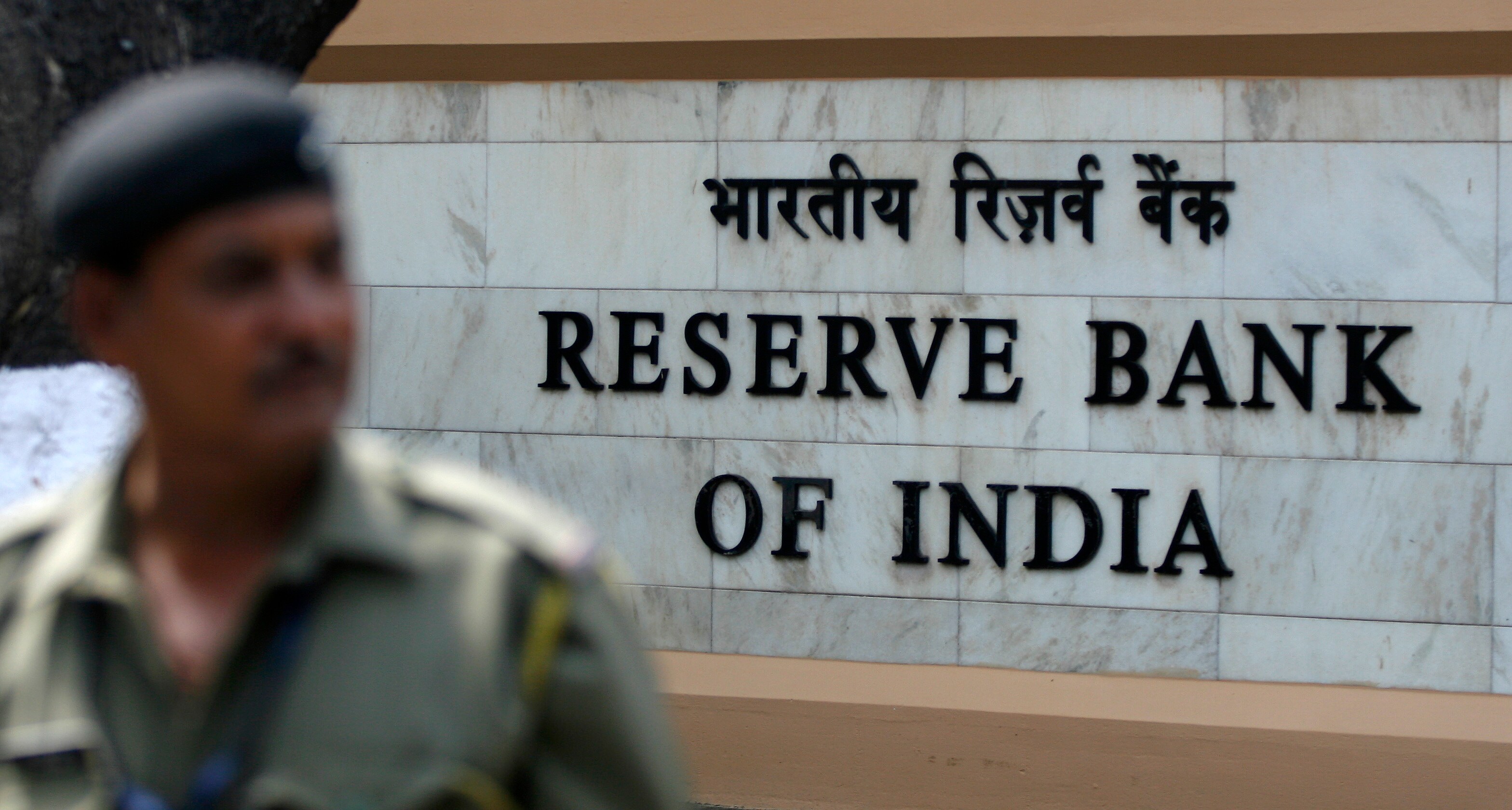
President Pranab Mukherjee approved the ordinance giving wider powers to the Reserve Bank of India to tackle bad loans. Sanjeev Sanyal, principal economic adviser to the Government of India, told BloombergQuint that the ordinance provides an enabling framework to resolve bad loans and there is no intention for the central bank to dictate terms to lenders. The government or RBI will not be involved in the commercial decisions of banks, he said.
Edited excerpts of the interview...
Do you feel as provisions rise and public sector banks continue to bleed, consolidation is likely to happen? Is that the intent behind the ordinance?
No, they are separate issues. Consolidation is a separate issue from this one. This is a much more targeted approach to deal with the NPA problem. It is a serious problem that has been hanging on our banking sector for some time. The intention here is to provide the Reserve Bank with specific powers in order to take a much more targeted approach to try and resolve the issue. They will shortly notify the exact steps through which they will solve it.
Should the RBI dictate commercial decisions to banks?
There is a misunderstanding. There is no intention at all for the RBI to dictate. All it will do is to enable a framework using the new powers through an oversight committee. Read the ordinance, the last particular paragraph mentions this clearly. The idea is that these oversight committees make sure that the process is followed. Once the commercial decision is taken, everybody participates in it. Therefore, there is no free-rider problem and there is compliance once everybody has agreed. The decision is not going to be dictated by the RBI or the overseeing committee in general, because we understand that these are commercial decisions which the regulator or the government should not be involved in. This is certainly not the case or the intention of this ordinance to try and dictate or go back to the old days of directed lending. What we are attempting to do is to create a process and provide powers to back that process so that these decisions, commercial as they may be, are complied with by the group. Once the stamp has been put to the resolution, maybe then there is no investigation to it in the future – which is one of the fears bankers had been expressing – because the oversight committee certifies that due process was followed.
Also Read: Insolvency Mechanism Equipped To Handle Added Load, Says IBBI Chairperson MS Sahoo
Will this lead to banks losing operational freedom when dealing with stress?
Not at all. In fact, it enables them because all that is happening is that the oversight committees, backed by the power of the RBI, are essentially making sure the processes are being followed. In fact, quite to the contrary of the fear you just mentioned, there is no attempt here to direct banks to do something specific. It's a general process that they have enforced and not a decision to do something. We understand that its a commercial decision, all that is being done is that the Reserve Bank, using the oversight committees, can ensure processes are followed.
Will this protect banks against investigative agencies as oversight committees will be backing the commercial decisions of the banks?
That's exactly the point I am making. The oversight committee is not taking the commercial decisions. All it is doing is certifying that due process is followed in order to arrive at the decision itself taken by bankers. The regulator cannot take the decisions as then we will go back to the bad old days of directed lending. This is precisely what we are trying to avoid. All that is happening is that we recognise that there are certain problems. One of the problems is that everybody does not participate, which is the free-rider problem. Second problem is once this commercial decision is taken, all the banks that are part of the consortium will follow whatever has been agreed because somebody does it, somebody doesn't do it. So now, the oversight committee can enforce. The third and the most important part is when due processes are followed, the oversight committee can put a stamp of approval and certify that processes are followed, which means that the decisions can be taken without fear that in future it can be investigated because all they would have to say is that ‘look, we did the process'. The oversight committee certified it, how can you investigate us because we followed the process?
Also Read Empowering RBI To Clean Up The Bad Loan Mess. Will It Work?

-
Medicine Pricing: Where Must Profit Stop?

India must confront excessive margins, hidden incentives and regulatory gaps that threaten the integrity of medicine.
-
Why Amazon And Flipkart Are Struggling To Beat Meesho In India's Smaller Cities
With 274 million users and lowest-cost logistics, Meesho is defending its value commerce crown against giants like Amazon and Flipkart.
-
High US Salaries, No Green Card Certainty: The Financial Calculation Facing Indian H-1B Families
The suspension of PERM processing at eight technology employers does not cancel existing H-1B visas. What it does is force a question many Indian families have been avoiding: is the US salary worth tying your career and family plans to one employer?
-
Swiggy vs Eternal: Food Delivery's Two Rivals Are No Longer In The Same Race
Eternal is building a private AI assistant, dark.ai. Swiggy is still working out how to make Instamart pay, with an operating loss of Rs 895 crore in the July-September quarter while Blinkit stayed profitable.
-
Where You Live Shapes How You Get To Work | The Reason Why
Two-wheelers are the most popular way to get to work in India, accounting for nearly 43% of workplace commutes.
-
Unhedged Position: Can India See An Indonesia-Style Time Correction?
The Nifty is trading below levels it first clocked in 2024. Is there, then, as I have suggested in the headline, potential that the current time correction drags on painfully for the next three-five, even ten years?
-
Navigating Friction And Energy Realities: An Analysis Of Marco Rubio's October Visit To India
Occurring at a critical juncture marked by stalled trade negotiations and escalating geopolitical pressures over global energy supplies, the visit offers a profound window into modern US-India relations.
-
India Exports Capital. Why Not Export Trusteeship?
The big question, then, is whether India can build an institution that global borrowers, investors, banks, and lawyers can trust, even without an Indian connection.
-
France's Economy & Politics Are In Crisis | The Reason Why
Let's look at how the French economy and politics evolved under Nicolas Sarkozy, Franois Hollande and Emmanuel Macron.
-
You May Inherit The Business. You Must Earn Its Credibility.
Succession tests the founder's ability to share authority as much as it tests the next generation's readiness to assume it.










